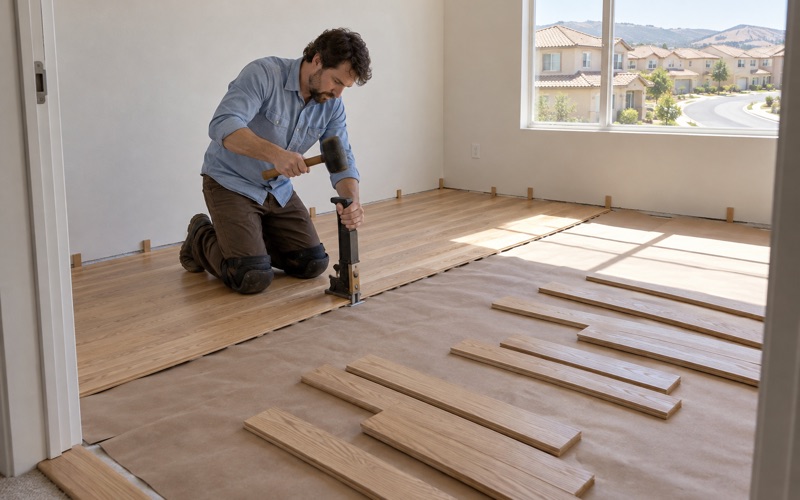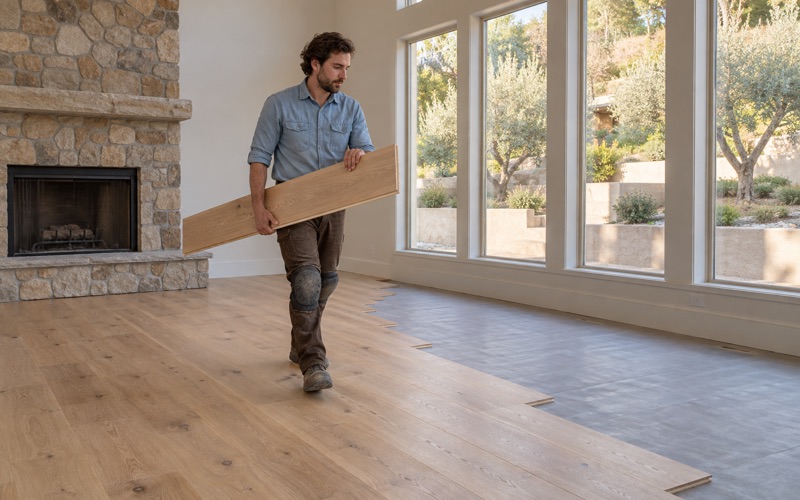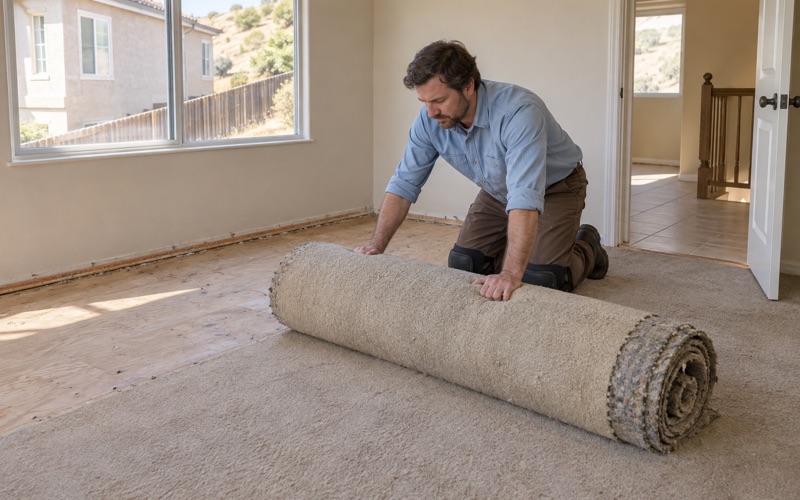
Diamond Bar Wood Flooring brings more than 20 years of work to wood flooring in Artesia, from sanding and refinishing tired oak to replacing damaged boards and laying new engineered or solid hardwood. We handle houses that owners live in and houses that are rented out, and we plan each job around who is using the rooms and when. The work starts with what the floor actually is, not with a price per square foot.
Before a sander touches a floor, we confirm the year the house was built. Homes from before 1978 get lead-safe work practices, because old finish and paint along baseboards can release lead dust once an abrasive cuts into it. On engineered boards we measure the wear layer first, so nobody is promised a sanding the veneer cannot survive.
Finishes are picked to stay inside the South Coast AQMD Rule 1113 limit for wood coatings, which applies to anyone applying or storing them on site. When a refinish wraps up, you get a written cure schedule that says when the floor can take foot traffic, when furniture goes back and when rugs can go down. Stairs are priced by each tread and riser rather than buried in a square-foot number.
Rented Houses and the Time Between Tenants
Why so many Artesia floors belong to rentals
Artesia is a renter-majority city. Of 4,513 occupied homes counted in the Census Bureau’s 2024 five-year survey, 2,278, or 50.5 percent, are rented. What sets it apart is the kind of rental: the largest single group of renters, 1,116 households or 49.0 percent, live in detached houses rather than apartment buildings.
That means a wood floor in a rented house often absorbs years of hard use in a few leases. We see board gapping near entry doors, gray traffic lanes through living rooms, pet stains gone black at the edges and scratches cut through to bare wood. The owner of one of those houses is usually weighing refinishing against replacement with a vacancy clock running.
Fitting a refinish into a vacancy
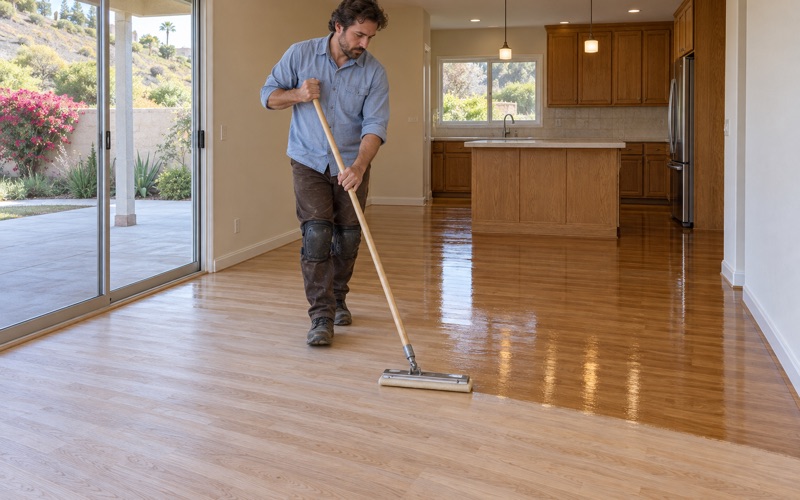
An empty house is the easiest floor to sand. With no furniture to move and nobody to keep out, we can run the drum sander and edger through every room in order, work the grit sequence down to clean wood and apply finish without stopping for daily foot traffic. The written cure schedule then tells the owner or property manager exactly when a cleaner, a painter or a new tenant can walk in.
Finish choice matters more in a rental. Waterborne polyurethane dries faster and yellows less, which helps a tight turnover, while oil-modified polyurethane brings a warmer amber tone and a longer cure. When the existing finish is worn but not cut through, a screen and recoat can freshen the surface in far less time than a full sand.
Repairs instead of a whole floor
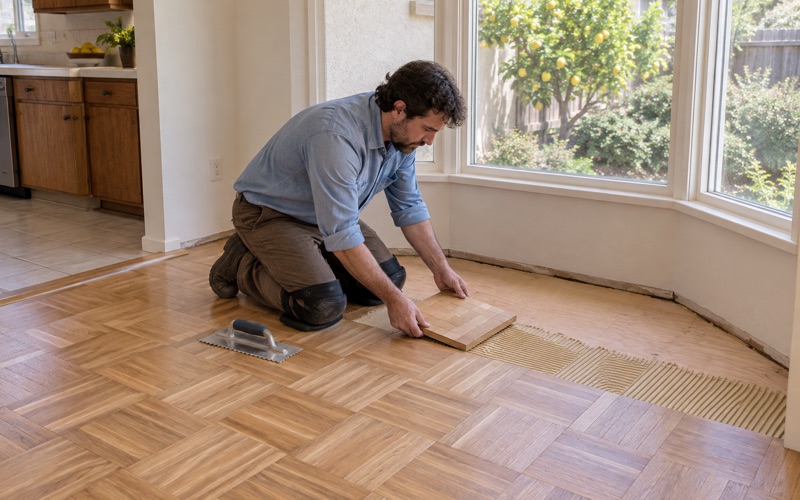
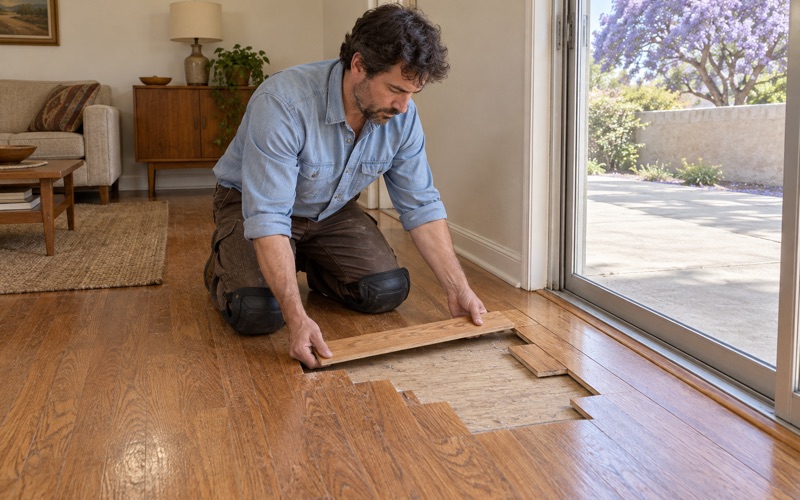
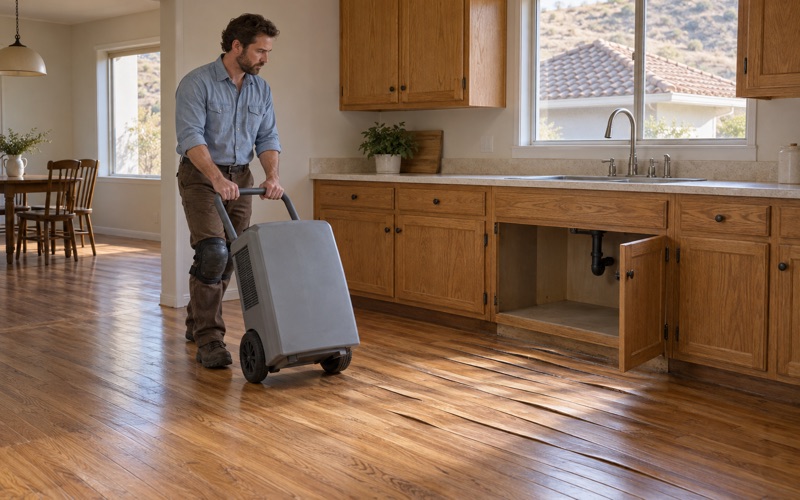
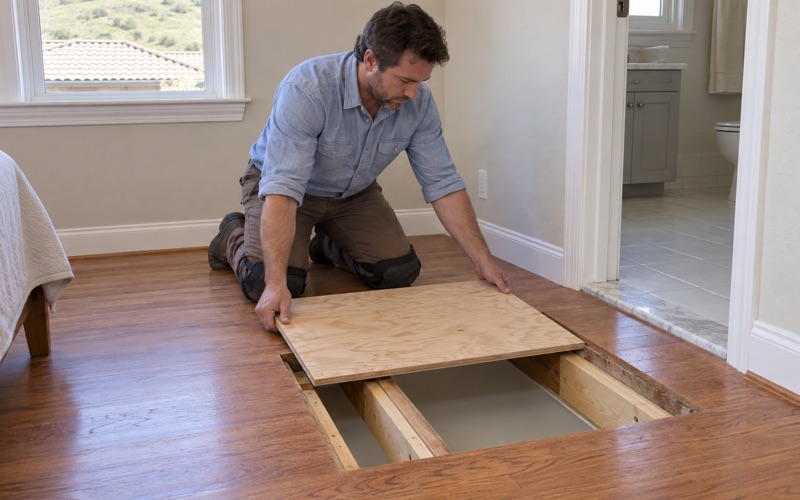
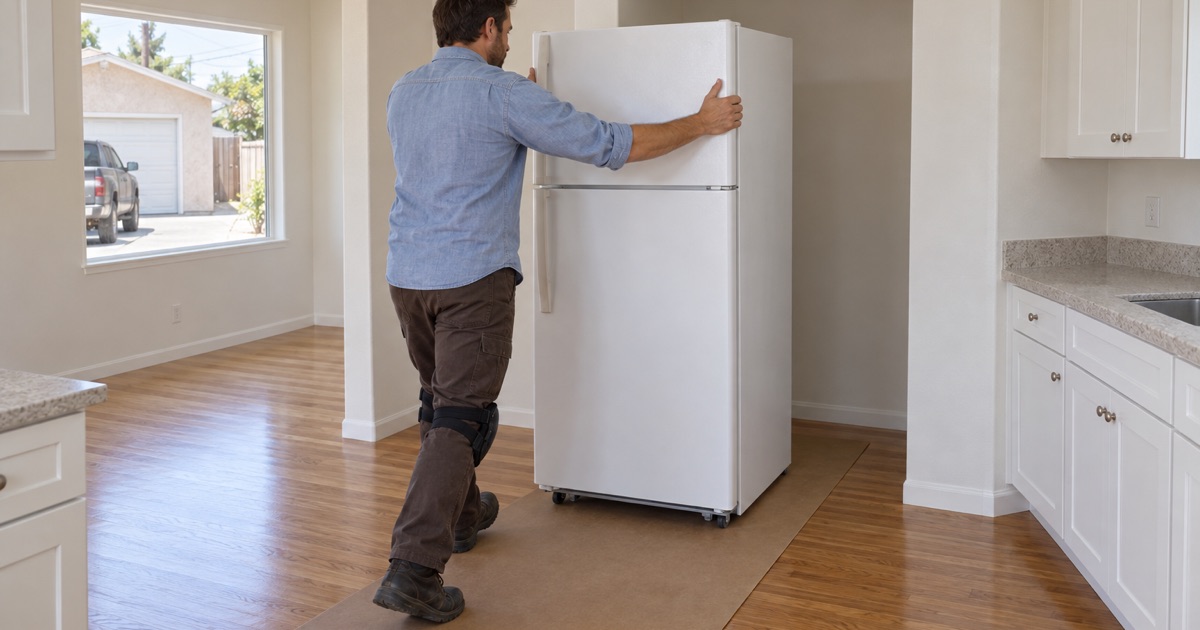
Not every turnover needs a full refinish. A water ring where a refrigerator line dripped, a scorched board or a few pieces lifted by a pet accident can often be handled with board replacement and a weave-in repair that ties new wood into the old pattern. Before any water-damaged board comes out, we find where the water came from and take readings with a pin moisture meter.
If we pull up damaged wood and find kick-out holes or termite frass, we stop and refer the owner to a licensed pest company before new boards go down. Laying fresh oak over active drywood termites only hands the next tenant the same problem. Leak damage is photographed and documented as we go, so an adjuster sees the same record we do.
Looking for wood-flooring closer to Hawaiian Gardens? See Wood-Flooring in Hawaiian Gardens.
Artesia’s Small Plexes and Apartment Buildings
Three-or-four-unit and five-to-nine-unit buildings
The rest of Artesia’s renters are spread across smaller buildings. Census counts put 280 renter households in three-or-four-unit buildings, another 280 in five-to-nine-unit buildings and 239 in buildings of ten to nineteen units. These are the plexes and small apartment buildings where one owner often holds several units with floors of different ages.
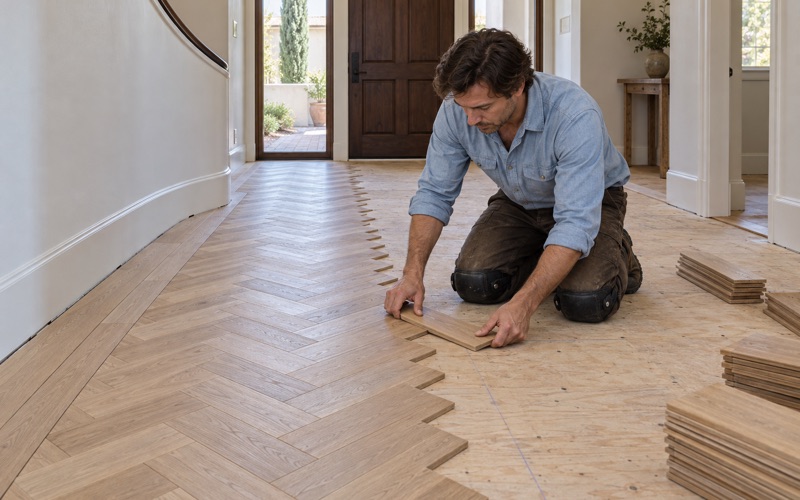
In a building like that, we try to match what is already there. An older unit may have plain-sawn red oak strip, while a later renovation next door may have added engineered hardwood with an aluminum oxide prefinish that cannot be treated the same way. We identify each floor before quoting, so an owner is not surprised by two different answers under one roof.
Working beside occupied units
A plex floor usually shares walls, and sometimes a ceiling, with a neighbor who is still at home. We use a dust containment system and HEPA dust extraction on the sanding equipment, and we keep the loudest work to normal daytime hours. Choosing finishes within the Rule 1113 limit also keeps odors down for the people next door.
Upper units raise questions about underlayment and whether a nail-down, glue-down or floating installation suits the space, and a building’s own rules can set conditions on what goes down. We check those rules with the owner before any flooring is ordered rather than after it arrives.
Stairs inside multi-level units
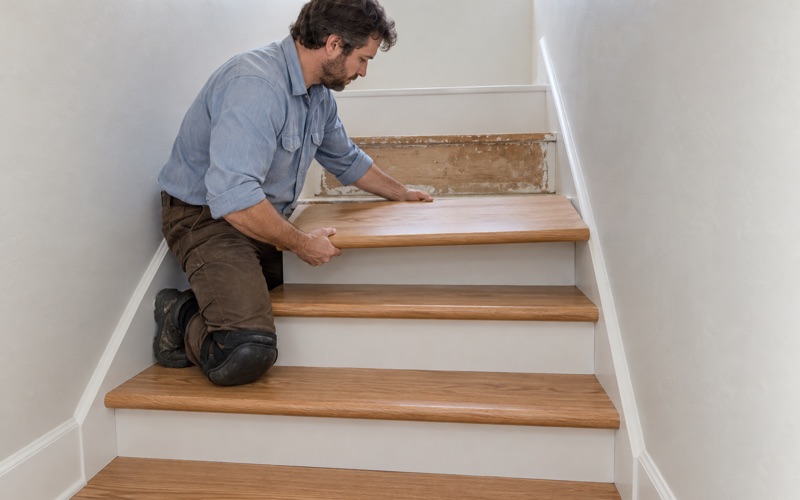
Where a unit has a wood staircase, we quote it by the tread and riser. A worn bullnose tread, a loose stair nosing and a scuffed stair riser each take their own hand work. Folding a staircase into a square-foot rate hides that labor, and it tends to surface later as a dispute.
Owner-Occupied Houses on the Same Streets
A city built mostly of detached houses
Owners hold the other 49.5 percent of Artesia’s occupied homes, and 2,034 of those households, 91.0 percent, live in detached houses. Across the whole city, 68.0 percent of housing units are detached single-family homes. That mix puts rented houses and owners’ houses side by side, with floors from similar years and very different histories.
Artesia was dairy country before it was a city. Portuguese and Dutch dairymen settled here in the 1920s, residential tracts replaced the dairies after World War II, and the city incorporated on May 29, 1959.
What the age of the housing means
About 34.9 percent of Artesia’s housing units were built before 1960, and 76.2 percent went up before 1980. For a floor job, that puts most houses inside the window where lead-safe practices apply to sanding and trim removal. It also means many floors have been refinished before, sometimes more than once, so we check how much wood remains above the tongue before planning another full sand.
Older solid hardwood can show cupping where moisture got under the boards, or crowning where a cupped floor was sanded flat before it dried. We read the pattern before recommending anything, because sanding a floor that is still wet can leave it crowned once it settles. Where a floor feels soft underfoot, we look at the subfloor and floor joists before new wood goes over them.
Living at home during the work
Unlike a vacant rental, an owner’s house is usually occupied while we work. We run dust containment and a room-by-room sequence so a family can keep using the kitchen and bedrooms while one area is sanded and finished. Each completed room then follows its written cure schedule before furniture comes back.
Owners also have more say over the look. We talk through red oak against white oak or hickory, the Janka hardness rating of each, and whether a site-finished floor or a prefinished plank suits the house. Sheen level is one of the easiest choices to get wrong, since a high gloss shows every scratch in a busy hallway.
Planning a Floor Job in Artesia
Who handles building questions
Building matters in Artesia go through the City of Artesia Building & Safety office at 18747 Clarkdale Avenue, which is staffed under contract by BPR Consultants. Permit questions for a flooring project, especially one that reaches the subfloor or joists, belong with that office. We suggest owners ask before the work is scheduled.
For an owner who manages several Artesia rentals, it pays to confirm each project on its own terms. A refinish in one house and a subfloor repair in another are different scopes, and the answer for one does not carry over to the next.
Air quality and finish choices
Artesia sits within the South Coast Air Quality Management District, the agency behind the Rule 1113 VOC limits on wood coatings. Those limits shape which sanding sealer, polyurethane and hardwax oil products we bring to a job. Asking about the finish up front is also the simplest way to learn how long rooms need to stay empty.
Moisture, weather and scheduling
The National Weather Service places Artesia in forecast zone CAZ368, Los Angeles County Inland Coast, rather than the beaches zone along the Long Beach shoreline. Humidity still shifts through the year, so we let new wood acclimate and check moisture content before a nail-down installation with flooring cleats or flooring staples.
For an owner planning around a lease date, the order is straightforward: an inspection of the floor, a written quote that separates stairs and repairs, the work itself and then the cure schedule. Tell us the move-out and move-in dates at the first visit, and we will say plainly whether a full sand, a screen and recoat or a targeted repair fits between them.
- 20+ Years of Wood Floor Work
- Free In-Home Estimates
- Dust-Contained Sanding