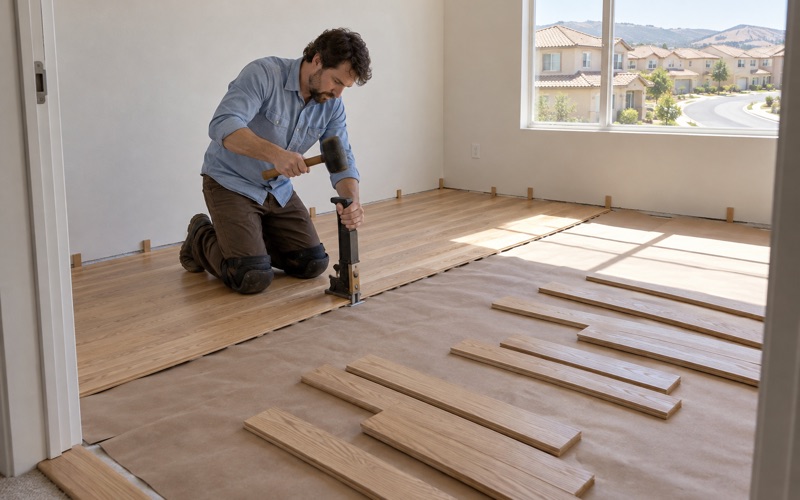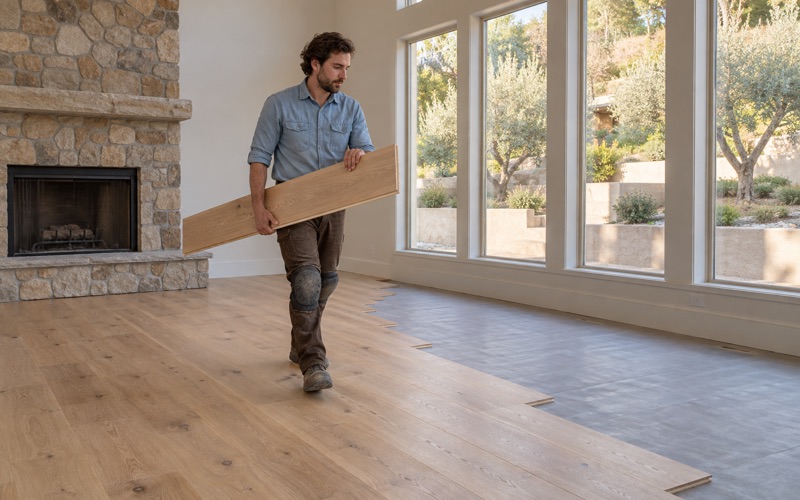
Diamond Bar Wood Flooring brings more than 20 years of experience to wood-flooring in Brea, installing, sanding and repairing hardwood in detached houses, townhomes and apartment units. Before we quote anything, we confirm the year the home was built, because that one date shapes how we sand, which finish we recommend and what we look for underneath the boards.
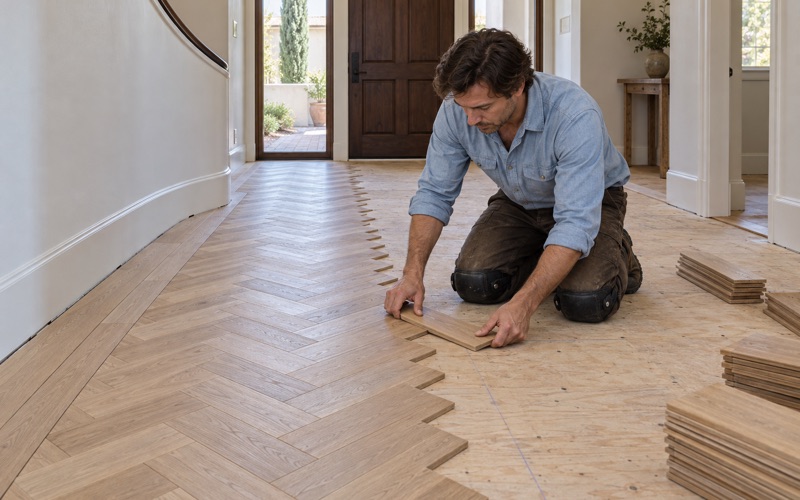
Our work runs from nail-down and glue-down installation of solid and engineered hardwood to screen and recoat visits, full sand-and-refinish jobs and board replacement after a leak or pest damage. On engineered planks we measure the wear layer before promising a sanding, and staircases are priced by the tread and riser instead of being folded into a square-foot figure.
Every refinish ends with a written cure schedule covering when you can walk on the floor in socks, when furniture can go back and when rugs can come down. Households that stay put during the job get dust containment and a room-by-room order of work, so a kitchen and a bedroom remain usable while the rest of the floor is in progress.
Wood Floors in Brea’s Newer Homes and Former Oil Land
A city still adding housing
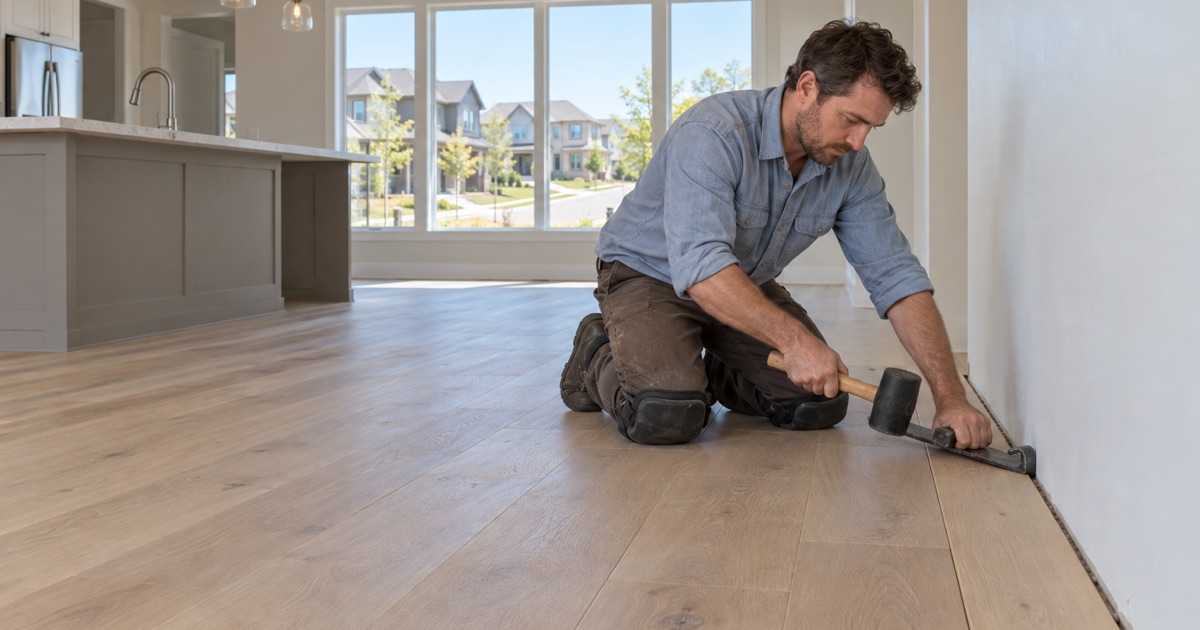
Brea has more recent construction than many buyers expect. The Census Bureau’s 2024 five-year American Community Survey counts 2,697 of the city’s 17,373 housing units, or 15.5 percent, as built in 2010 or later, with 2,535 of those finished during the 2010s alone. That is a large share of homes whose floors are still young enough to be on their original factory finish.
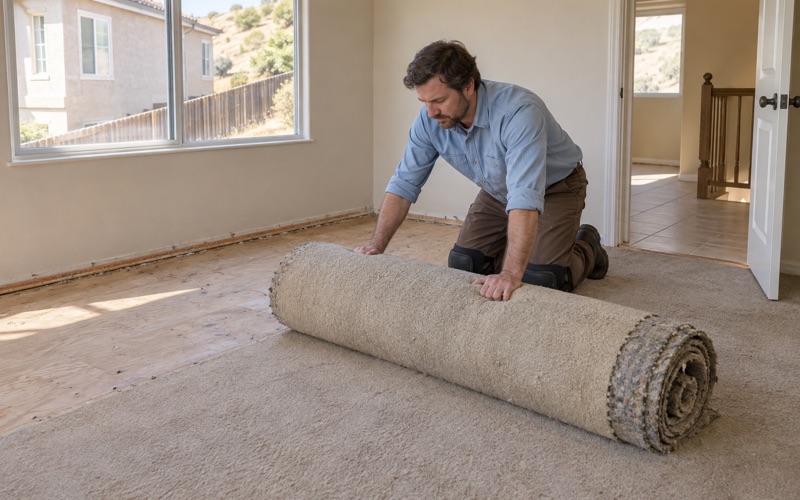
Owners of these houses rarely need a full sanding yet. More often they want a worn traffic lane refreshed, a scratched section of planks swapped out, or hardwood carried into bedrooms and stairs that were left with carpet. Each of those jobs starts with identifying exactly what product is already down, since matching color, width and edge profile decides whether a repair blends in.
Checking an engineered floor before anyone sands it
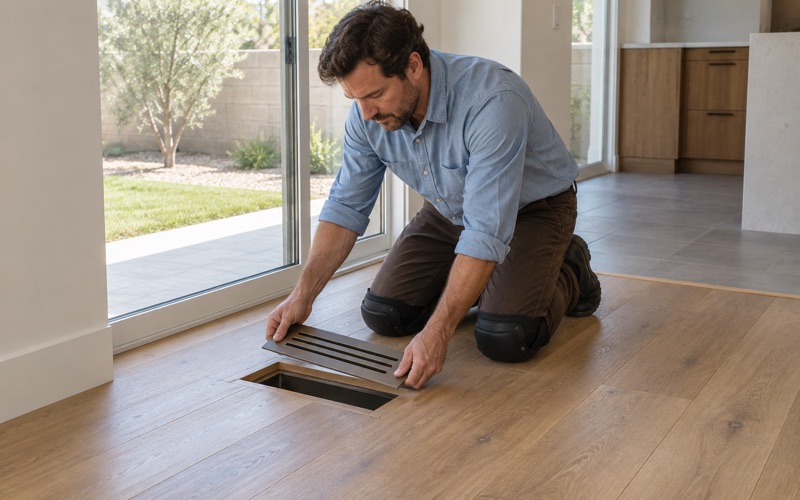
Many newer floors are engineered hardwood with an aluminum oxide prefinish, a very hard factory coating that a new topcoat does not grip easily. We pull a floor vent or a threshold piece and measure the wear layer directly, because some engineered products carry too little real wood to survive a drum sander and an edger.
When the wear layer is thin, we say so plainly and talk through the alternatives, such as board replacement in the damaged area or a careful abrasion and recoat where the finish allows it. A sanding that breaks through to the core cannot be undone, so the measurement comes before the promise, not after.
From oil fields to neighborhoods
Oil is where Brea began. The Brea-Olinda Oil Field was discovered in 1880, and the city incorporated on February 23, 1917, joining Olinda Village and the town of Randolph. That conversion of production land into housing is still underway: the Brea 265 Specific Plan, approved by the City Council on July 19, 2022, provides for up to 1,100 units on a 262-acre site used for oil and gas production, with the wells and facilities to be remediated before construction.
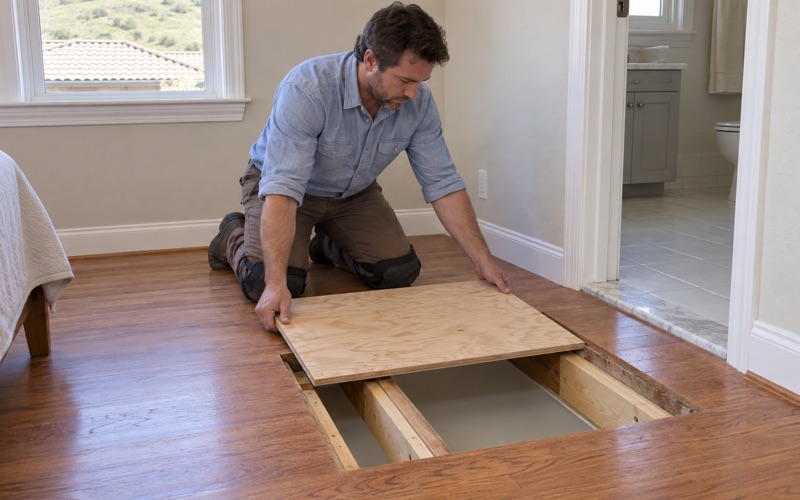
For anyone putting wood into new construction, anywhere in town, moisture is the first question. We take pin moisture meter readings on a plywood or OSB subfloor, and on concrete we use in-situ relative humidity testing under ASTM F2170 before a vapor retarder or glue-down adhesive is chosen. Hardwood laid over a subfloor that has not dried is how cupping and buckling show up a season later.
Looking for wood-flooring closer to West Covina? See West Covina Wood-Flooring.
Refinishing Brea’s 1970s Houses
The decade that built the most of Brea
The 1970s are Brea’s largest building decade, with 4,740 units, or 27.3 percent of the housing stock, dating from those ten years. Counting everything before 1980, just over half of the city’s homes are now more than 45 years old. Among owner households, 78.1 percent live in detached houses, which is where most of our sanding and refinishing work in town happens.
In houses of that age we often find solid oak that spent decades under carpet, or earlier refinishes that were sanded unevenly. We read the floor before planning a grit sequence, checking for loose boards, exposed flooring cleats or staples, board gapping and old wood filler that has cracked out of the seams.
Lead-safe practices on homes built before 1978
Most of that 1970s stock falls before 1978, the cutoff the EPA Lead Renovation, Repair and Painting Rule uses for residential work. Sanding a floor also disturbs baseboards, shoe molding and door casings that may carry older paint, so we confirm the construction year first and follow lead-safe work practices on any home built before that date.
In practice that means sealing the work area, running HEPA dust extraction on the sanders and cleaning up in a way that keeps dust out of the rest of the house. It also gives families who stay home during the job a clear boundary between the rooms under work and the rooms they are living in.
Finishes that fit Orange County air rules
Brea sits within the South Coast Air Quality Management District, which covers all of Orange County. Its Rule 1113 sets VOC limits for wood coatings, and those limits apply to anyone applying or storing the products at a job site, so every sanding sealer and topcoat we bring is chosen to fit them.
Within that limit there is still a real choice. Waterborne polyurethane dries clearer and returns the room sooner, oil-modified polyurethane gives red oak a warmer amber tone, and a hardwax oil suits owners who would rather spot-repair than recoat. We go over sheen level with you too, since a satin finish hides everyday scuffs far better than gloss.
Floor Work in Brea Apartments, Condos and Townhomes
Large buildings and the renters who live in them
Renters make up 40.3 percent of Brea’s occupied homes, and many of them live in big buildings. Census tenure data shows 37.8 percent of renter households in buildings of fifty or more units, and those buildings hold 15.3 percent of all the city’s housing units.
For a property owner or manager, that scale changes the work. A screen and recoat between tenants can bring back a tired floor in a day, while replacing a run of damaged planks calls for matching stock and planning around neighbors, shared hallways and elevator access. We schedule around the building rather than asking the building to schedule around us.
Association and building rules come first
Another 12.3 percent of Brea owner households live in one-unit attached homes such as townhomes. Before a condo or townhome floor is ordered, we check the association’s rules, which may require an architectural review committee sign-off or a specific underlayment under hard flooring.
Where a building asks for sound control, we plan around a sound-rated underlayment and a floating or glue-down installation that suits it, and we leave the approval paperwork to the association’s own process. Ordering materials before that answer comes back is how a new floor ends up being pulled out again.
Leaks, stairs and transitions in shared buildings
Water from an upstairs unit or a supply line is a common reason for board replacement in multi-story buildings. We find the source of the leak and take moisture readings before replacing anything, and we photograph the damage so the adjuster sees exactly what we see.
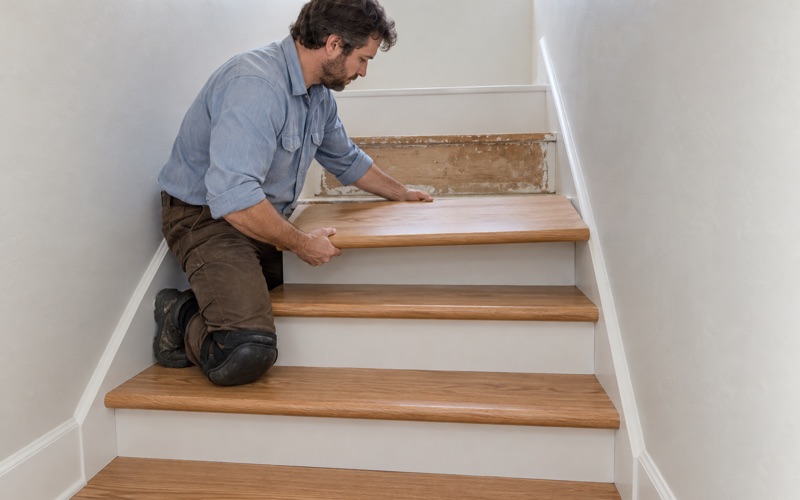
Transitions matter more in compact units, where hardwood meets tile at a T-molding or a reducer every few feet. Stairs in townhomes get their own quote by tread and riser, with stair nosing or a bullnose tread matched to the new floor.
Olinda Village, Carbon Canyon and Everyday Wear
Smoke, ash and fire season in the hills
The northeastern edge of Brea runs into Carbon Canyon, and fire has reached it. Orange County Fire Authority’s after-action report on the 2008 Freeway Complex Fire mapped eight homes destroyed or damaged in Olinda Village. In April 2026, the Carbon Fire burned 205 acres near Carbon Canyon Road and Olinda Road, and evacuation warnings for Olinda Village and nearby areas were lifted the next day.
Even a home left standing can carry smoke and ash residue into a finish and between boards. We document that residue with photographs before cleaning, screening or refinishing, so an insurance claim reflects the actual condition of the floor instead of a description written after the evidence is gone.
Dry spells and seasonal movement
Brea falls in the National Weather Service forecast zone for inland Orange County, handled by the San Diego office. Wood responds to swings between humid months and dry spells, opening small board gaps when the air is dry and tightening again when moisture returns.
A little seasonal gapping is normal, and we explain that before a new floor goes down rather than after. Crowning or cupping that persists is different and points to a moisture source, which we trace with readings before any sanding is scheduled.
Termites and hidden damage under older boards
Older houses anywhere in town can hide drywood termite activity. Kick-out holes along a baseboard, piles of termite frass or boards that sound hollow underfoot are signs we stop and point out before replacing anything.
When we see them, we refer you to a pest control company, and we come back for the board replacement or weave-in repair once the treatment is done. Putting new wood over an active colony only feeds the next round of damage.
- 20+ Years of Wood Floor Work
- Free In-Home Estimates
- Dust-Contained Sanding