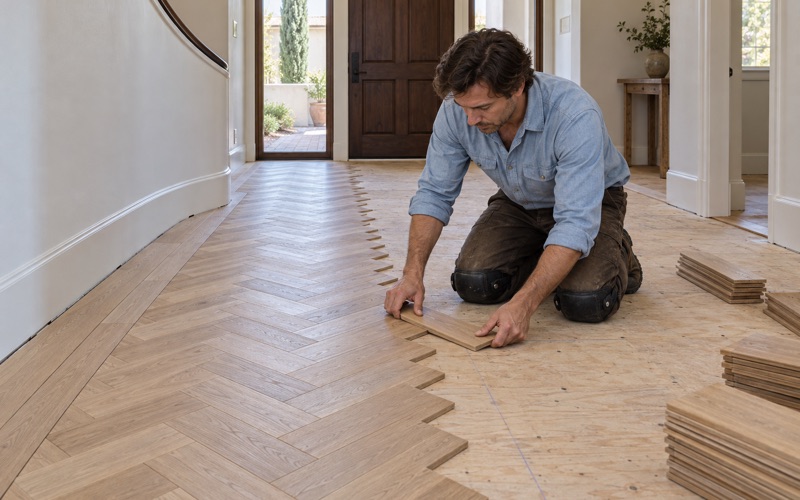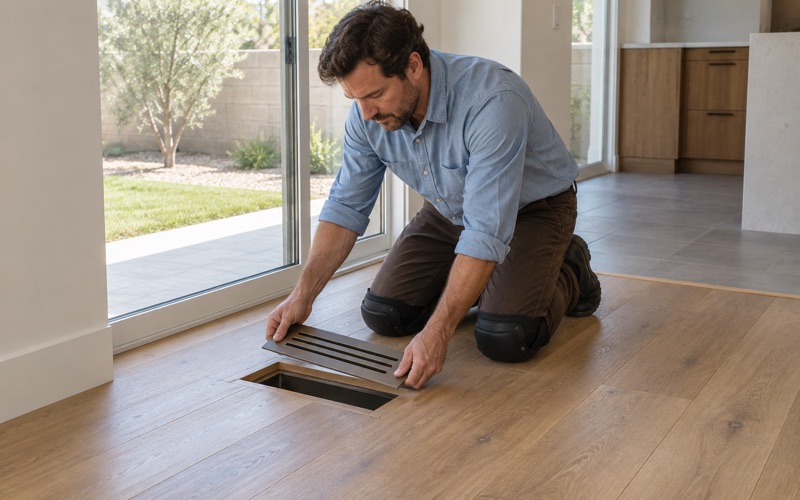
Diamond Bar Wood Flooring brings more than 20 years of wood-flooring work to Charter Oak, from sanding and refinishing solid hardwood to replacing damaged boards and installing engineered planks. We work in detached houses, apartments, condos and resident-owned mobile homes, and each of those asks something different of the floor and of the people living on it.
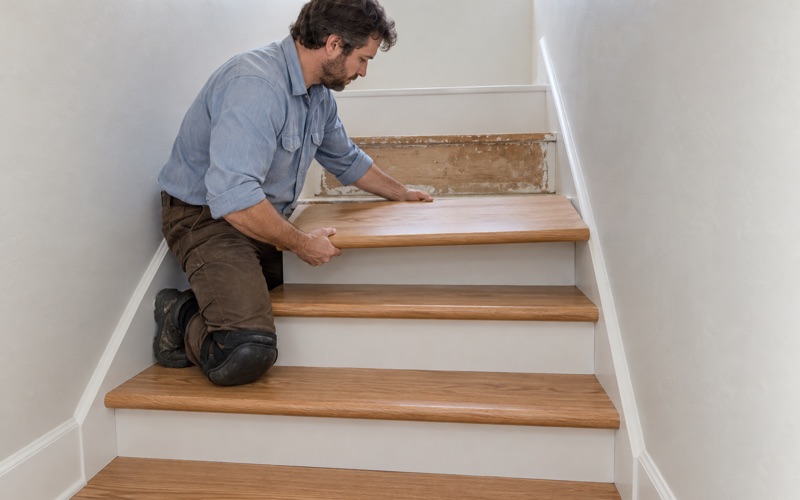
Before we quote a refinish, we find out when the home was built. When a floor is engineered, we measure its wear layer rather than guessing whether it can take another sanding. Stairs get their own line on the estimate, priced by the tread and the riser, so a staircase never hides inside a square-foot figure.
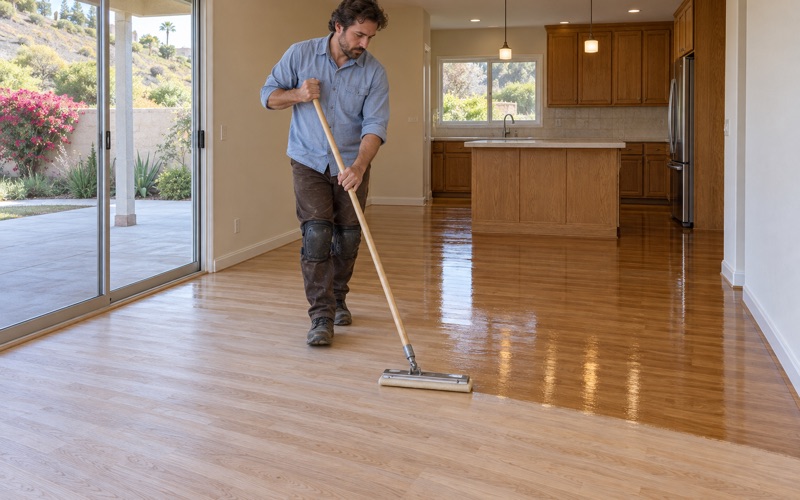
Most of our clients stay in the home while the work happens. A dust containment system with HEPA dust extraction and a room-by-room sequence keep part of the house usable at all times. Every refinish ends with a written cure schedule that says when to walk on the floor, when furniture can return and when rugs can go back down.
Floor Work Where the County Is the Local Government
No City Hall in Charter Oak
Charter Oak is an unincorporated community and census-designated place in the San Gabriel Valley of Los Angeles County, about 26 miles east of downtown Los Angeles. It has no municipal government, so the services a city would normally provide come from the County instead. That shapes a flooring project in a few concrete ways, starting with who answers building questions.
The community shares ZIP 91724 with the City of Covina, and a mailing address that reads Covina makes it easy to assume the wrong authority. A Charter Oak property is still unincorporated County territory. We confirm which side of that line a home sits on before any paperwork conversation begins.
Building Questions Go to County Public Works
In unincorporated areas, Los Angeles County Public Works, Building & Safety issues permits and offers building services through district offices. What a particular floor job needs from that department depends on its scope. We raise the question during the estimate rather than answering it from habit.
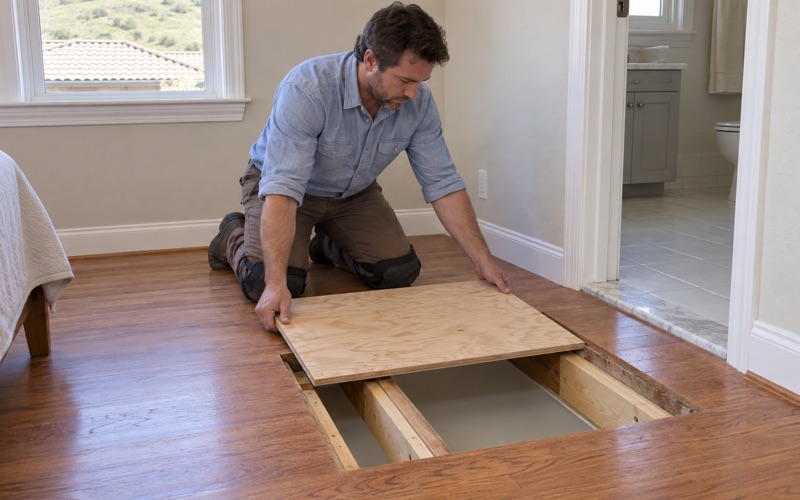
The scope question matters most when a project reaches below the floor surface, such as repairing floor joists or sistering a joist under a soft spot. We describe what we found under the boards in plain terms, with photos, so the owner can take accurate information to Public Works.
Air Rules and Build Dates Shape the Finish
Charter Oak sits in the South Coast Air Quality Management District, and SCAQMD Rule 1113 sets the VOC limit for wood coatings applied or stored on a job site. We choose waterborne polyurethane, oil-modified polyurethane or hardwax oil only from products that fit that limit. The sheen level is then picked with the owner, since matte and satin wear differently in busy rooms.
Build dates matter just as much. Of Charter Oak’s 3,170 housing units, 73.2 percent were built before 1980, so we confirm the year before the drum sander or edger comes out. On any home built before 1978, we follow lead-safe work practices from setup through cleanup.
Looking for wood-flooring closer to San Dimas? See Wood-Flooring Services in San Dimas.
Apartments and Condos Along the Arrow Highway Corridor
A Community With a Large Apartment Share
Apartments make up a bigger part of Charter Oak than a drive past its houses suggests. Census estimates put 843 of the 3,170 units, or 26.6 percent, in buildings of five or more units, and 393 of those sit in complexes of fifty or more. Arrow Highway is the community’s primary commercial corridor, and the Charter Oak Library sits in a strip mall along it.
The County’s East San Gabriel Valley Area Plan describes the multifamily housing here as car-oriented and notes that complexes are sometimes gated. For us that means planning access before the first day. We work out where the van parks, how materials reach an upper unit and when sanding equipment can run without disturbing neighbors.
Renters Live Mostly in Larger Buildings
Renter households make up 40.9 percent of occupied homes in Charter Oak, and 720 of those 1,259 households, or 57.2 percent, live in buildings of five or more units. When a floor in one of these units needs work, the decision usually belongs to the owner or manager. We coordinate with them while keeping the tenant’s schedule in mind.
Owners live in the larger buildings too, including 62 owner households in fifty-plus-unit complexes. Whoever holds the keys, we plan the job so the unit is out of service for as short a stretch as the finish allows.
Association Rules Before Anything Is Ordered
Condos and townhomes often fall under an association governed by the Davis-Stirling Common Interest Development Act, and many associations route floor changes through an architectural review committee. We check the association and building rules before any flooring is ordered. A plank that arrives and then fails a rule costs money and weeks.
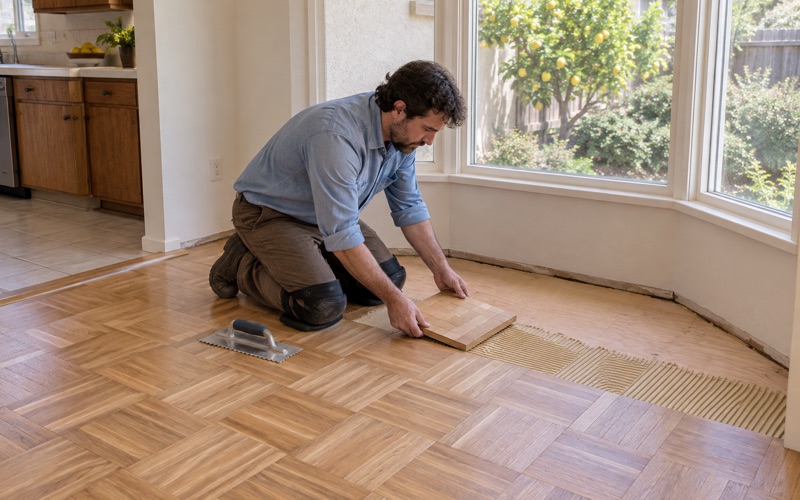
Those rules frequently address what goes under a floor on upper stories. Where a sound-rated underlayment is required, we match the product to the written requirement and choose between floating installation and glue-down installation to suit it. We leave the sound rating itself to the association’s documents rather than quoting one.
Postwar Houses and Resident-Owned Mobile Homes
Houses From the Postwar Buildout
Charter Oak was mostly settled by citrus farmers in the late nineteenth century, and a housing boom after World War II shaped the community that exists today. The 1950s are the largest single building decade, at 1,022 units or 32.2 percent. Construction then continued steadily through the 1960s, 1970s and 1980s.
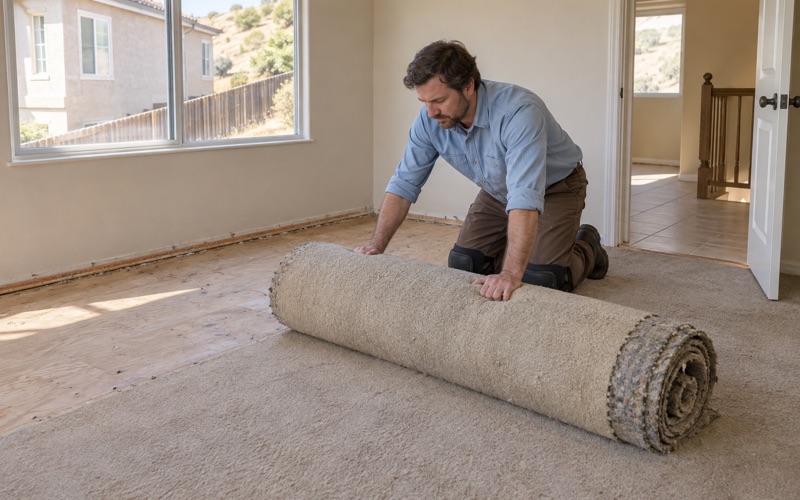
Detached houses account for 1,650 units, and 1,241 of them are owner-occupied. When solid hardwood such as red oak or white oak turns up under old carpet, we check for cupping, crowning, buckling and board gapping first. That inspection decides whether a full grit sequence or a lighter screen and recoat is the right call.
Mobile Homes Their Residents Own
Charter Oak has 300 mobile homes, 9.5 percent of its housing units, and nearly all of them are lived in by their owners. Census figures count 290 owner households in mobile homes, which is 15.9 percent of every owner household in the community. That is a large group of homeowners whose floors need a different approach.
Flooring work in a manufactured home starts with what is underfoot. We look at what the subfloor is made of and how it is supported before recommending a product, and a lighter engineered hardwood on a floating installation can suit it better than a heavy nail-down solid floor. Soft spots near a kitchen or bathroom get readings from a pin moisture meter before any board is replaced.
Engineered Floors and Wear Layers
Engineered hardwood can look exactly like solid wood from above, which is why we measure the wear layer before promising a refinish. A thin layer may only accept a screen and recoat. An honest answer at the estimate is better than a sanded-through veneer.
Prefinished boards with an aluminum oxide prefinish raise a similar question, because they do not always take a new site finish evenly. Where a refinish is not realistic, we lay out the replacement options and what each would cost instead.
Rentals Under County Rent Rules
What the County Ordinances Cover
Because Charter Oak is unincorporated, the Los Angeles County Rent Stabilization and Tenant Protections Ordinance applies here rather than a city ordinance. Its rent ceilings cover unincorporated buildings with two or more units and a certificate of occupancy on or before February 1, 1995. The ordinance also requires just cause for eviction.
Mobilehome spaces in unincorporated areas fall under a separate County ordinance that limits space rent increases. Whether a specific building or space is covered depends on details such as unit count and certificate date. We leave that determination to the owner and the County rather than guessing.
Turnovers, Repairs and Security Deposits
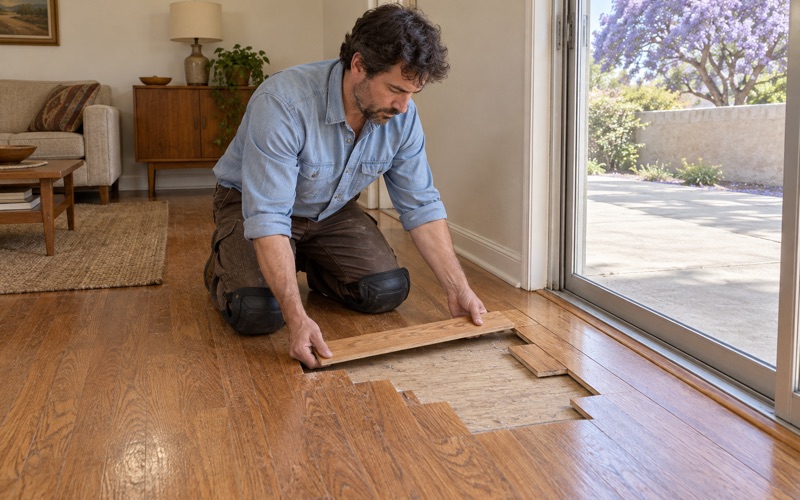
For landlords, floor work often lands between tenants. A screen and recoat can refresh a worn finish quickly, while deep scratches, pet stains or cupped boards call for board replacement or a weave-in repair that blends new wood into the existing pattern.
Owners and tenants sometimes disagree about whether floor damage is normal wear, which is where Civil Code 1950.5 security deposit questions come in. We photograph and describe the condition we find so the owner has a clear record. What the deposit should cover is not our call to make.
Leaks, Termites and the Record an Adjuster Needs
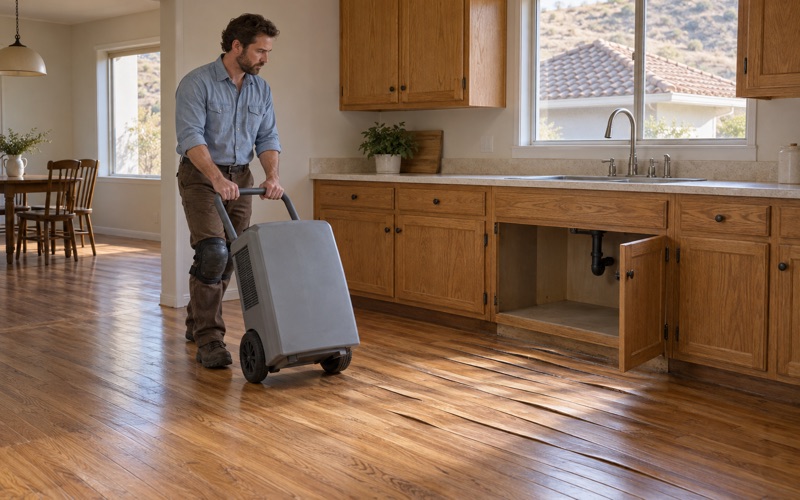
In a multi-unit building, a leak from the unit above or a slab leak below can cup boards across more than one room. We find the source and take moisture readings before replacing anything. Water, smoke and ash damage is photographed and documented so an insurance adjuster sees the same evidence we do.
Damaged boards sometimes reveal a different problem. When we see termite frass, kick-out holes or other signs of drywood termites, we stop and refer the owner to a pest control company before new boards go in, since treatment or tent fumigation has to come first.
- 20+ Years of Wood Floor Work
- Free In-Home Estimates
- Dust-Contained Sanding