Diamond Bar Wood Flooring has handled wood flooring in Chino Hills for more than 20 years, and most of that work lands in houses from the same two decades of building. We sand and refinish worn oak, replace boards that have cupped or buckled, install new solid and engineered hardwood, and rebuild staircases one tread at a time. Every job starts with the same question: what is this floor, and what can it still take?
That question has practical answers. We measure the wear layer on engineered planks before we tell anyone a sander can touch them, we take moisture readings before any board comes out, and we confirm the year the house was built before sanding begins. Those checks decide whether a floor gets a screen and recoat, a full sand, a board replacement or a new installation.
Because most houses are lived in while we work, we plan the job room by room behind a dust containment system with HEPA dust extraction, so the kitchen stays usable while the living room is under finish. When the last coat is down, you get a written cure schedule telling you when to walk on the floor, when furniture goes back and when rugs can return.
Floors in Chino Hills’ 1980s and 1990s Tract Houses
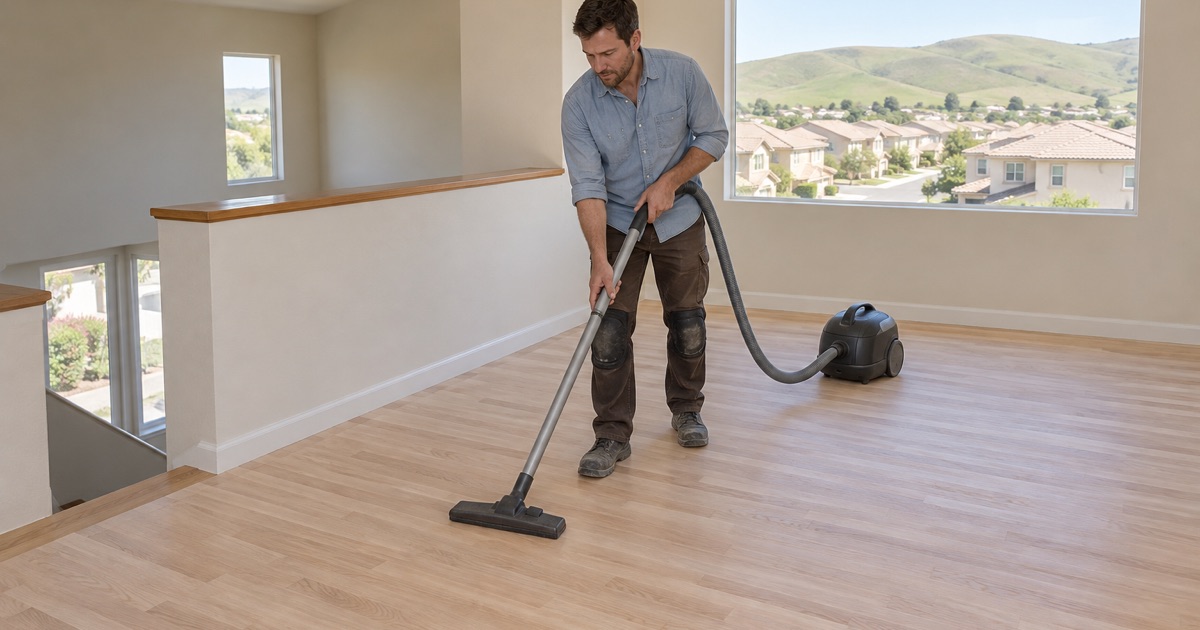
Chino Hills grew quickly through the 1980s and early 1990s, and the city incorporated on December 1, 1991, after much of that building had filled in. Census figures show the result: 60.3 percent of the city’s housing units were built between 1980 and 1999, with 31.9 percent from the 1980s alone. That is the floor we see most often, in master-planned neighborhoods such as Gordon Ranch, Rolling Ridge and Butterfield Ranch.
What a 35-Year-Old Floor Usually Needs
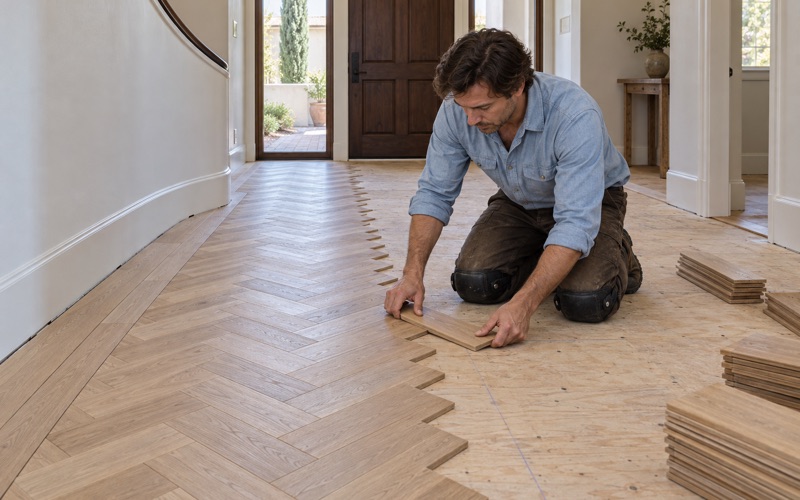
The floors we meet in these houses range from site-finished red oak strip to prefinished planks from a later remodel, and sometimes both in one house where an addition met the original rooms. Each tells us something different about the subfloor underneath and how the boards were fastened, whether with flooring cleats, flooring staples or adhesive.
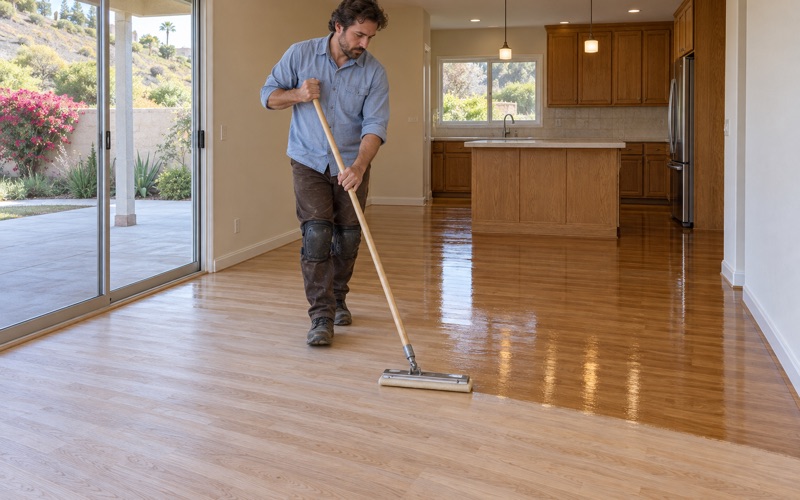
A full sand runs through a grit sequence on a drum sander and edger, followed by a multi-head orbital sander to flatten the scratch pattern before stain. On a floor that is only dull, with no bare wood showing through the finish, a screen and recoat restores the sheen with far less disruption to the household.
Cupping, Gapping and What Sits Underneath
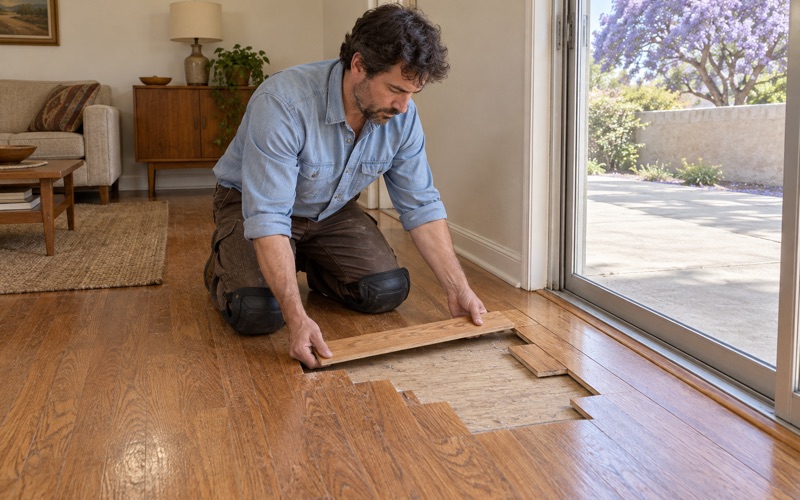
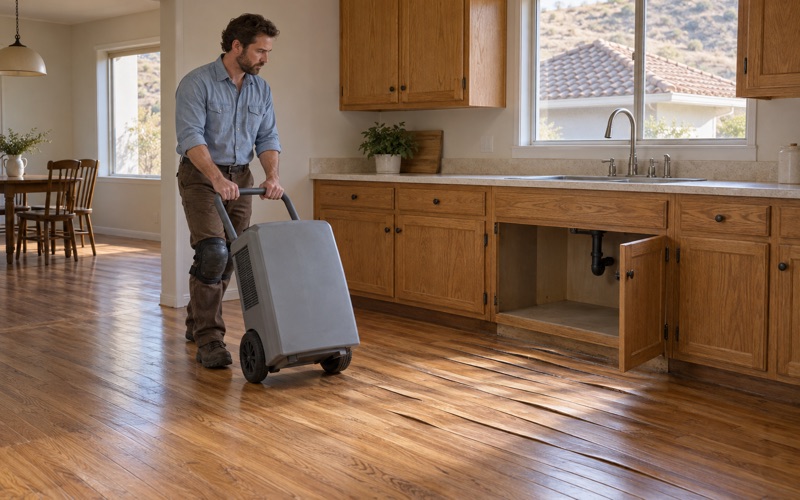
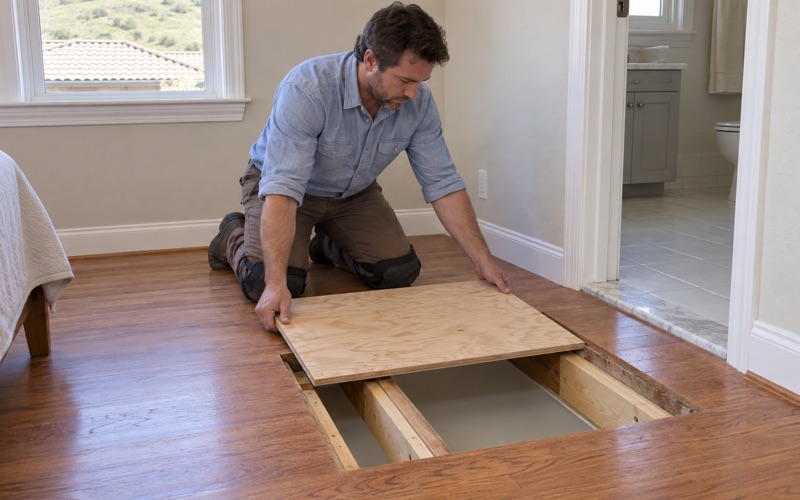
When boards cup, crown or pull apart into board gapping, the finish is not the problem. We take pin moisture meter readings across the room and look for the source, whether that is a supply line, a dishwasher, sprinklers against an exterior wall or a slab leak. Replacing boards before the water is found just means replacing them twice.
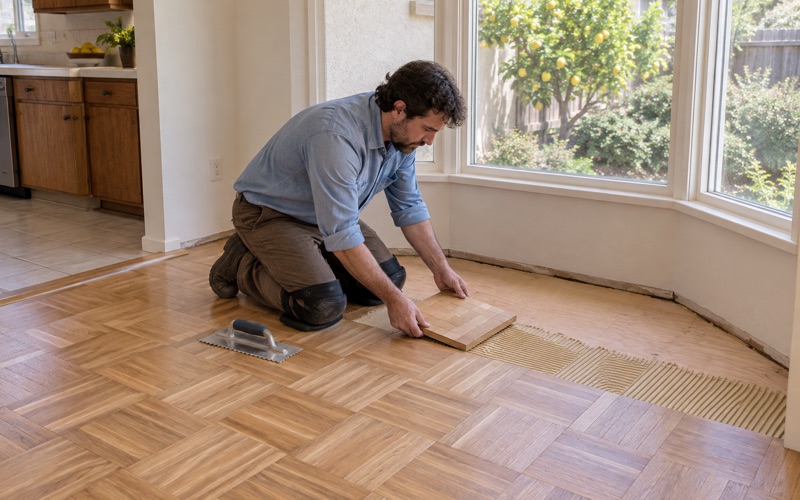
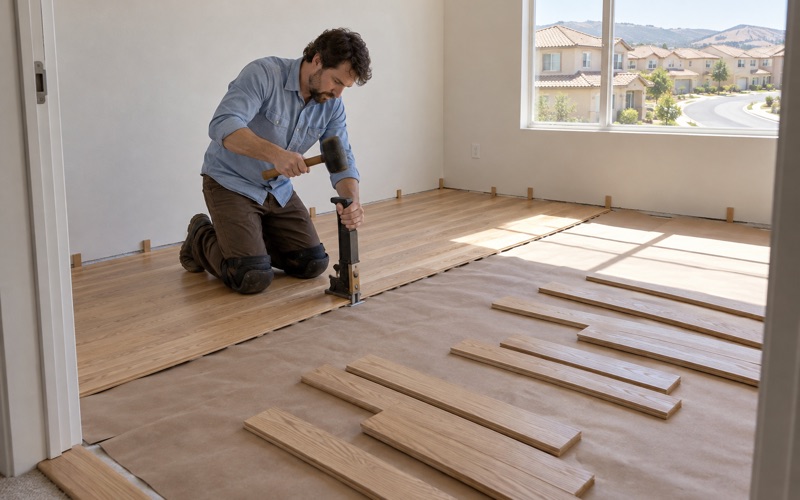
Where a floor sits on a plywood subfloor or OSB subfloor, we check for soft spots and loose fastening before new wood goes down. Over concrete, we run an in-situ relative humidity test following ASTM F2170 before any glue-down installation, and we add a vapor retarder where the readings call for one.
Detached Houses and the Year-Built Check
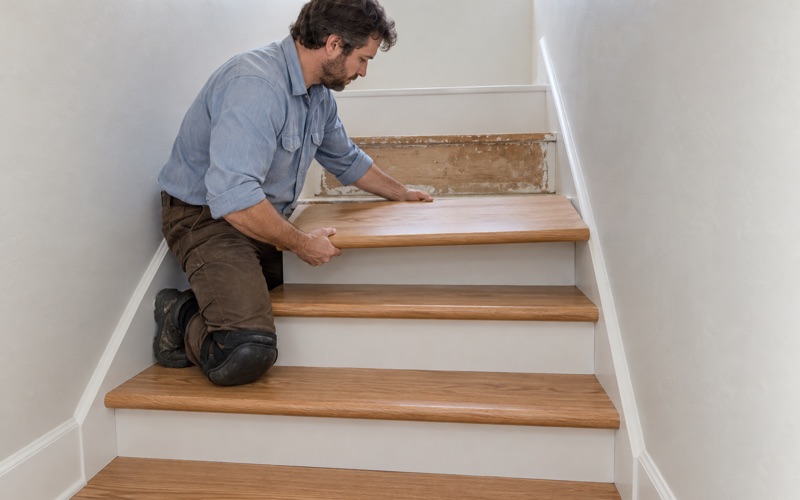
Owners here overwhelmingly live in single-family homes, with 89.5 percent of owner households in detached houses. That makes most of our Chino Hills jobs whole-house decisions, with hallways, bedrooms and staircases that have to match once the work is done. We quote stairs by the tread and riser rather than folding them into a square-foot price, because a staircase is its own job.
A house from the 1980s is past the 1978 line for lead paint, but not every home in the city is that young. About 17.2 percent of units date from before 1980, so we confirm the build year on every job and follow lead-safe work practices under the EPA Lead Renovation, Repair and Painting Rule whenever a home predates 1978.
Looking for wood-flooring closer to Valinda? See Wood-Flooring Services in Valinda.
Newer Homes and the Los Serranos Bungalows
Not every house fits the tract-home pattern. Units built in 2000 or later make up 22.5 percent of the city’s housing, and at the other end of the scale the Los Serranos neighborhood carries a history older than the city itself.
Engineered Floors from the 2000s and 2010s
Houses from these decades are far more likely to have engineered hardwood from the start, often wide plank with an aluminum oxide prefinish. Those floors can look worn well before they are worn out, but whether they can be sanded depends entirely on how much wood sits above the core.
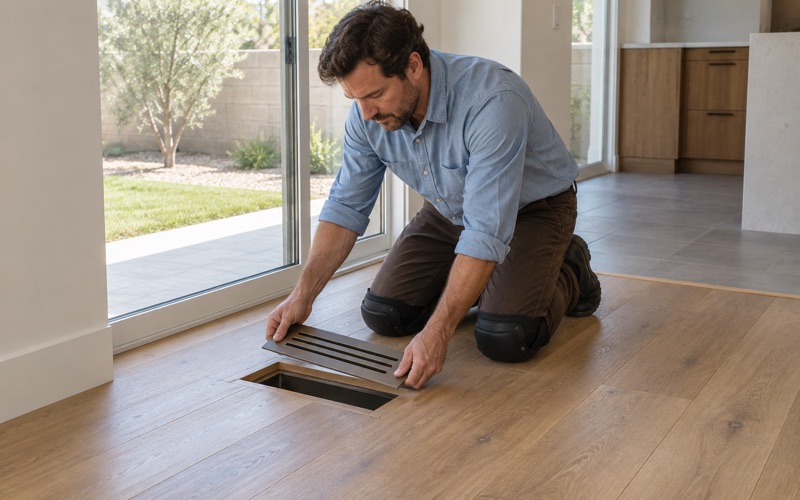
We pull a floor vent or a threshold and measure the wear layer before we promise a refinish. A thick wear layer can take a light sand and new finish. A thin one cannot, and then the choice is board replacement where the damage is limited or a new floor where it is not.
Matching Wood Across Open Floor Plans
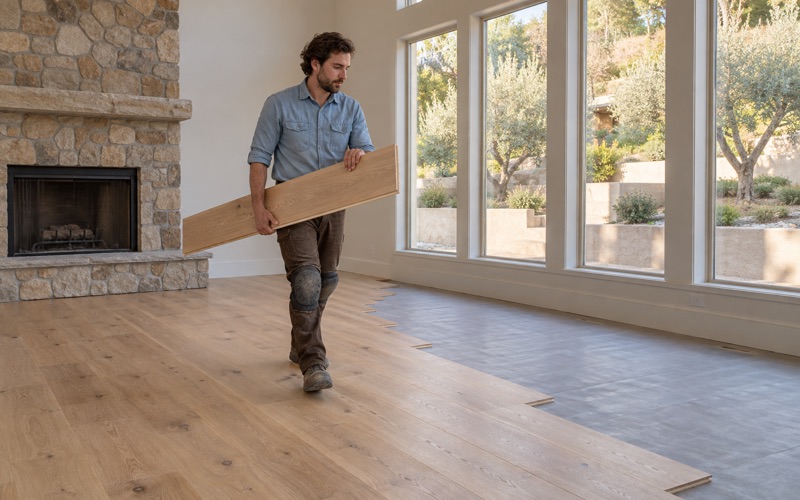
Open plans put wood, tile and luxury vinyl plank side by side, so transitions matter. We fit T-molding, reducers and stair nosing to the actual heights involved rather than forcing a stock profile. When wood is being extended into another room, we match species, select grade or character grade, and plain-sawn or rift-sawn boards before anything is ordered.
Hickory and maple sit higher on the Janka hardness rating than red oak or white oak, which helps against dog claws and dragged barstools. Hardness is only part of the choice, though. Maple takes stain unevenly, and hickory’s color variation reads very differently across a large open room than it does on a sample board.
Los Serranos and Its Narrow Lots
Los Serranos grew from a 1920s resort. The Los Serranos Golf and Country Club opened on April 25, 1925, members could buy small lots to build cabanas, and the neighborhood’s narrow golf course bungalows now sit on lots averaging 30 feet wide. It was counted as its own Census-designated place in 1990, then became part of Chino Hills at incorporation.
Those narrow houses mean tight staging, since equipment, boards and finish all move through a small footprint. We keep the containment close and the sequence strict. In older or much-remodeled homes we also watch for drywood termites, such as termite frass and kick-out holes, and refer anything we find to a licensed pest company before boards are replaced.
Planning Floor Work in a Very High Fire Hazard City
Chino Hills sits against a great deal of open hillside. In a March 2025 release, the city said the updated CAL FIRE maps place over 24,000 acres of Chino Hills in one of three hazard zones. Just over 20,000 of those acres are rated very high, including more than 7,300 acres in Chino Hills State Park and 1,750 acres in Tres Hermanos Ranch.
What the Designation Does and Does Not Change
The designation matters for defensible space, which property owners in a very high zone must maintain under the Government Code and Chino Valley Fire District Ordinance 2022-01. Sellers in a high or very high zone also have to disclose it. Nothing we have read ties the zone to interior floors, so we do not treat it as a reason to pick one wood or finish over another.
Where it can affect a floor job is timing. If you are preparing to sell, the refinish belongs early in the plan so the floor has cured before photographs and showings. Our written cure schedule turns that date into something you can book around.
Evacuations and a Floor Under Finish
The October 2020 Blue Ridge Fire showed how quickly the hillside can empty a neighborhood. Chino Valley Fire District officials said 19,730 people in 5,958 homes were evacuated, and city officials said no homes in Chino Hills were damaged. For a floor project, the lesson is that a household may need to leave on short notice.
We plan around that when the National Weather Service fire weather zone covering the city, CAZ248, is under watch. A room-by-room sequence keeps a finished, walkable path to the door, and we avoid coating hallways and exits on the same day. If an evacuation order comes mid-job, the floor can wait while everyone leaves safely.
Finishes, Air Rules and Dry Weather
Chino Hills is inside the South Coast Air Quality Management District, so the SCAQMD Rule 1113 VOC limit for wood coatings applies to every finish we apply or store at your house. We choose waterborne polyurethane, hardwax oil or other coatings that fit that limit, and we settle the sheen level with you before the first coat.
The city falls in the Inland Empire valleys forecast zone, CAZ048, where dry spells pull moisture out of wood quickly. New boards acclimate inside the house before installation, and we read moisture in both the flooring and the subfloor so the two are close enough to meet National Wood Flooring Association installation guidelines.
Refinishing a Rented House Between Tenants
Renters in Chino Hills often live in houses rather than apartments, since 42.5 percent of renter households rent a detached home. For the owners of those properties, the floor is usually refinished in the short window between one lease and the next.
Working to a Turnover Date
A vacant house is the simplest floor we sand, since nothing needs moving and no family is living around the containment. We schedule the full sand, stain, sanding sealer and topcoats back to back, then hand you the cure schedule so cleaners, painters and the next tenant arrive in the right order.
When the floor is sound but dull, a screen and recoat can fit a much shorter gap between leases. We tell you which one the floor needs before you book, so a tight turnover is never built around the wrong job.
Documenting Condition and Water Damage
Photographs matter at turnover. We record the floor’s condition before we start, including pet damage, water staining and gouges, which gives you a clear record when a conversation about the security deposit under Civil Code 1950.5 comes up. Deciding what counts as ordinary wear stays with you and your own advisers.
If a leak caused the damage, we find its source and take moisture readings before a single board is replaced. Everything is photographed and documented along the way, so your insurance adjuster sees exactly what we saw.
Choosing Durable Wood for a Rental
Rentals take harder use than most owner-occupied rooms. For replacements we often suggest a harder species, or an engineered hardwood with a generous wear layer so the floor can be refinished again at a later turnover. We check engineered products for labeling that shows they meet CARB Phase 2 and TSCA Title VI formaldehyde limits.
Satin and matte sheens hide scratches between tenants better than gloss does. A well-maintained waterborne finish can usually be screened and recoated rather than sanded to bare wood, which keeps the next turnover a shorter, quieter job for everyone.
- 20+ Years of Wood Floor Work
- Free In-Home Estimates
- Dust-Contained Sanding