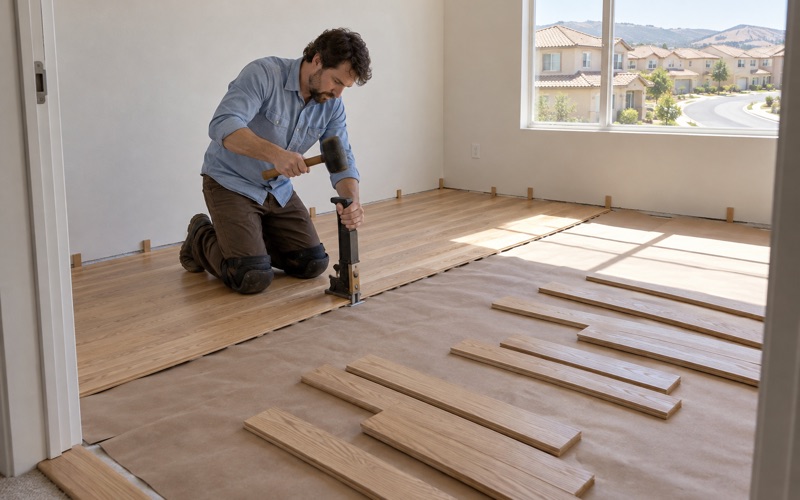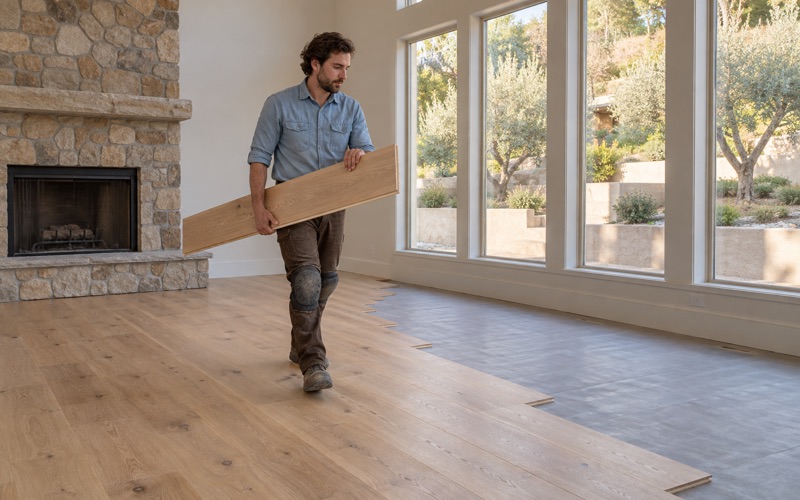
Diamond Bar Wood Flooring has spent more than 20 years on wood flooring in Citrus and across our service area, sanding, repairing and installing floors in houses people actually live in. Before a drum sander touches a board, we confirm the year the house was built, because that one date shapes how we contain dust, which finish we reach for and what the old floor may be hiding.
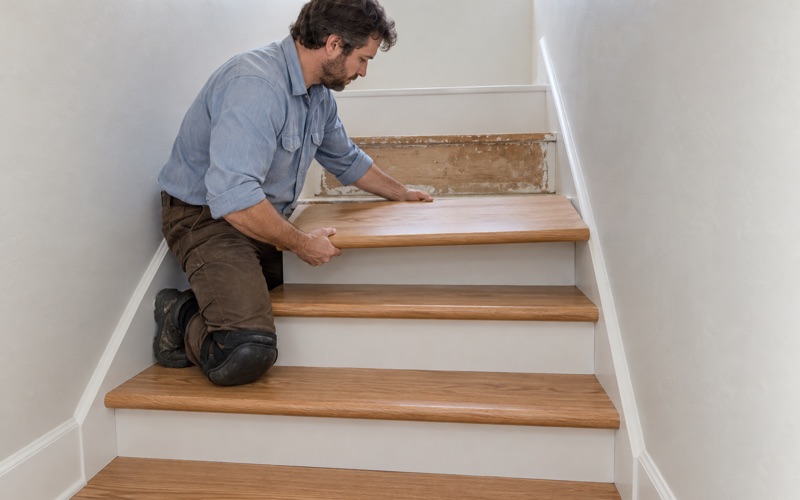
Most jobs start with a walk-through and a few readings rather than a flat price per square foot. We measure an engineered floor’s wear layer before saying it can be sanded, take pin moisture meter readings where boards have cupped or crowned, and look closely at any board gapping along exterior walls. Stairs get their own line on the quote, priced tread by tread and riser by riser.
Families usually stay home while we work. A dust containment system with HEPA dust extraction, plus a room-by-room sequence, keeps the kitchen and at least one bedroom usable on most days. When the last coat goes down, you get a written cure schedule that spells out when socks are fine, when furniture can come back and when rugs can return.
Floors in Citrus’s 1950s Houses
One Decade Built Most of the Neighborhood
Citrus is an unusual place to work because so much of it went up at once. Census estimates from the 2024 American Community Survey place 1,789 of the community’s 2,740 housing units, or 65.3 percent, in the 1950-1959 build bracket. Only 1.6 percent of units were built in 2000 or later, so a newer house is the exception on almost any street.
That concentration matters for floor work. Houses framed in the same decade tend to share construction habits, and they have had roughly the same seventy years to settle, get remodeled and collect layers of flooring. We still treat each house on its own terms, but we arrive ready for the questions a 1950s house tends to raise.
Finding Out What Is Under the Carpet
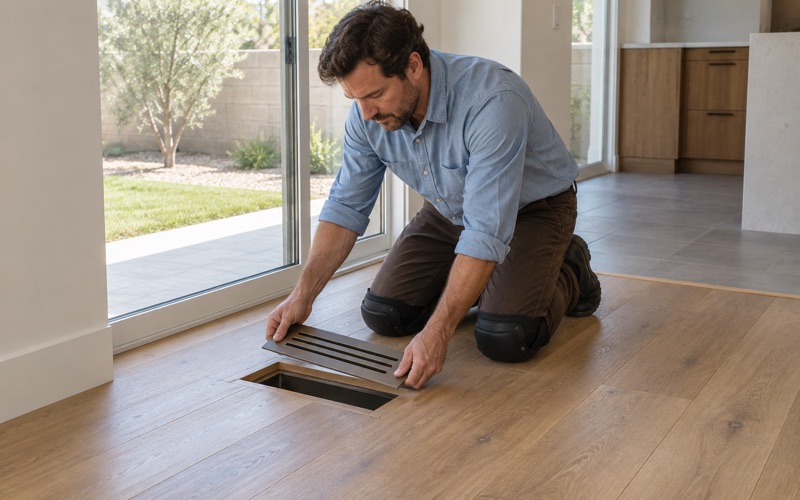
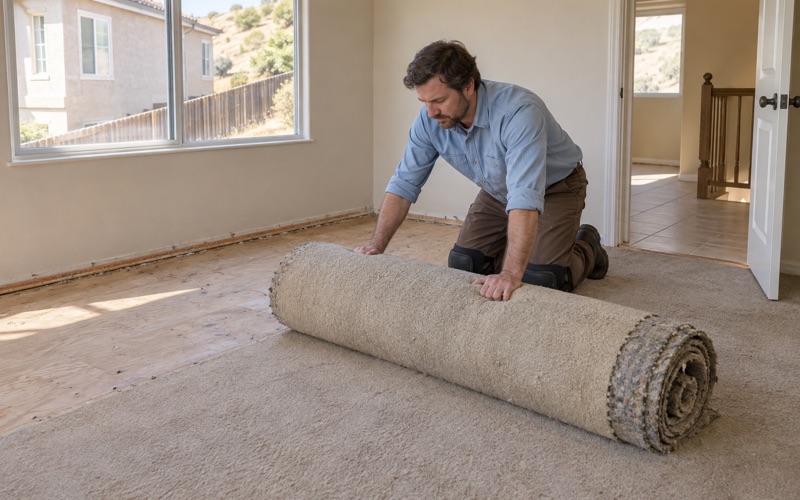
We never assume what a Citrus house has underfoot. Pulling back a corner of carpet can turn up strip hardwood, sheet goods, tile or bare subfloor, and a remodel from any later decade may have changed a single room. Our first visit checks at a vent or threshold where we can, so the quote describes the floor you have instead of the floor we hoped for.
Older adhesives deserve a careful look too. Where a previous floor was glued down, black mastic or cutback adhesive can show up on the subfloor, and we stop to identify it before any scraping or sanding begins. That pause keeps a simple removal from turning into a dust problem across the whole house.
Lead-Safe Work in Older Homes
With 92.0 percent of Citrus housing units built before 1980, we plan most jobs here expecting the EPA Lead Renovation, Repair and Painting Rule may come into play. The census bracket ends at 1980 rather than 1978, so not every older house is covered, which is exactly why the build year gets confirmed first.
On a house built before 1978, painted baseboards, door casings and shoe molding are where lead-safe work practices matter most during a refinish. We keep plastic sheeting sealed at doorways, run HEPA dust extraction on the sanders and edger, and clean thoroughly before any sanding sealer or finish coat goes down.
Looking for wood-flooring closer to Hacienda Heights? See Wood-Flooring in Hacienda Heights.
Renting Out or Moving Into a Whole Citrus House
Detached Houses Dominate, Even for Renters
Citrus is a neighborhood of single houses. Of its 2,740 units, 2,426, or 88.5 percent, are one-unit detached homes, and 71.4 percent of occupied units are lived in by their owners. Most of our calls here come from someone responsible for an entire house rather than a unit inside a larger building.
Renters in Citrus usually live in a whole house as well. The census count shows 563 of 784 renter households, or 71.8 percent, in detached houses. For a floor contractor, a rental here looks much like an owner’s home: bedrooms, a hallway, a living room and years of foot traffic worn into the same paths.
Turning a Rental Between Tenants
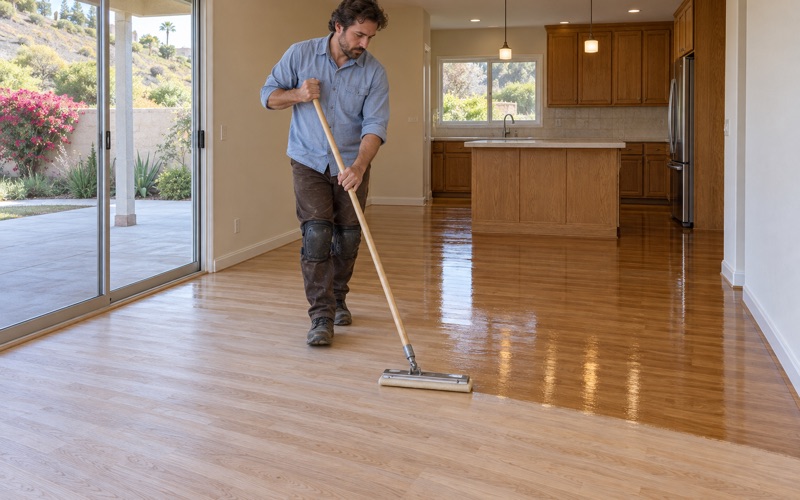
Owners who lease out a house often call us in the gap between tenants. A screen and recoat can refresh a finish that is dull but intact, while deep scratches, pet stains and graying boards usually call for a full sand through a proper grit sequence. We tell you which one the floor needs after looking at it, not before.
Timing is the hard part of any turnover. Our written cure schedule lets a landlord plan cleaning, a walk-through and a move-in date around the finish instead of guessing. Dated photos of the floor before and after the work also give the owner a reference to keep with the property file.
Rent Rules in Unincorporated Los Angeles County
Rental houses in Citrus fall under county rules rather than a city’s. The Los Angeles County Rent Stabilization and Tenant Protection Ordinance, administered by the Department of Consumer and Business Affairs, applies in unincorporated areas to qualifying rentals with a certificate of occupancy issued on or before February 1, 1995, and it can include single-family homes unless an exemption applies.
We are not the right people to say whether a particular address is covered, and the county rent registry lets owners check by address or parcel number. What we can do is make floor work predictable for a tenant, with the rooms, dates and cure times written down well ahead of time.
Floor Work in Unincorporated Los Angeles County
A County Community Without a City Government
Citrus is an unincorporated community and census designated place in Los Angeles County, with no municipal government of its own. Many street addresses carry an Azusa or Covina mailing name, which is why locals often call the area unincorporated Azusa or unincorporated Covina, but a postal name does not place a house inside either city.
For homeowners, that means county agencies answer building questions. Los Angeles County Public Works, through Building & Safety, serves unincorporated areas and works under Title 26 of the County Code, its building code. The department directs people to its Service Locator to find which office handles a given project location.
When the Subfloor Needs More Than Boards
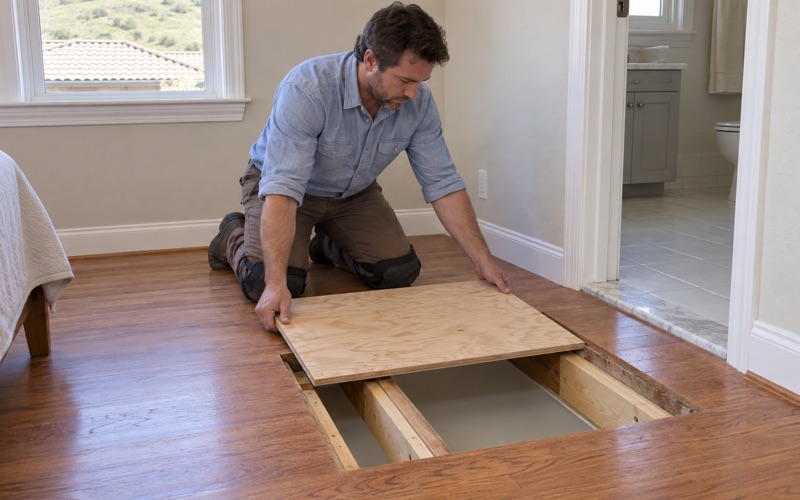
A floor that bounces, dips or squeaks along one line often points to something below the flooring itself. We check the subfloor, look at how the flooring cleats or flooring staples are holding, and note any floor joists that were notched or cracked during past plumbing or electrical work.
Framing repairs go beyond a cosmetic floor job, so we raise them with the owner before quoting. For work like a sistered joist or a new section of subfloor, we recommend confirming requirements with county Building & Safety before anything is scheduled. Signs of drywood termites, such as termite frass or kick-out holes, get referred to a licensed pest company before any boards are replaced.
Air Rules and Seismic Retrofits
Citrus sits within the South Coast Air Quality Management District, so the finishes we apply fit SCAQMD Rule 1113 and its VOC limit for wood coatings. In practice, most customers end up with a waterborne polyurethane, with hardwax oil as an option for some rooms, and we explain how each wears and how long each takes to cure.
Owners weighing an Earthquake Brace + Bolt retrofit should know the program’s 2025 list is based on ZIP codes, and both 91702 and 91722, which serve Citrus, appeared on it. Eligibility is worth confirming with the program directly. If a retrofit is already on the calendar, finishing floors after that work keeps dust off fresh coats.
Keeping One Generation of Floors Consistent
Matching Rooms Remodeled at Different Times
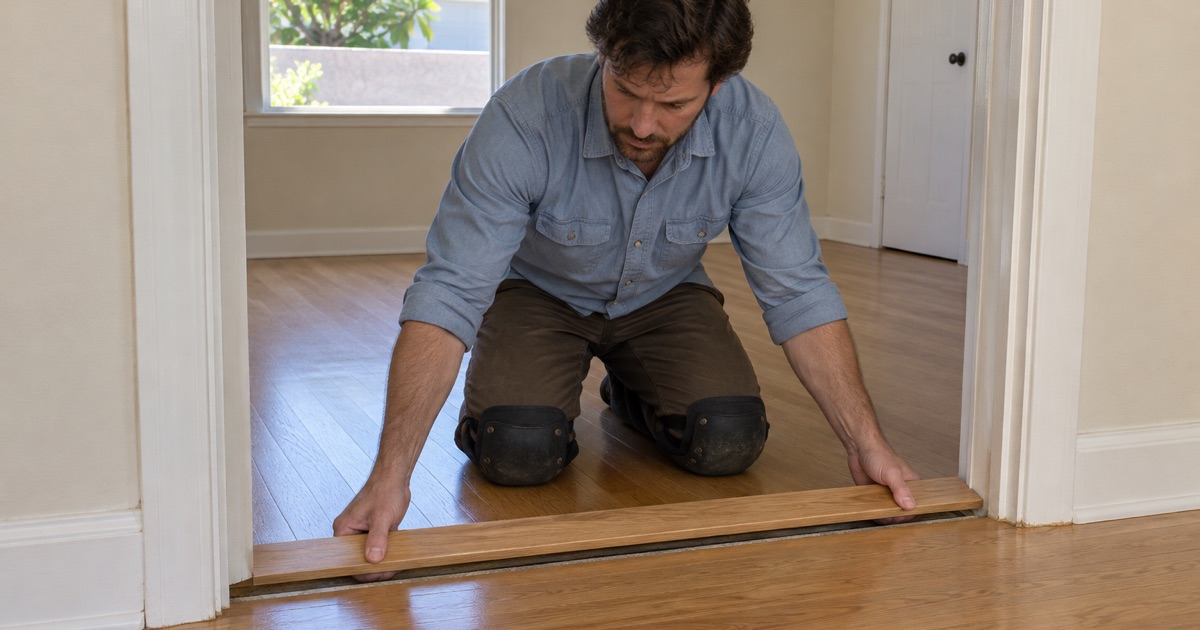
In a house lived in since the 1950s, rooms rarely stay in sync. A kitchen may have been redone in one decade and a bedroom in another, leaving red oak beside a different species, mismatched board widths or a T-molding where no transition was ever needed. We look at the whole floor plan before recommending a patch or a full replacement.
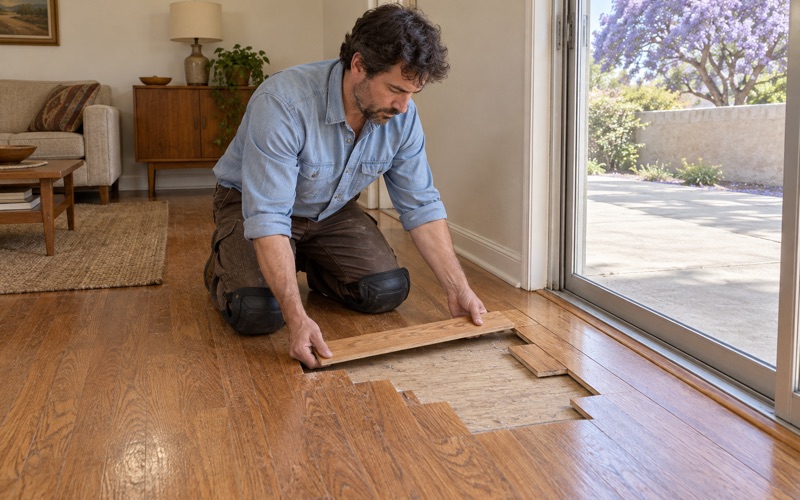
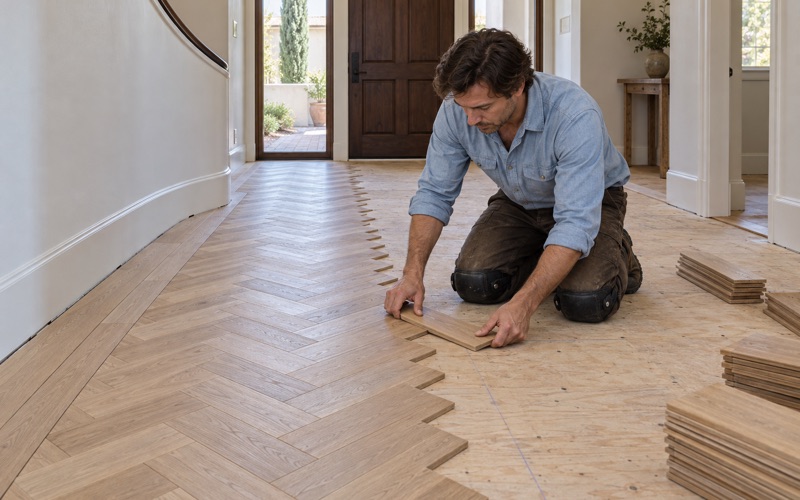
When the goal is one continuous look, a weave-in repair ties new boards into existing ones so the seams follow the established layout. We match species, plain-sawn or rift-sawn grain and board width as closely as supply allows, then sand old and new areas together so the stain and sheen level read as a single floor.
Choosing Species, Grade and Finish
For owners replacing flooring outright, the choice usually comes down to how the house gets used. White oak and red oak are forgiving and easy to refinish again later, hickory and maple rank higher on the Janka hardness rating, and character grade hides wear better than select grade. Solid hardwood can be sanded many times, while engineered hardwood depends on its wear layer.
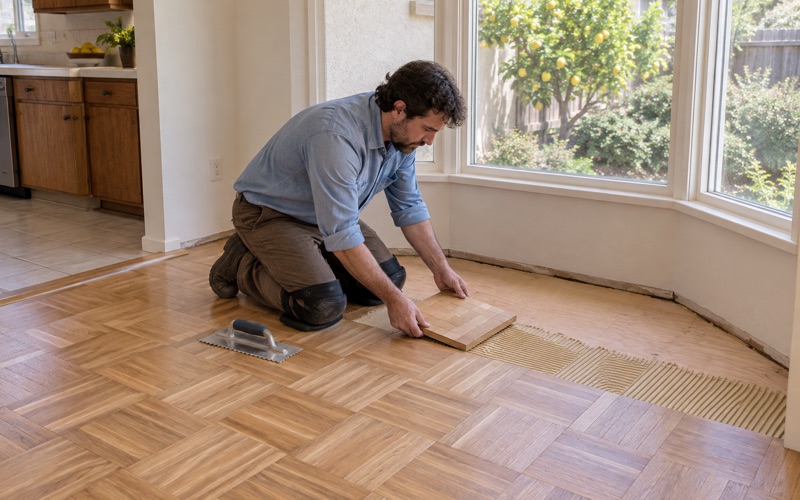
Finish is the other half of the decision. A site-finished floor lets us match stain across rooms and seal every seam, while a board with an aluminum oxide prefinish goes in faster and leaves the house torn up for less time. We lay out the tradeoffs with samples in your own light before anything is ordered.
Water Damage and Documentation
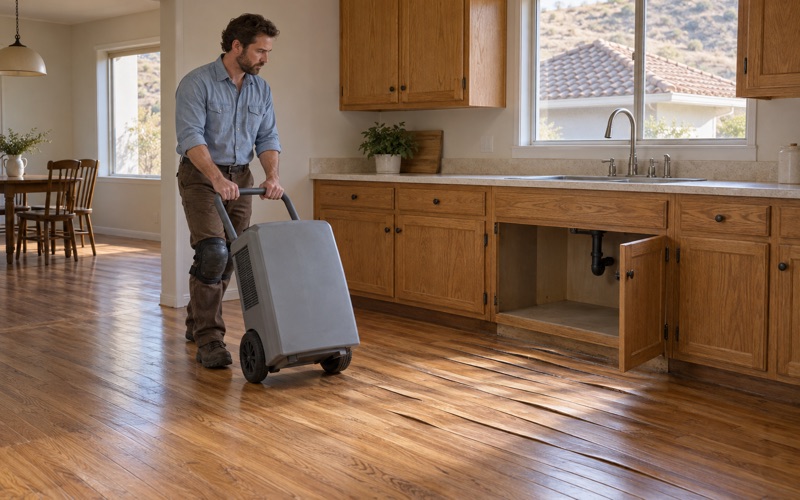
A water heater, a supply line or a leaking dishwasher can damage one room of hardwood long before anyone notices. When boards start cupping or buckling, we find the source first and take moisture readings across the area, because replacing wet boards over a leak that is still running only repeats the repair.
If an insurance claim is involved, we photograph and document water, smoke or ash damage so the adjuster sees the same conditions we do. Once the floor is dry and the cause is fixed, we replace the damaged boards, blend them into the surrounding floor and hand over the same written cure schedule every refinish gets.
- 20+ Years of Wood Floor Work
- Free In-Home Estimates
- Dust-Contained Sanding