Diamond Bar Wood Flooring handles wood-flooring in Hacienda Heights with more than 20 years of sanding, repairing and installing hardwood behind us. Most of the floors we are asked about here are original to houses built in the 1960s and 1970s, or are a later floor laid over the same subfloor since. Our first step on any visit stays the same: confirm the year the house was built, then decide what the floor can take.
That order matters because an old floor carries history a new one does not. A red oak strip floor that has been sanded three times has less wood above the tongue than it started with, and an engineered floor put down in a later remodel may have a wear layer too thin to sand at all. We measure before we promise anything.
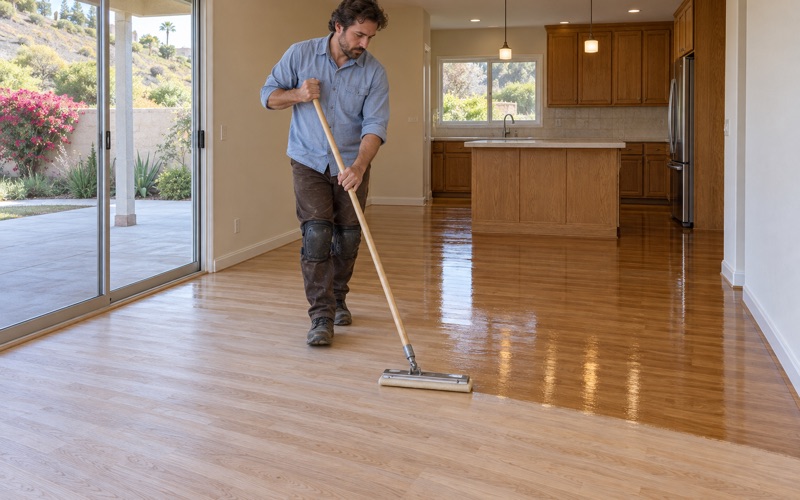
From there the work is ordinary craft done carefully. That means a grit sequence matched to the wood, a finish chosen for the South Coast AQMD limit on wood coatings, dust contained room by room so a family can stay home, and a written cure schedule left behind when we pack up.
Floors in Hacienda Heights’ 1960s and 1970s Houses
Census figures put the age of this housing stock in plain view. Of 17,283 housing units counted in the 2024 five-year American Community Survey, 5,258 were built in the 1960s and 4,696 in the 1970s, so 57.6 percent of the community went up across those two decades.
What the Original Floors Usually Are
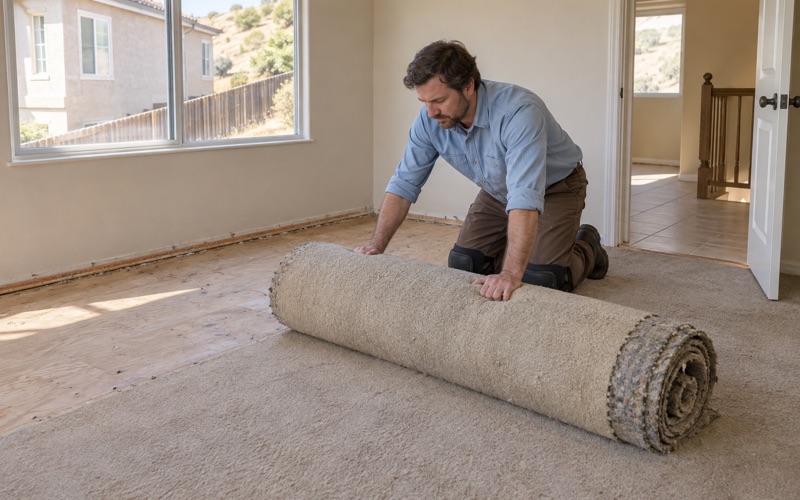
Houses from these decades commonly received oak strip flooring, often plain-sawn red oak in narrow boards, and many had it covered with wall-to-wall carpet within a few years. When we pull carpet back in a house of this age, we check for staple rows from the tack strip, pet stains that have gone black in the grain, and board gapping where the wood has dried out over time.
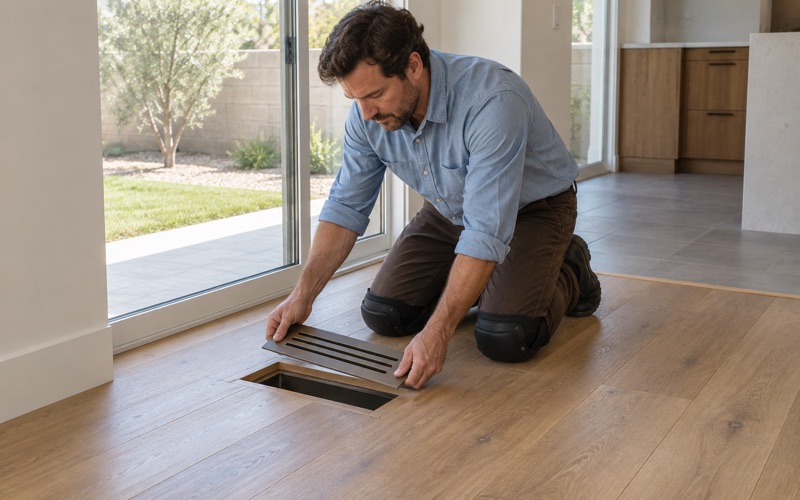
Not every house has wood under the carpet, and we say so before anyone budgets for a refinish. Where we do find solid hardwood, we check its thickness at a floor register or threshold to see how many sandings remain. A floor with enough wood left can usually be brought back rather than replaced.
How Many Sandings Are Left
Every full sanding removes wood, and a floor more than 50 years old may already have been through several. We read the exposed tongue edges and the nail heads for signs that a previous drum sander took the surface close to its limit. If the fasteners sit near the surface, a screen and recoat may be a better answer than another cut.
Engineered hardwood added in later remodels gets a different check. We measure the wear layer directly before quoting a sand and refinish, because a thin veneer can be sanded through in a single pass. When the wear layer will not support sanding, we talk through a recoat or board replacement instead.
Lead-Safe Work on Older Trim and Finishes
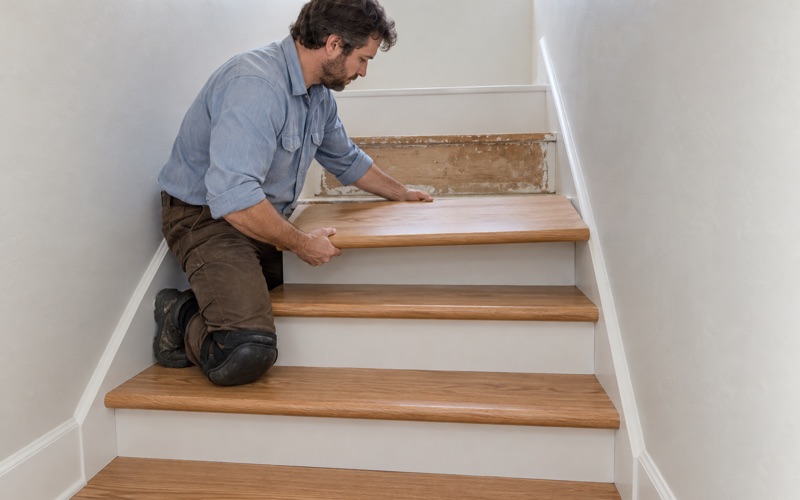
Federal rules put houses built before 1978 in a separate category for renovation work. The EPA Lead Renovation, Repair and Painting Rule governs how painted surfaces are disturbed in that housing, and baseboards, shoe molding and stair risers in a 1960s house may carry old paint. We confirm the build year first and follow lead-safe work practices on any home that predates 1978.
Census buckets do not line up exactly with that cutoff. More than four in five Hacienda Heights units were built before 1980, but the 1970s count mixes houses from both sides of 1978, so we check the individual house rather than assume. The actual build year settles the question for that address.
Looking for wood-flooring closer to South El Monte? See Wood-Flooring Services in South El Monte.
Homes on the Puente Hills Slopes and in Fire Hazard Zones
The Puente Hills form the southern border and much of the western border of Hacienda Heights, and Workman Hill rises to 1,391 feet. Residential areas are often oriented inward and developed in cul-de-sacs, and homes on and below the hills shape how a floor job is staged as much as how it is finished.
Access and Staging on Hillside Lots
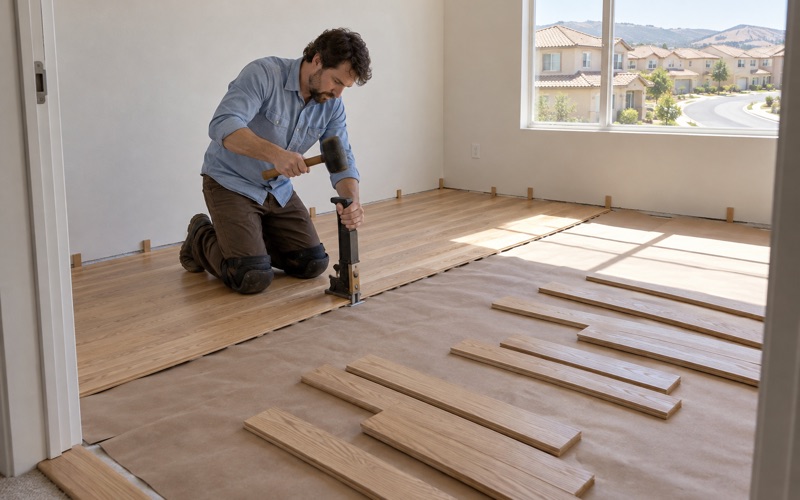
A drum sander, an edger and a multi-head orbital sander all have to reach the front door, along with HEPA dust extraction and boxes of flooring. On a sloped driveway or a long walk from the end of a cul-de-sac, we plan the carry before the first day so equipment is never dragged across finished rooms. We prefer to acclimate new boards inside the rooms where they will be laid.
Homes set against a hillside can show different moisture conditions from one side of the house to the other. We take pin moisture meter readings across the floor and compare them with the new boards before a nail-down installation, and a concrete subfloor, where one exists, gets an in-situ relative humidity test under ASTM F2170. Cupping along one wall and flat boards along another tell us where to look.
What the Fire Hazard Zone Designation Means
Hacienda Heights is unincorporated Los Angeles County, and the county’s East San Gabriel Valley Area Plan draft notes that many portions of the community fall within designated Very High Fire Hazard Severity Zones. The same draft counts about 25 miles of wildland/urban interface surrounding the Puente Hills. Those designations shape how land near the hills is planned and how houses are built on the outside.
They do not, as far as we have established, set rules for the flooring inside a house. Fire hazard zone construction standards address exterior construction, so we never sell an interior floor as a fire-zone requirement. What we can do is keep our own work orderly for households that have exterior projects under way.
Scheduling Floor Work Around Fire-Season Preparation
Houses near the interface may have brush clearance or exterior work going on during the dry months. Floor refinishing fits around that when it is sequenced well: we finish one area at a time, keep dust containment sealed at doorways, and leave a usable path to the back door and yard where the layout allows.
Conditions outside also affect the finish inside. Windows stay shut during coating and cure, and we check the National Weather Service forecast for the San Gabriel Valley zone that covers Hacienda Heights before a finish day. The written cure schedule then tells the household when the floor can take socks, shoes, furniture and rugs.
From Orchard Tracts to Sixty-Year-Old Subfloors
The land under these houses has had more than one life. In 1913 developers subdivided the area as North Whittier Heights, which became known for avocado, citrus and walnut orchards, and suburban building accelerated in the 1950s before the community was renamed Hacienda Heights in 1961.
Reading the Subfloor Under an Old Floor
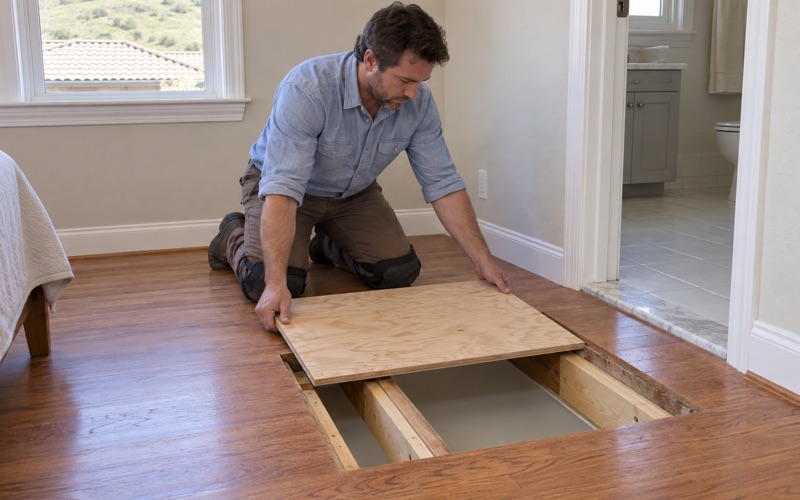
Decades of use leave marks below the finish. Squeaks, soft spots and boards that deflect underfoot can point to loose flooring cleats, a tired plywood subfloor or a floor joist that needs attention, and those get sorted out before new wood goes down. Where a joist needs strengthening, a sistered joist is a common fix.
Where an older wood floor has been covered by later layers, we find out what sits between the wood and the top flooring. Black mastic and cutback adhesive turn up under old tile and sheet goods in houses of this era, and they change how removal is handled. We identify what is there before any scraping starts.
Termites and Water Before Board Replacement
Drywood termites are a familiar problem in Southern California wood, and the signs are small: termite frass in tidy piles, kick-out holes along a board edge, wood that sounds hollow. When we see them, we refer the homeowner to a licensed pest company before any boards are replaced, since new boards laid first would leave the cause in place.
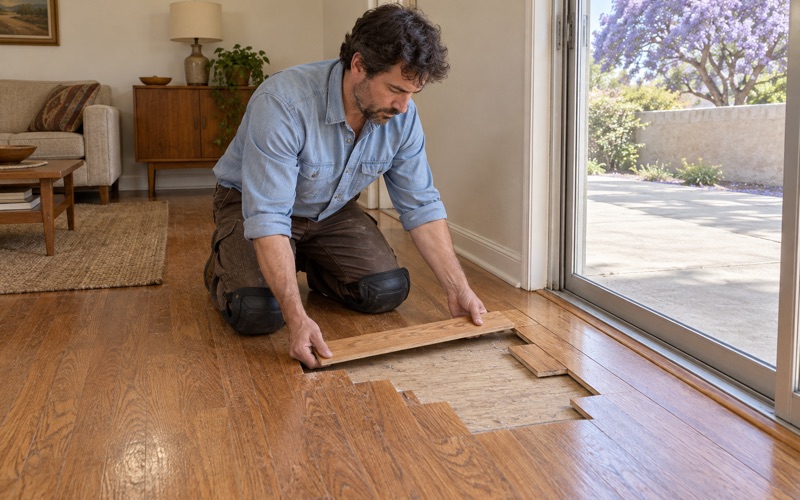
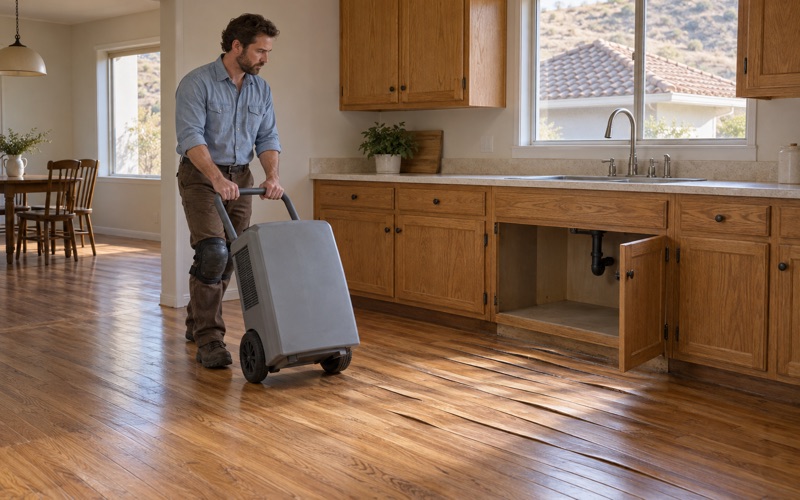
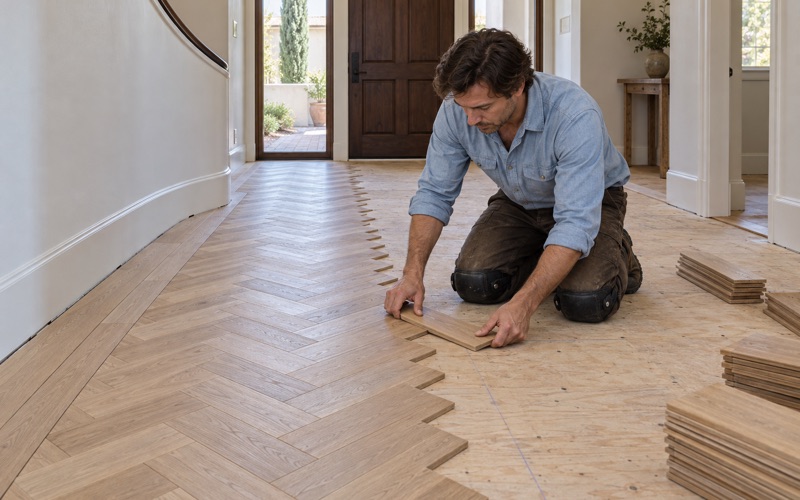
Water damage gets the same order of operations. A buckled or crowned section near a kitchen or bathroom sends us looking for the source of the leak before the repair, and moisture readings confirm the area has dried. A weave-in repair then ties new boards into the old pattern so the patch does not read as a patch.
Seismic Retrofit Timing
ZIP code 91745 appears on the 2025 Southern California list for the California Earthquake Brace + Bolt program, which helps owners retrofit qualifying houses. The list can change from year to year, so we suggest checking the current one. If a retrofit is on the calendar, tell us early so the two jobs can be sequenced sensibly.
Mobile Homes, Rental Houses and County Rules
Three in four occupied homes here are owner-occupied, 75.5 percent by the census count. The rest of the housing mix still shapes what kind of floor work makes sense.
Floors in Owner-Occupied Mobile Homes
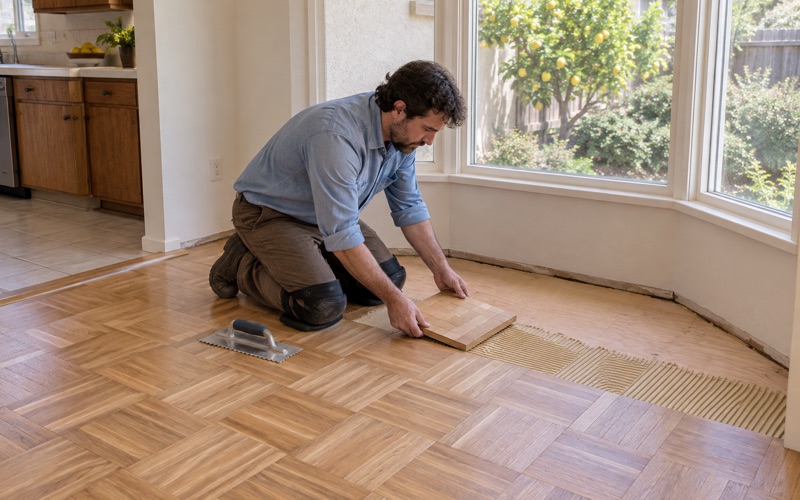
The census counts 400 mobile homes in Hacienda Heights, 352 of them occupied by their owners. A mobile home floor is built differently from a site-built house, and a heavy solid hardwood floor may not suit it. We look at the existing floor structure first and often point these owners toward engineered hardwood in a floating installation or luxury vinyl plank.
Weight, movement and the condition of the substrate are the questions we answer first. A floating floor over a suitable underlayment tolerates some movement, while a glue-down installation needs a substrate that will hold adhesive. Doorway transitions get a T-molding or reducer so the new floor meets the old height cleanly.
Rental Houses and the County’s Rent Stabilization Ordinance
More than half of renter households here, 58.9 percent, live in detached houses rather than apartments. Unless exempt, most rental units in unincorporated Los Angeles County with a certificate of occupancy issued on or before February 1, 1995 fall under the county’s Rent Stabilization and Tenant Protections Ordinance, administered by the Department of Consumer and Business Affairs.
The ordinance lets landlords pass on costs related to certain improvements, and the county sets those terms, so owners should confirm the details with the department. For our part, we time refinishing between tenants when possible and choose a durable waterborne polyurethane for a rental that will see regular move-ins and move-outs.
Who Sets the Rules for Work Here
With no city government of its own, Hacienda Heights looks to Los Angeles County Public Works, Building and Safety, which serves unincorporated communities through its headquarters and district offices. Planning follows the Hacienda Heights Community Plan, adopted in May 2011, and the East San Gabriel Valley Area Plan. We ask homeowners to confirm any permit question for their own project directly with the county.
Air quality rules apply here as they do across the region. The South Coast Air Quality Management District’s Rule 1113 limits VOC content in wood coatings, and that limit binds whoever applies or stores the product on a job site. Every finish we bring, from sanding sealer to the final coat, is picked to fit it.
- 20+ Years of Wood Floor Work
- Free In-Home Estimates
- Dust-Contained Sanding