Diamond Bar Wood Flooring has handled wood flooring in La Puente for more than 20 years, refinishing, repairing and installing hardwood in owner-occupied houses and rental units alike. Most of the work here falls into two very different jobs, and we plan each on its own terms. A family sanding the original oak in a house they have lived in for decades needs something different from a property manager turning over an apartment between tenants.
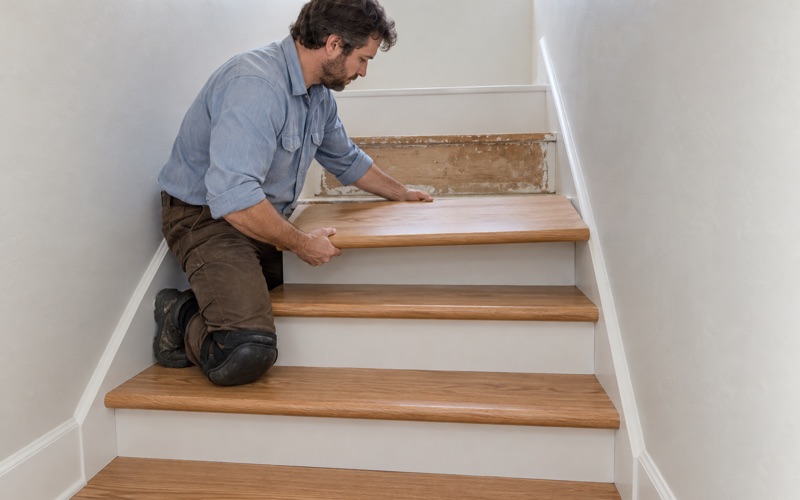
Before a sander touches a floor, we confirm the year the building went up, because that date decides how we handle dust, old finishes and any adhesive under a covering. On engineered boards we measure the wear layer first, so a quote to sand is a promise we can keep. Stairs get their own line on the estimate, priced per tread and riser.
Finishes are selected to stay within the South Coast AQMD Rule 1113 limit for wood coatings, which applies to anyone using or storing them on a job site. When a refinish is done, you get a written cure schedule that says when to walk on the floor, when furniture can come back and when rugs can go down.
Floors in La Puente’s 1950s Houses
The city’s housing is unusually concentrated in a single decade. According to ACS 2024 five-year estimates, 5,069 of La Puente’s 9,958 housing units, or 50.9 percent, were built in the 1950s, and the city itself incorporated on August 1, 1956, in the middle of that boom. Part of that growth replaced the Skyranch airport, which operated from 1944 to 1951 before the land was developed for housing.
Ownership shapes the work as much as age does. Among owner households, 87.9 percent live in detached houses, so most of the flooring decisions owners bring us involve a single-family home from the postwar years.
Sanding Original Oak From the Postwar Era
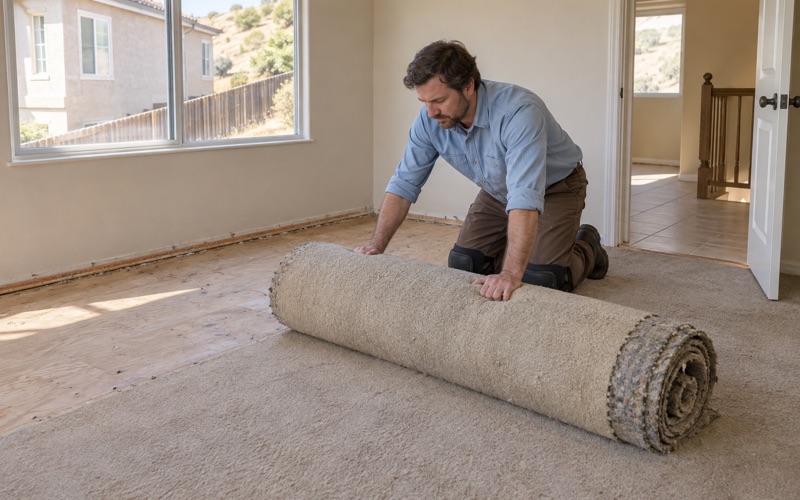
Houses of that period often have solid hardwood, commonly plain-sawn red oak, hiding under carpet or vinyl added in later decades. Solid strip flooring can usually take several full sandings over its life, but every earlier sanding removed wood. We check the thickness above the tongue before committing to a full grit sequence, and where it is thin, a screen and recoat may be the safer choice.
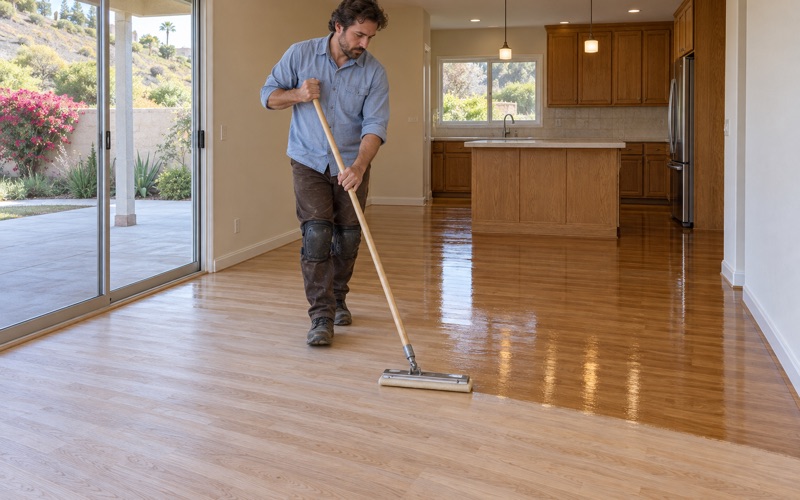
A full refinish starts with a drum sander on the open field and an edger along the walls, followed by a multi-head orbital sander to remove the scratch pattern. Gaps and nail holes get wood filler, and a sanding sealer or first coat goes down once the dust is extracted. Owners choose between waterborne polyurethane, oil-modified polyurethane and hardwax oil, and we settle the sheen level before the first coat.
Gaps, Cupping and Worn Boards
After roughly seven decades, boards show their history. Seasonal board gapping is normal in solid wood, but cupping, where edges rise above the center, or crowning, the reverse, points to moisture moving through the floor at some point. We take pin moisture meter readings across the room and near kitchens, bathrooms and exterior walls before recommending any sanding.
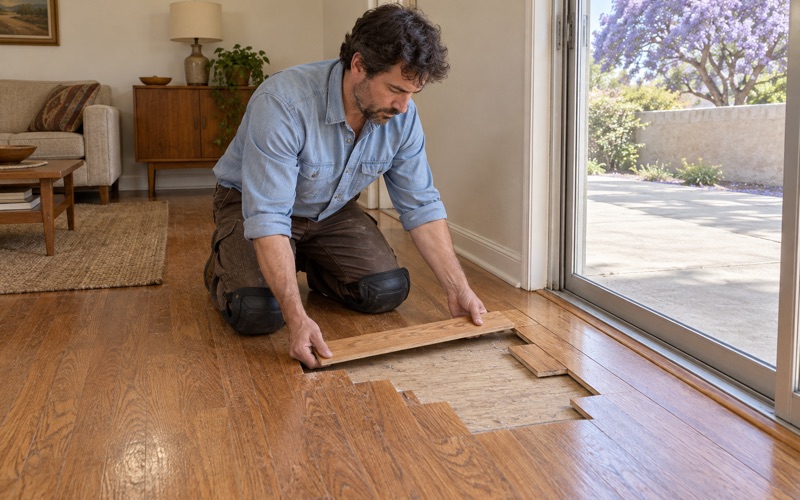
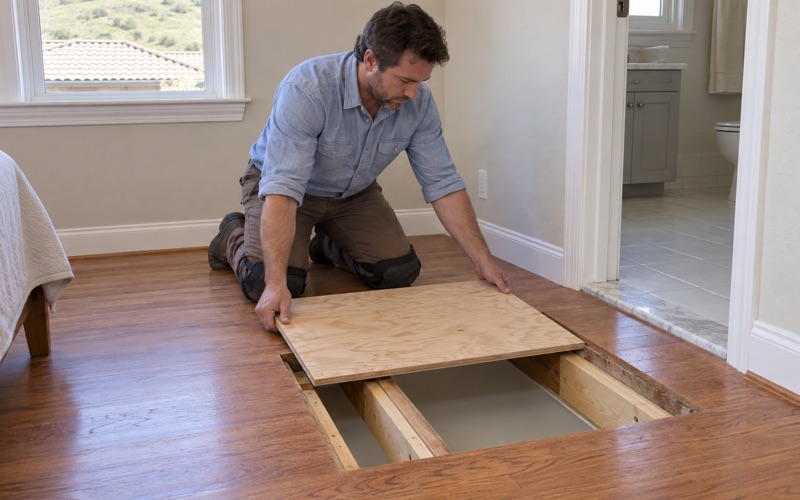
That step matters because sanding a cupped floor flat while it is still wet leaves it crowned once it dries. Damaged or stained boards are handled with board replacement and a weave-in repair, staggering new pieces into the existing layout so the patch does not read as a square. Red oak is usually straightforward to match, while mixed or unusual stock takes more sorting to blend grain and color.
Water Damage and Hidden Pests
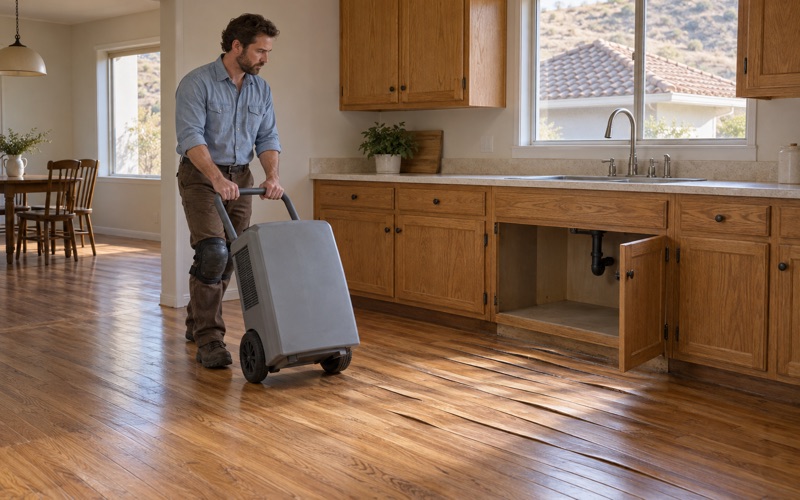
When boards have buckled from a leak, we find the source and confirm it is fixed before replacing anything, then keep taking readings until the subfloor has dried. Water, smoke and ash damage is photographed and documented through the job so an insurance adjuster sees the same conditions we do.
Drywood termites are another reason boards fail in older houses. Termite frass, the small pellets that collect near baseboards, and kick-out holes in trim or flooring are the signs we look for. When we find them, we refer the homeowner to a licensed pest company before any replacement boards go in, since new wood laid over an active colony will not last.
Looking for wood-flooring closer to Yorba Linda? See Wood-Flooring Services in Yorba Linda.
Apartment Floors Between Tenants
The rental side of La Puente looks nothing like the owner side. Renters occupy 39.6 percent of the city’s occupied units, and 47.2 percent of renter households, 1,800 of 3,811, live in buildings with five or more units. A steady share of our work here is apartment turnover on a deadline.
Refinish or Replace on a Turnover Schedule
A vacant unit loses rent every day it sits, so owners want a clear answer quickly. If a unit has solid hardwood in fair shape, a screen and recoat can refresh the finish in a short window. Deep pet stains, gouges or gray, worn traffic lanes usually call for full sanding, and we quote each unit on what we find rather than on a building-wide assumption.
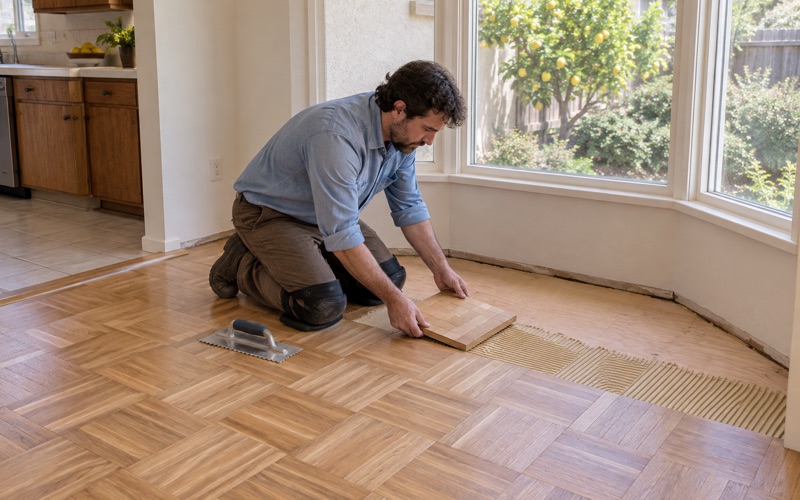
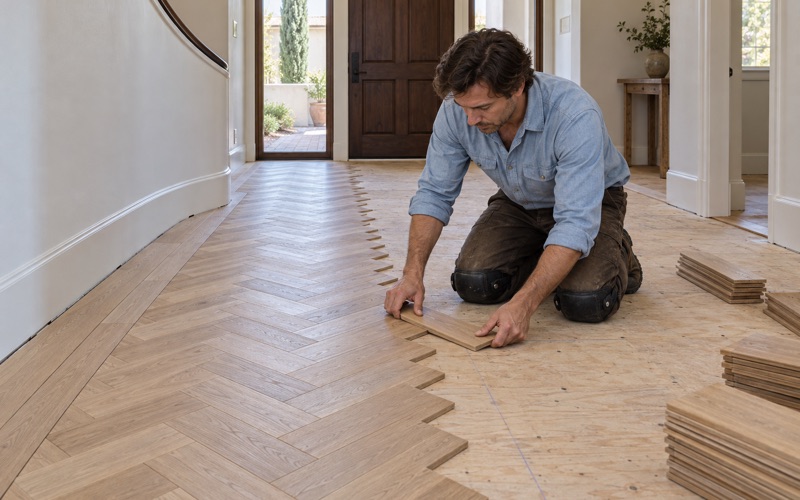
For units that need new floors, many owners weigh engineered hardwood with an aluminum oxide prefinish against luxury vinyl plank. Prefinished boards skip on-site finishing and cure time, which can matter when a move-in date is fixed. We explain the tradeoffs in durability, the Janka hardness rating of each species and future repairability before anything is ordered.
Sound Underfoot in Multi-Unit Buildings
In a five-plus-unit building, the tenant below hears whatever goes on the floor above. Upper-floor installations are often floating or glue-down over a sound-rated underlayment, and a building’s own rules may set impact insulation class or sound transmission class requirements. We ask the owner or management company for those rules in writing and follow them rather than guessing at a product.
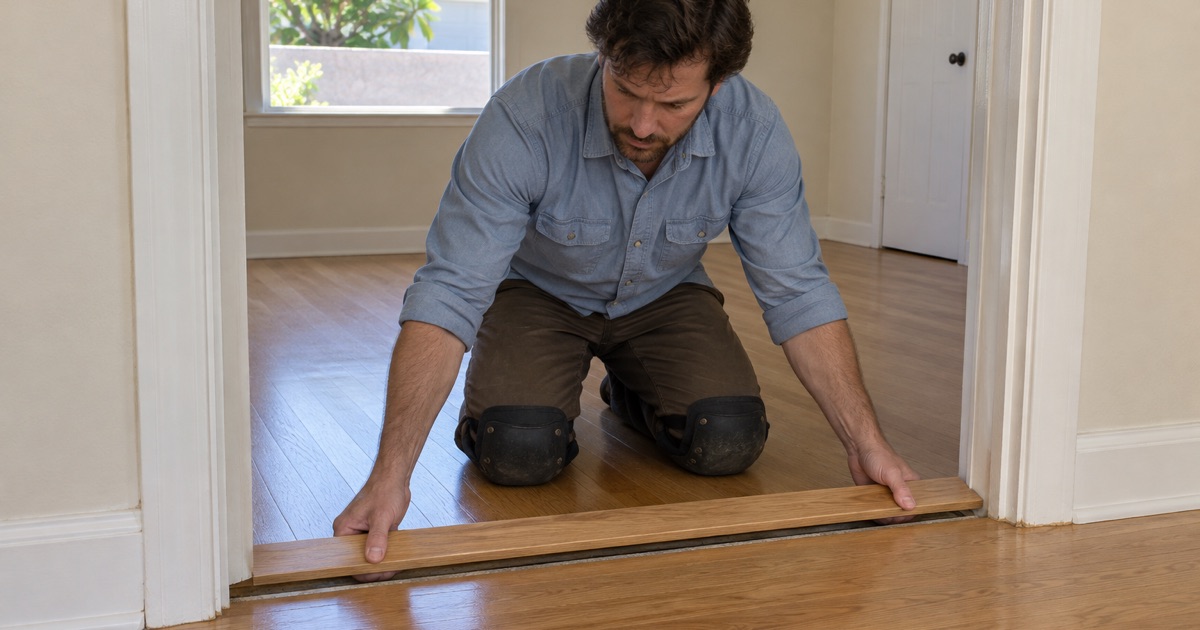
Transitions take a beating in rentals too. A T-molding between rooms and a reducer where hardwood meets tile keep edges from lifting under heavy use, and a well-fastened transition is one less item on the next turnover list.
Condos and Association Rules
Not every multi-unit building has a single landlord. Where units are individually owned under a homeowners association, the Davis-Stirling Common Interest Development Act and the association’s governing documents can shape what flooring is allowed. Some associations route flooring changes through an architectural review committee.
We check those association and building rules before a condo or townhome floor is ordered, not after the boxes arrive. That includes underlayment requirements, approved installation methods and any limits on work hours, so the job does not stall halfway through.
Pre-1940 Houses and Lead-Safe Work
A small slice of the housing stock is much older than the postwar tracts. ACS counts 418 units, or 4.2 percent, built in 1939 or earlier. In the 1930s the area was known for its fruit and walnut groves and was home to the world’s largest walnut packing plant.
What Older Floors Can Hide
Floors in pre-1940 houses have usually been through many owners and several coverings. Under carpet or linoleum we sometimes find black mastic or cutback adhesive, and older adhesives of that type can contain asbestos. We stop and recommend testing before any of it is sanded or ground.
Structure deserves a look in the oldest houses as well. Where a floor feels soft or bouncy, we check the floor joists and subfloor where they can be reached, and a sagging joist may need a sistered joist before new boards go down. We make no assumptions about what sits under a given house until we have seen it.
Confirming the Build Year First
The EPA Lead Renovation, Repair and Painting Rule applies to renovation work in housing built before 1978. With so much of La Puente built in the 1950s and 1960s, most homes we see here fall into that group, so we confirm the year a house was built before sanding starts rather than assuming.
On homes built before 1978, we follow lead-safe work practices. Painted baseboards, shoe molding and stair risers are common places where old paint meets a floor job, and disturbing them without containment spreads dust through the house.
Keeping the House Livable During the Work
Many owners of older houses stay home during a refinish. We set up a dust containment system with HEPA dust extraction and work room by room, so bedrooms and a path to the kitchen stay usable while other rooms are sanded and finished.
Sequencing also accounts for the finish. Waterborne products generally allow a quicker return to light foot traffic than oil-modified ones, and we plan which rooms reopen first around the household’s routine.
Planning Floor Work With the City of La Puente
La Puente is its own incorporated city, so building questions go to City of La Puente Development Services, Building & Safety, at 15900 E. Main Street, not to Los Angeles County. The division enforces city standards for the construction, alteration and maintenance of buildings and handles building, electrical, mechanical, plumbing, energy and accessibility permits.
Asking the Right Counter
The city’s Building & Safety page does not publish a list of permit-exempt work and does not mention flooring. Rather than guess, we recommend a call or visit to the counter when a project goes beyond surface work, such as replacing subfloor or changing walls. Staff listed there include a Senior Permit Specialist, a Building Official and Plans Examiner, and a Building Inspector.
Structural findings made partway through a floor project, such as a failing joist, are exactly the kind of item worth raising with Building & Safety. When one turns up, we pause and let the owner take that question to the city before work continues.
Seismic Retrofits and Floor Timing
La Puente ZIP codes 91744, 91745, 91746 and 91748 appeared on the 2025 California Earthquake Brace + Bolt list for Southern California, and owners should check the current year’s list. If a retrofit is on the horizon, scheduling it before new floors go in keeps the structural work settled before finished boards are laid.
Humidity and Moisture Before Installation
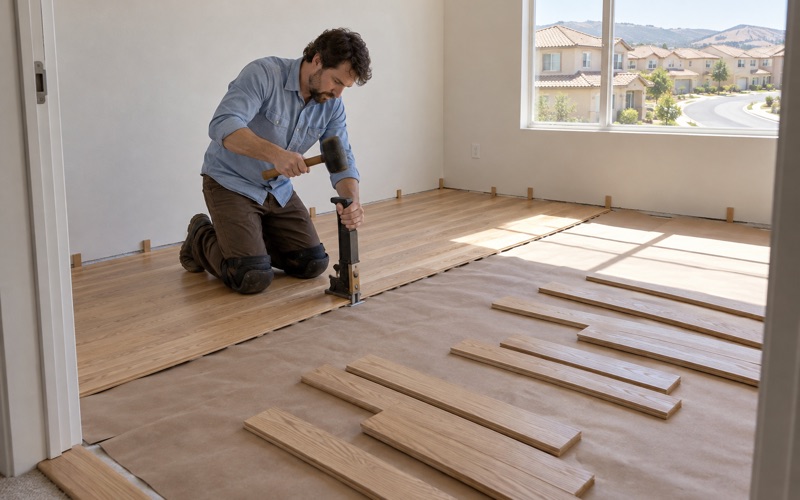
The city sits in National Weather Service forecast zone CAZ548, Los Angeles County San Gabriel Valley. Humidity shifts through the year, so new solid or engineered boards acclimate inside the house, and we compare wood readings with the subfloor before a nail-down installation with flooring cleats or staples.
Over a concrete slab, an in-situ relative humidity test following ASTM F2170 tells us whether a vapor retarder is needed and whether a glue-down or floating installation suits the room. Getting those numbers first is what keeps a new floor from gapping or cupping in its first year.
- 20+ Years of Wood Floor Work
- Free In-Home Estimates
- Dust-Contained Sanding