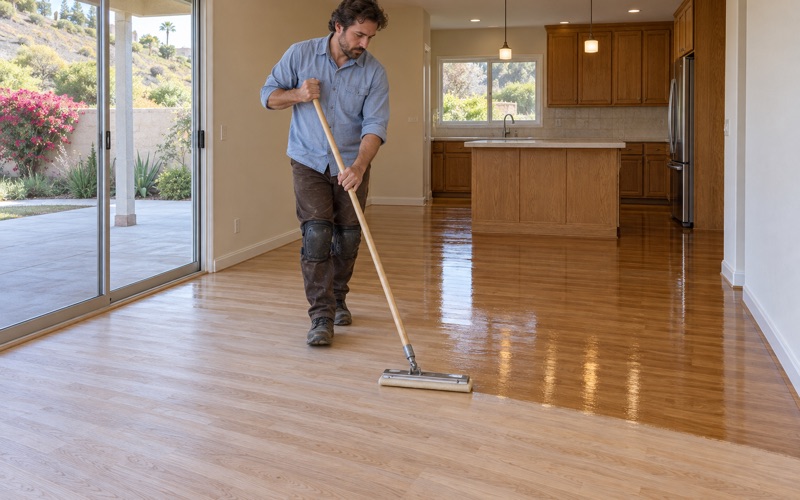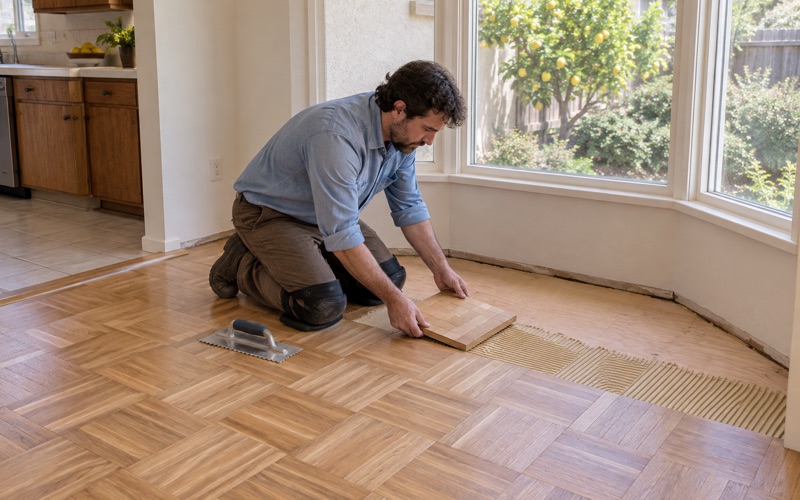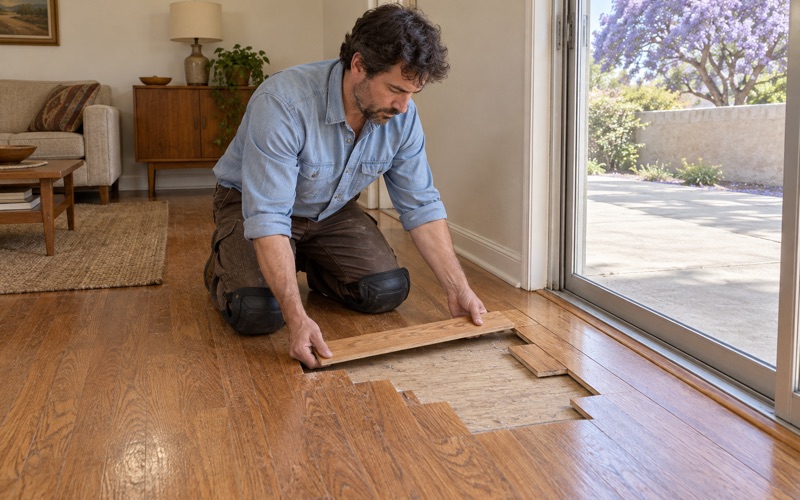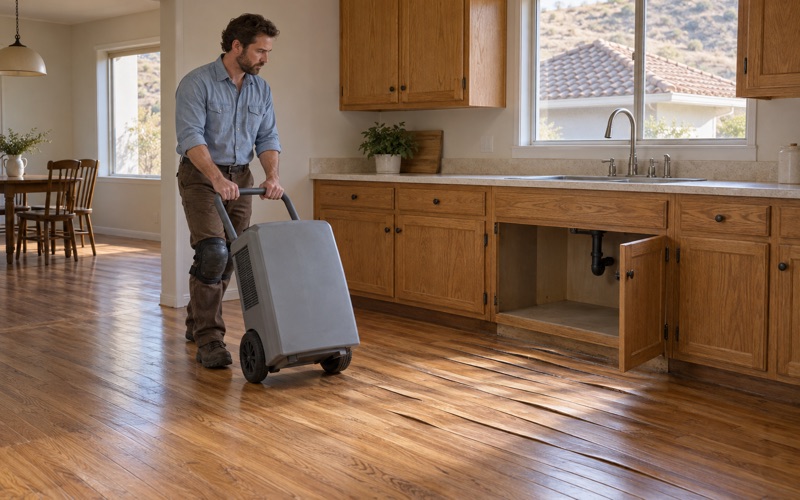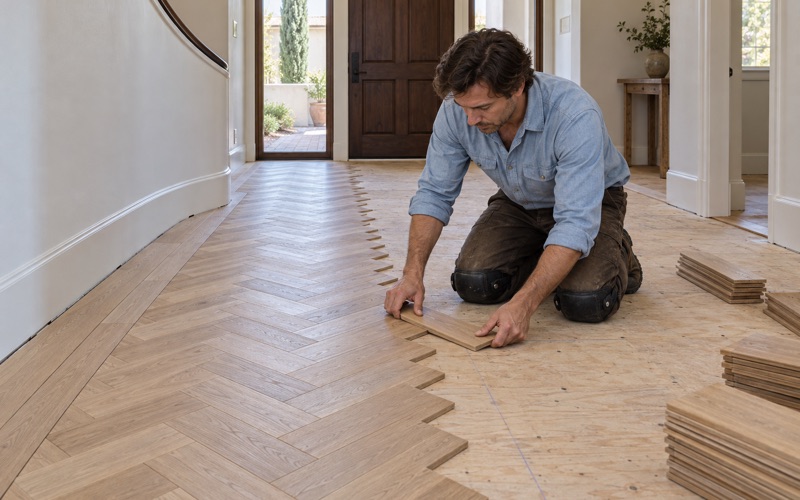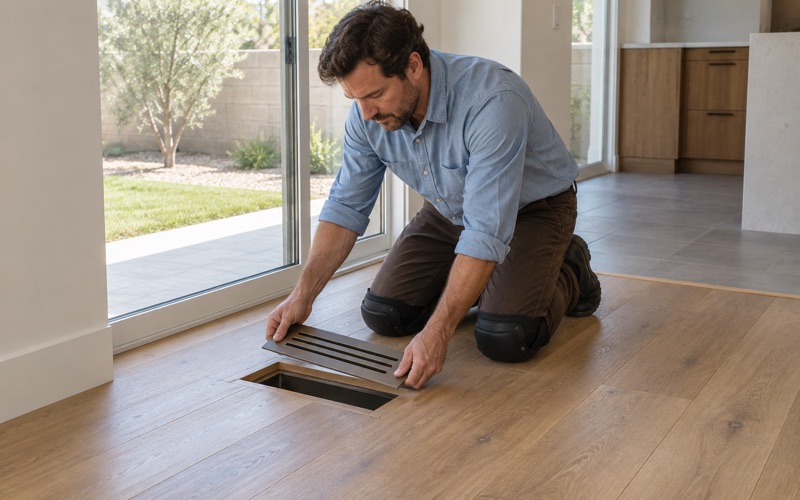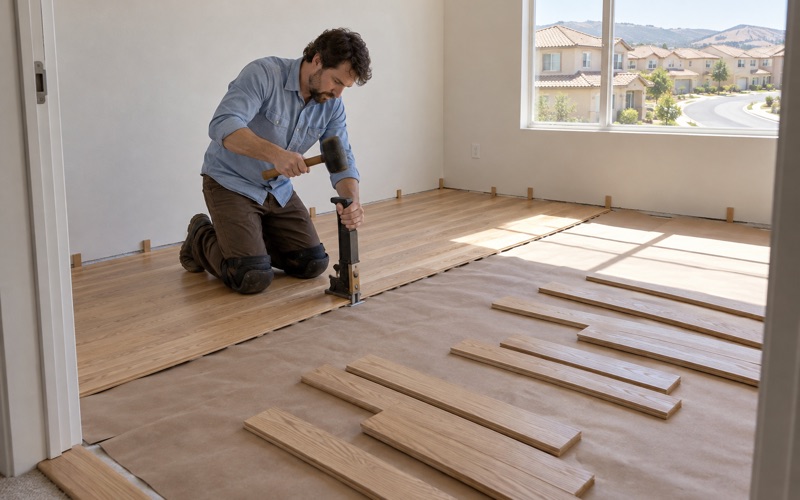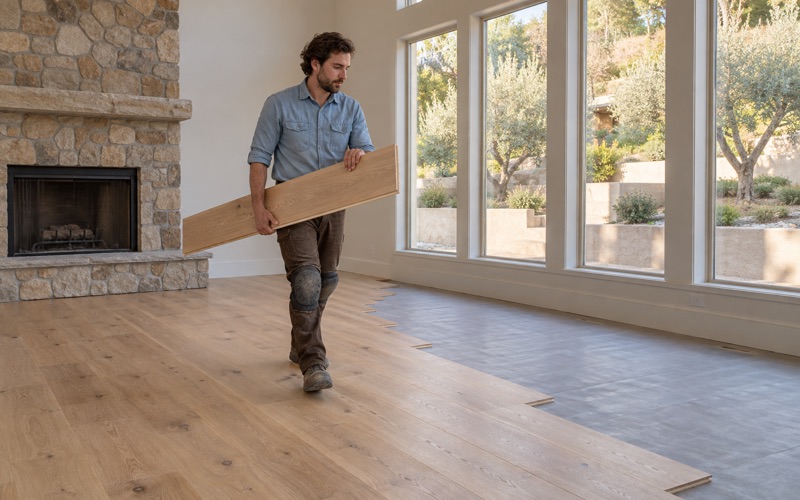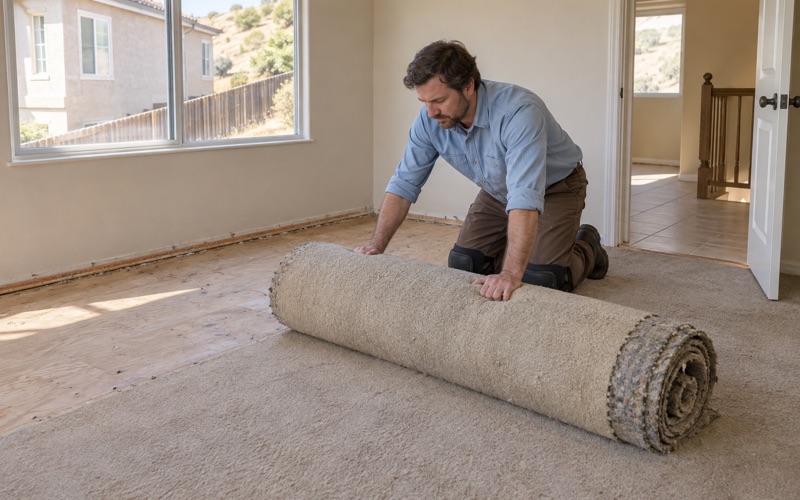
Diamond Bar Wood Flooring handles wood-flooring in La Verne with more than 20 years in the trade behind every refinish, repair and installation. We sand and recoat solid hardwood, replace damaged boards with weave-in repairs, and install engineered, solid and prefinished floors in whatever layout the rooms call for. Each job starts with a close look at what is already down and how it has held up.
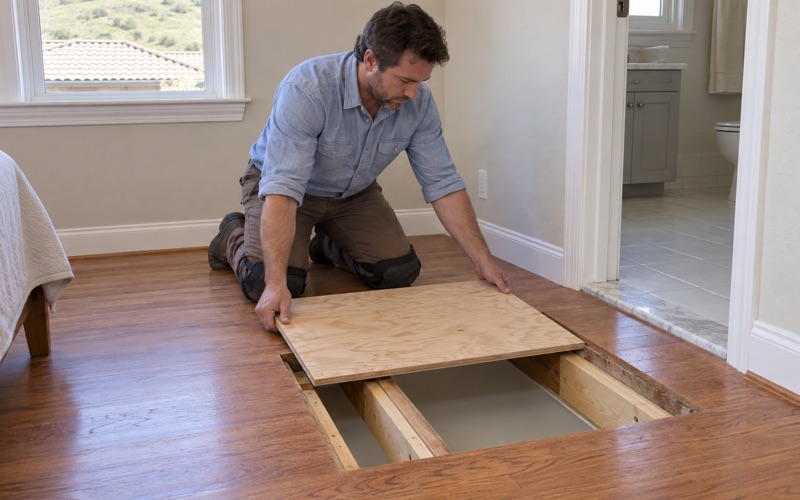
That first look decides a lot. We measure the wear layer on an engineered floor before telling anyone it can be sanded, because a thin veneer sanded through to its core cannot be put back. Where boards show cupping, crowning or buckling, we find the moisture source and take readings before anything is pulled up, since new boards laid over an active leak only set up a second repair.
We also look for pests and paperwork before ordering material. Termite frass or kick-out holes point to drywood termites, and we refer those signs to a licensed pest company before any boards are replaced. For a condo or townhome, the association and building rules get checked first, so the product that arrives is one the property actually allows.
Floors for La Verne’s Manufactured Home Parks
Park homes are a large share of the city
Manufactured homes are not a side note in La Verne’s housing. The 2024 five-year American Community Survey counts 1,644 mobile homes, 13.7 percent of the city’s 12,020 housing units. Among owner households, 18.4 percent live in a mobile home, so close to one in five homeowners here owns a park home rather than a detached house.
The city counts 8 mobile home parks holding 1,742 homes and describes them as a vital source of affordable housing for a variety of incomes. Some parks are limited to residents 55 and over, while others carry no age restriction. A floor project in a park can be for a retiree settling in for good or for a younger owner improving a first home.
Rent review and what owners put into the home
Space rents in La Verne’s parks fall under Municipal Code Chapter 9.16, whose stated purpose is to establish fair and reasonable rents and to maintain the character and quality of the city’s parks. The rent covers the space, while the owner pays for what goes inside the home, floors included. That makes durability and cost per year of wear the real questions behind a park homeowner’s quote.
A separate chapter, 9.18, requires a Relocation Impact Report approved by the City Council before a park can be converted to other uses. An owner planning to stay for years picks a floor differently than one getting ready to sell, so we ask about that first. Then we lay out what each option is likely to cost over the life of the floor, not just on install day.
Choosing wood for a park home
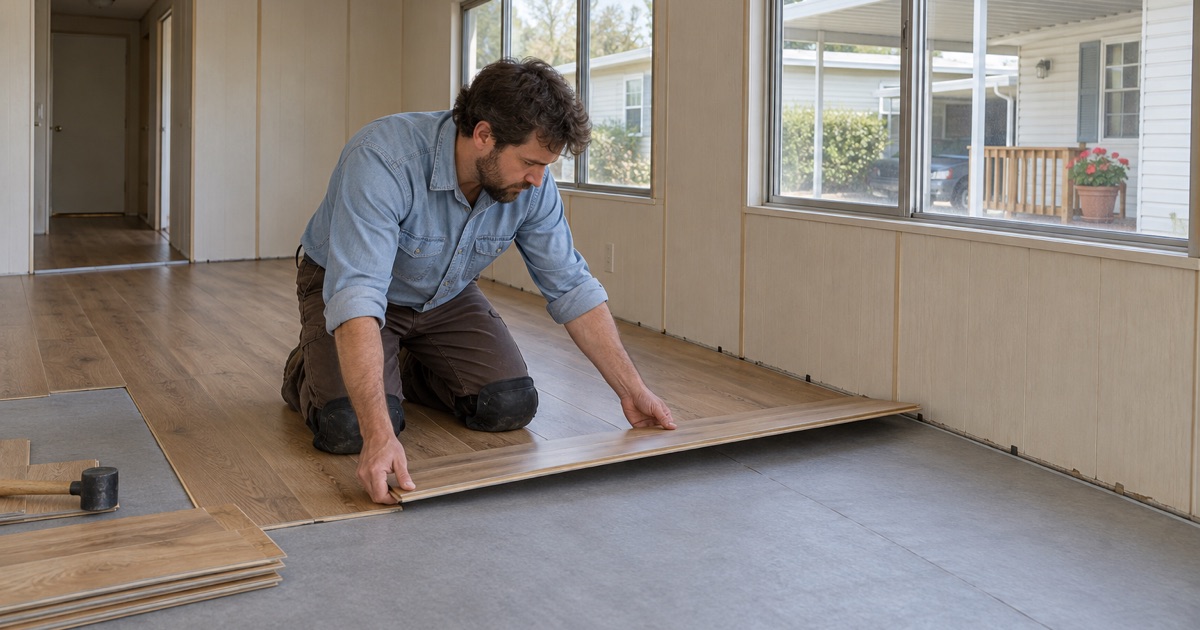
We do not assume how a park home’s floor structure was built, because the reliable answer comes from the home in front of us. Before recommending anything, we check the existing subfloor for soft spots, moisture and past leak damage around kitchens, baths and water heaters. What we find decides whether a nail-down, glue-down or floating installation makes sense.
Engineered hardwood with an aluminum oxide prefinish is a common pick when an owner wants real wood without waiting on a site-applied finish to cure in a compact home. The Janka hardness rating matters too, since hickory and white oak shrug off chair legs and pet claws better than softer species. Edges meeting tile or vinyl are finished with a T-molding or reducer so the transition does not become a trip point.
Looking for wood-flooring closer to Placentia? See Wood-Flooring Services in Placentia.
Detached Houses and Older Floors in La Verne
Confirming the build year first
Detached houses remain La Verne’s most common housing type, with 7,434 detached units counted, and the 1970s alone produced 32.3 percent of the city’s homes. With 62.0 percent of units built before 1980, many houses here predate 1978, the cutoff that matters under the EPA Lead Renovation, Repair and Painting Rule. That is why we confirm the year a house was built before any sanding starts.
On a pre-1978 home we follow lead-safe work practices, which shape how the room is set up, how dust is contained and how the space is cleaned afterward. Painted baseboards, stair skirts and old finish layers call for the most care. HEPA dust extraction on the drum sander, edger and multi-head orbital sander keeps fine dust out of the rest of the house.
Refinishing oak that has been down for decades
Houses of that age often hide solid red oak or white oak under carpet, sometimes in good shape and sometimes marked by pet stains, board gapping or tack strip holes. We pull back a corner, check board thickness and look for signs of past sandings before recommending a full refinish. A floor with enough wood left runs through a standard grit sequence, then sanding sealer and finish coats.
Where the finish is worn but the wood is sound, a screen and recoat can restore the surface without taking the floor down to bare wood. When boards are split or stained through, board replacement and a weave-in repair let the patch follow the original pattern. Waterborne polyurethane and oil-modified polyurethane look different on oak, so we show samples before a sheen level is chosen.
Old Town and the Lordsburg area
La Verne was founded in 1887 as Lordsburg, incorporated in 1906 and took its present name in 1917. Only 4.6 percent of the city’s units were built before 1940, so truly old floors are the exception here. When we do find one, we measure how much wood earlier sandings have left before quoting another refinish.
Two specific plans, the Lordsburg Specific Plan and the Old Town La Verne Specific Plan created in 2013, work as historic districts with design review. La Verne has no true preservation ordinance, designates landmarks by council resolution with owner consent, and offers the Mills Act program. Owners in those areas should ask the Community Development Department on D Street what applies to their project before work is scheduled.
Foothill Homes and Fire Hazard Zoning
What the fire hazard maps mean in La Verne
La Verne sits below the foothills of the San Gabriel Mountains, and the city states that portions of La Verne lie within Moderate, High and Very High Fire Hazard Severity Zones. The city operates its own fire department, which provides fire protection and emergency medical services. Municipal Code Chapter 15.37 carries the city’s Very High Fire Hazard Severity Zone regulations.
Rustic Canyon Estates is the city’s first Firewise USA community, and La Verne is on California’s Fire Risk Reduction Community List for July 2026 through June 2028. We do not guess which streets fall in which zone. Owners who want that answer can get it from the city, and we keep our attention on what the interior of the home needs.
Smoke, ash and documenting damage
Smoke and ash residue from a nearby fire can settle into open grain and scratches in the finish. Wiping it the wrong way can press the haze deeper into the wood. We test a small area before deciding between a careful cleaning, a screen and recoat, or a full sand.
When an insurance claim is involved, we photograph and document smoke, ash and water damage room by room so the adjuster sees the same conditions we do. Water from a burst line or from firefighting gets the same treatment as any leak. We find the source, take pin moisture meter readings and wait for the numbers to settle before boards are replaced.
Finishing work while the family stays home
A dust containment system and a room-by-room sequence keep bedrooms and the kitchen usable while other rooms are sanded and coated. Finishes are chosen to fit the SCAQMD Rule 1113 VOC limit for wood coatings, which binds anyone applying or storing them at a job site. Lower-VOC products also tend to make the house easier to live in during the work.
Every refinish comes with a written cure schedule. It spells out when socks are fine on the new finish, when furniture can come back on felt pads and when rugs can go down. Following it keeps the fresh coat from being marked before it has fully hardened.
Rental Homes in La Verne
Turnover floors for landlords
The institution that became the University of La Verne was founded in 1891 after German Baptist Brethren bought the vacant Lordsburg Hotel. Today renters occupy 30.8 percent of La Verne’s households, and 1,267 renter households live in detached houses. The gap between tenants is usually the easiest window for floor work in those homes.
For a landlord, a screen and recoat between tenants often costs less than a full sand and saves wear layer for later. Where a tenant left deep scratches or pet damage, we price board replacement against a refinish and show both. Our photos of floor condition give an owner a clear record when working through a Civil Code 1950.5 security deposit decision.
Condos, townhomes and apartments
La Verne also has attached homes and larger buildings, including 674 units in structures of fifty or more. Before ordering a floor for one of these, we check the association’s rules and any architectural review committee requirements, since those can govern underlayment and installation method. We do not quote sound-rating numbers, because the building’s own documents decide what is required.
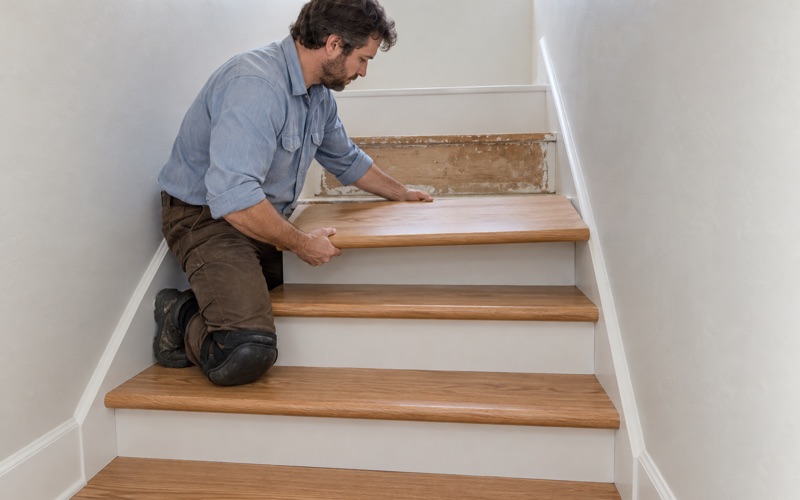
Glue-down and floating installations are common in shared buildings, and a sound-rated underlayment is often part of the conversation. Stairs inside a townhome are quoted by the tread and riser, never folded into a square-foot price. Stair nosing and bullnose treads are matched to the floor so the steps read as one surface with the rooms.
Species and cuts that hold up to tenants
Character grade boards hide everyday dents and scuffs better than select grade, which makes them a practical pick for a rental. Rift-sawn and quarter-sawn white oak move less with seasonal humidity than plain-sawn boards, though they cost more. We lay out those tradeoffs next to a luxury vinyl plank option so a landlord can compare real numbers before deciding.
- 20+ Years of Wood Floor Work
- Free In-Home Estimates
- Dust-Contained Sanding