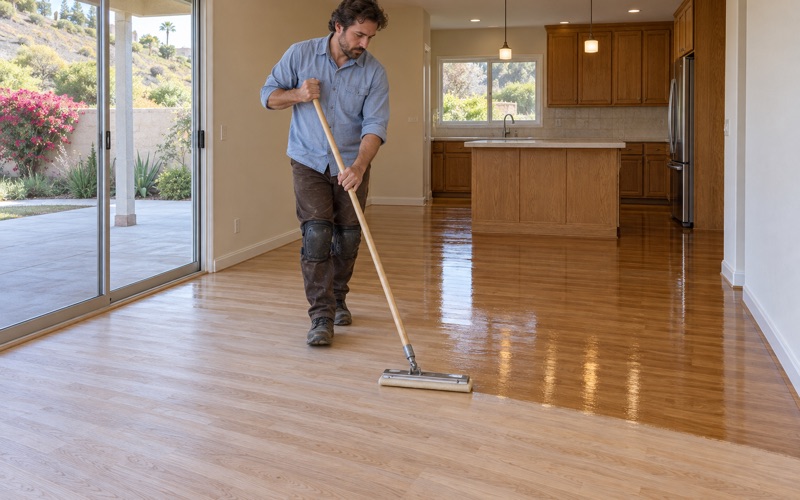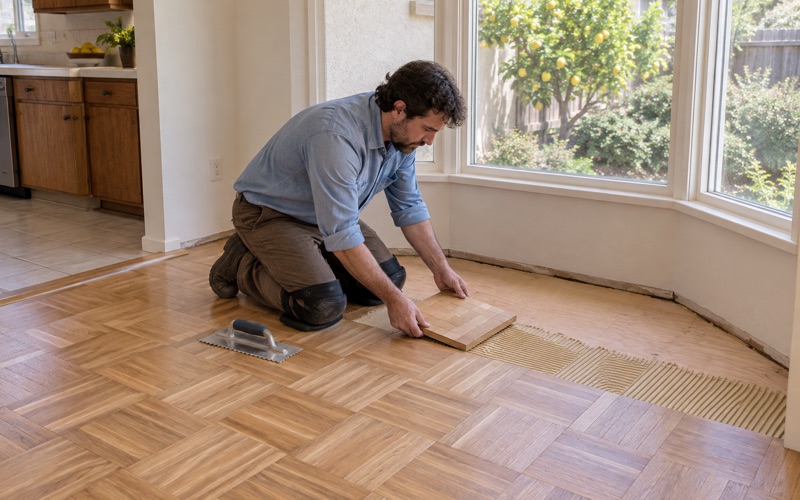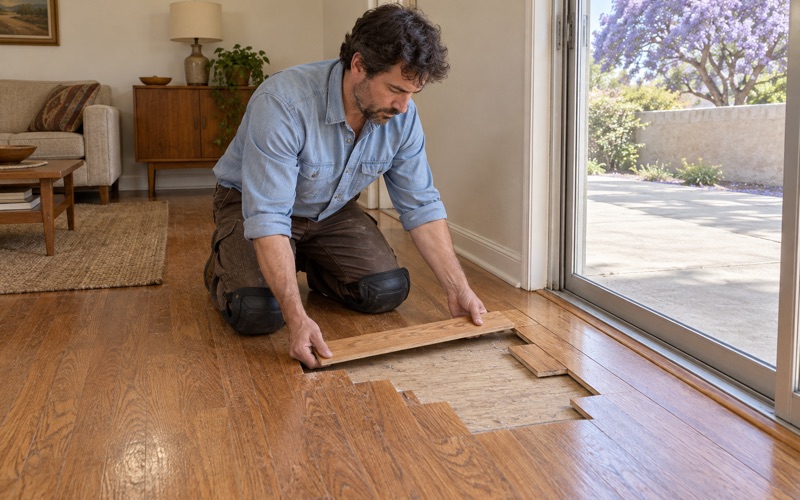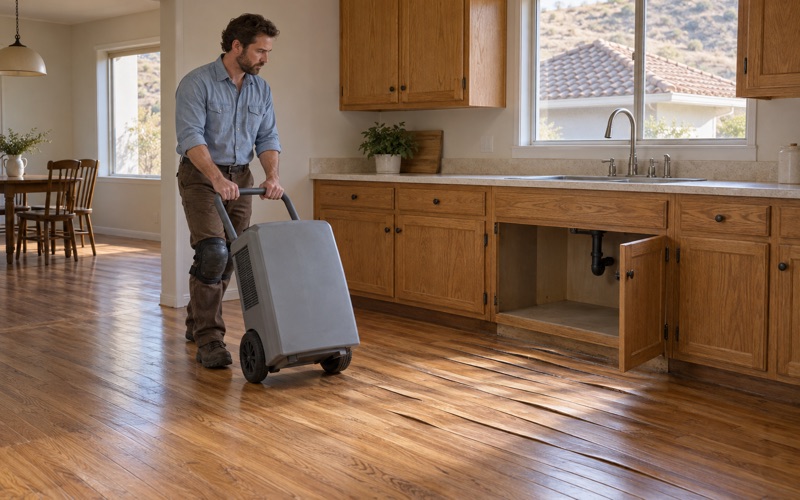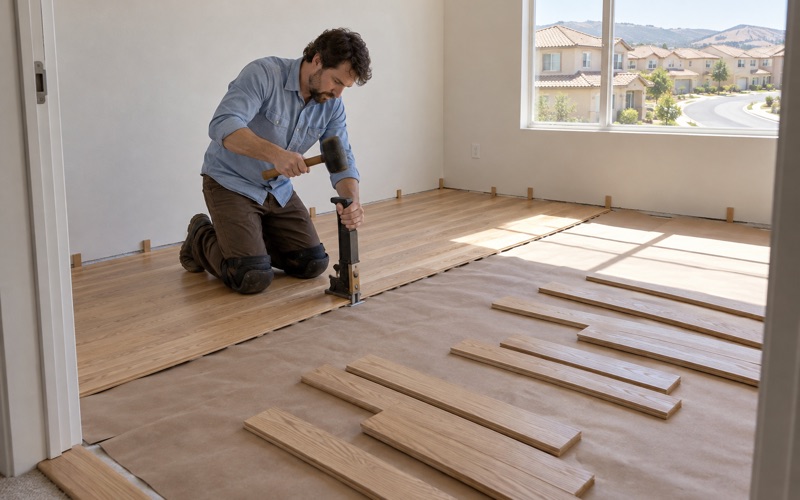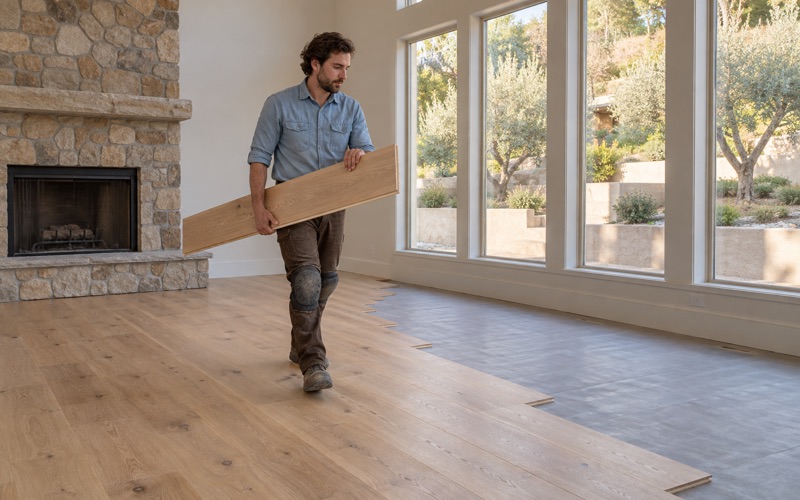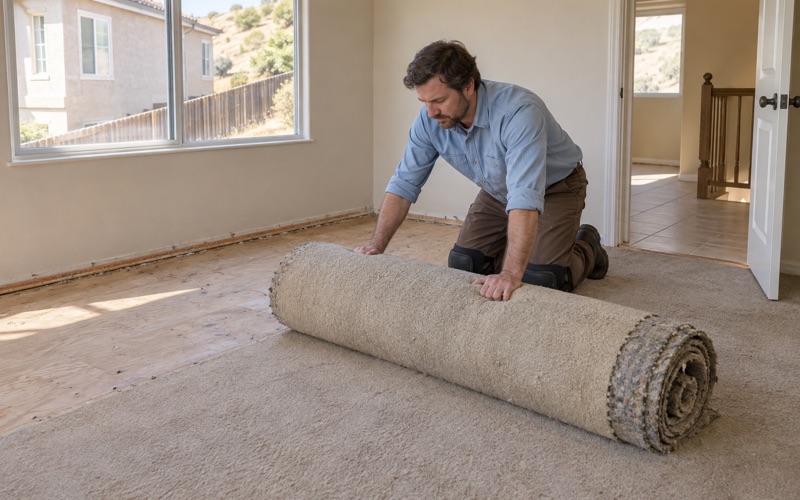
Diamond Bar Wood Flooring has done wood-flooring in Los Alamitos for more than 20 years, refinishing worn oak, replacing damaged boards and installing new engineered and solid hardwood. Much of that work happens in rental units, where a floor has to be sanded, finished and cured on a schedule that fits between one lease ending and the next one beginning.
We plan every job around the building it sits in. Before any sanding starts we confirm the year the structure was built, because older homes call for lead-safe work practices, and on engineered boards we measure the wear layer before promising that a refinish is possible. Nothing gets quoted on an assumption we could have checked first.
Owners get a written cure schedule at the end of each refinish that states when people can walk on the floor, when furniture can go back and when rugs can be laid. For a landlord, those three dates decide when a unit can be shown and when a new tenant can move in. The sections below cover small rental buildings, tenant turnovers, owner-occupied houses and newer units, and what the city expects of anyone doing the work.
Floors in Los Alamitos Fourplexes and Small Apartment Buildings
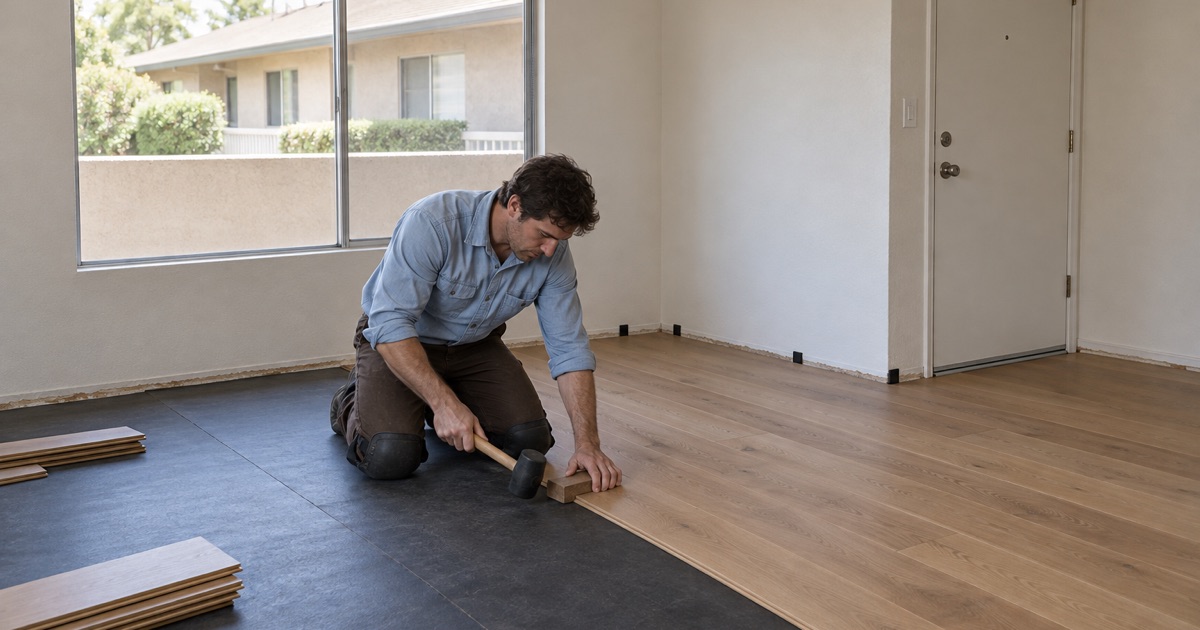
Los Alamitos is a renter-majority city. American Community Survey 2024 five-year estimates show that 57.6 percent of occupied units are rented, and 55.8 percent of those renter households live in buildings of three to nine units. Buildings of that size make up 31.8 percent of all housing units in the city, so a large part of our work here is unit floors rather than whole-house projects.
Stacked Units and Shared Walls
In a building with units above and below one another, the floor is also somebody else’s ceiling. Sanding noise, drum sander vibration and finish odor all travel, so we schedule the loudest steps for working hours and tell the owner ahead of time which days neighbors will hear the edger. When an owner wants a replacement floor over another unit, we talk through sound-rated underlayment and the building’s own rules before anything is ordered.
Upper units reached by exterior stairs also shape the job. Every board, roll of underlayment and bucket of finish is carried up by hand, and dust has to stay inside the unit being worked on rather than drifting onto a shared landing. We run a dust containment system with HEPA dust extraction at the sander for that reason.
Matching Floors Across Several Units
An owner of a four-unit or eight-unit building usually wants the units to look alike, even when they are refinished years apart. We record the species, the stain and the sheen level used in each unit so the next one can match. Red oak and white oak take stain differently, and plain-sawn boards will not read the same as a rift-sawn or quarter-sawn patch laid beside them.
Where boards have been replaced piecemeal over the years, we sort out what is original before choosing a finish. A weave-in repair using boards of the same species and width blends far better than a straight-cut patch, and it keeps a unit from showing exactly where an old water spill once sat.
Choosing a Finish That Survives Tenants
Rental floors take heavier traffic than most owner-occupied rooms, with furniture dragged in and out on a regular cycle. Waterborne polyurethane dries fast, stays clear and lets a unit reopen sooner, while oil-modified polyurethane ambers over time and needs longer before the floor can take furniture. Hardwax oil is easy to spot-repair but asks more routine care of a tenant than most leases can expect.
A satin or matte sheen level hides scratches better than gloss, which matters when the goal is a floor that still looks presentable after a year of move-ins. For floors that are worn but not scratched through to bare wood, a screen and recoat restores the surface in far less time than a full sand.
Looking for wood-flooring closer to Signal Hill? See Wood-Flooring Services in Signal Hill.
Turning a Unit Over Between Tenants
The gap between one tenant moving out and the next moving in is where most rental floor work gets done, and it is short. We build the job around the date the unit needs to be ready, then work backward to the day sanding has to begin.
Assessing the Floor After Move-Out
We walk the unit once it is empty and sort the damage into what a screen and recoat can fix, what needs a full sand through the grit sequence, and what needs board replacement. Pet stains that have gone black, deep gouges and boards showing cupping or crowning each point to a different repair.
Photographs taken at that walk-through give the owner a dated record of the floor’s condition. That record can help when an owner works through the security deposit rules in Civil Code 1950.5, though what gets deducted is the owner’s decision, not ours.
Water Damage in a Unit Above Another
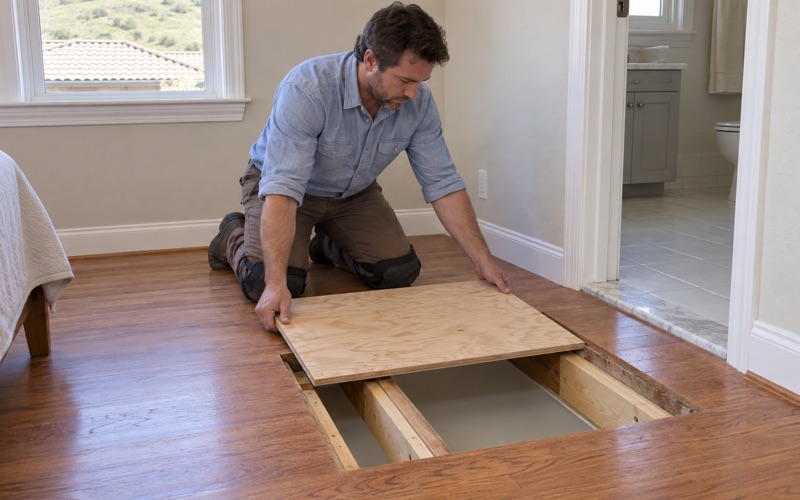
When a supply line or appliance leak soaks the floor of an upstairs unit, the water rarely stops there. We find the source of the leak and take readings with a pin moisture meter before any water-damaged boards come out, because boards laid over a subfloor that is still wet will show cupping or buckling again within weeks.
Water, smoke and ash damage all get photographed and written up so the insurance adjuster sees what we see. In a small building, that documentation often covers two units at once: the one where the leak started and the one beneath it.
Keeping the Schedule Honest
A unit can be listed only when its floor is ready for furniture, and that date depends on the finish. We state it in writing alongside the rest of the cure schedule so the owner can set a move-in date without guessing.
If we find drywood termite signs such as termite frass or kick-out holes during the work, we stop and refer the owner to a licensed pest company before any boards are replaced. The schedule is revised from there, and the owner hears about the change the same day rather than on the planned move-in date.
Owner-Occupied Houses and Newer Units
Detached Houses Owned by Los Alamitos Households
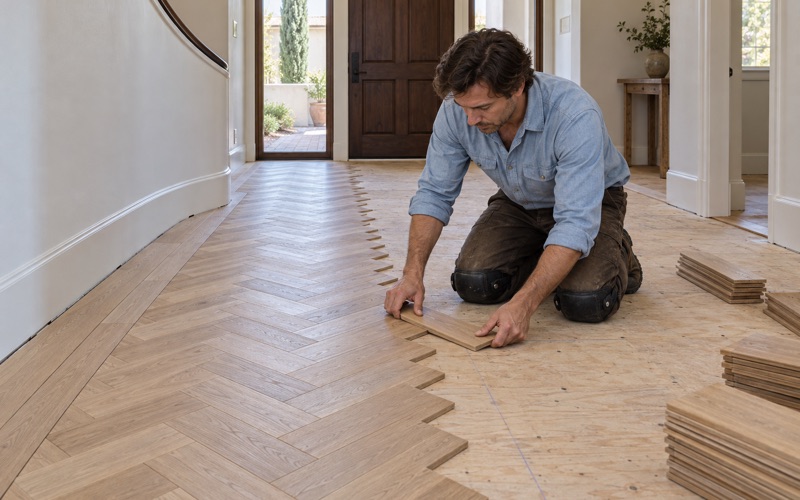
Owners make up 42.4 percent of Los Alamitos households, and 81.0 percent of those owner households live in detached houses. That is where our whole-house work tends to happen, including refinishing hardwood that has sat under carpet for decades and extending an existing floor into a room that never had one.
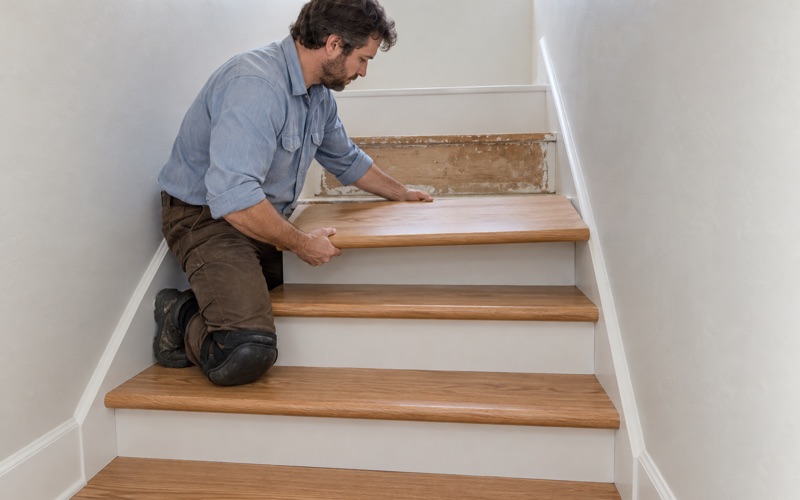
Extending a floor means matching board width, species and grade. A select grade board has fewer knots and a more uniform color than a character grade board, and mixing the two in one room reads as a mistake. Stairs in these houses are quoted by the tread and riser, with stair nosing and any bullnose tread priced as their own items rather than folded into a square-foot figure.
Houses From the 1960s and Earlier
The 1960s were the largest building decade in the city, accounting for 28.2 percent of today’s housing units, and 70.5 percent of all units were built before 1980. Before we sand a floor in a house of that age, we confirm the year it was built, and on homes built before 1978 we follow lead-safe work practices.
Older floors also hide surprises under later coverings. Black mastic or cutback adhesive left from vinyl tile has to be identified before anything is ground or sanded, and a floor that has already been refinished several times may have little solid wood left above the tongue.
Units Built Since 2020
Only 183 housing units in Los Alamitos were built in 2020 or later, 4.0 percent of the total. Many newer units use engineered hardwood or luxury vinyl plank rather than solid boards, and that changes what a refinish can do.
Before promising that an engineered floor can be sanded, we measure its wear layer. A thin wear layer or an aluminum oxide prefinish may allow only a light screen and recoat, or no sanding at all, and an owner is better off hearing that before the job starts than after the sander has reached the core.
What the City Asks of Contractors
Los Alamitos incorporated in March 1960, and a significant part of the city is occupied by Joint Forces Training Base – Los Alamitos. Construction permits in the city go through the Development Services Department’s Building and Safety Division, which runs an online Building Permit Center.
The Los Alamitos Business License
The city’s Building and Safety FAQ says contractors working in Los Alamitos are required to hold a Los Alamitos Business License. An owner hiring anyone for flooring work, whether in a rental building or a house, can ask to see that license before the job is put on the calendar.
The same FAQ says a Certificate of Workers’ Compensation Insurance must be on file if a contractor has employees. Questions about what a particular floor job needs from the city belong with the Building and Safety Division, whose walk-in counter is open 7:30 a.m. to 12:30 p.m. Monday through Thursday.
Finishes Under South Coast AQMD Rules
The South Coast Air Quality Management District covers all of Orange County, and its Rule 1113 sets the VOC limit for wood coatings applied or stored at a job site. We choose sanding sealer, stain and polyurethane that fit that limit, which matters in a small building where finish odor can reach the unit next door.
We also ventilate the unit being finished and keep doors to shared hallways closed until the finish has set. Neighbors in a fourplex should be able to get through a refinish next door without planning their week around it.
Working Around Occupied Homes
Not every job happens in an empty unit. When a family stays in a house during the work, we use dust containment and a room-by-room sequence so part of the home stays usable each day. For a condo or townhome, we check the association and building rules first, including any architectural review committee requirements, before a floor is ordered.
Each project closes with the written cure schedule and a walk-through of the finished floor. For an owner with several units, that paperwork becomes the reference for the next turnover, the next matching stain and the next recoat.
- 20+ Years of Wood Floor Work
- Free In-Home Estimates
- Dust-Contained Sanding