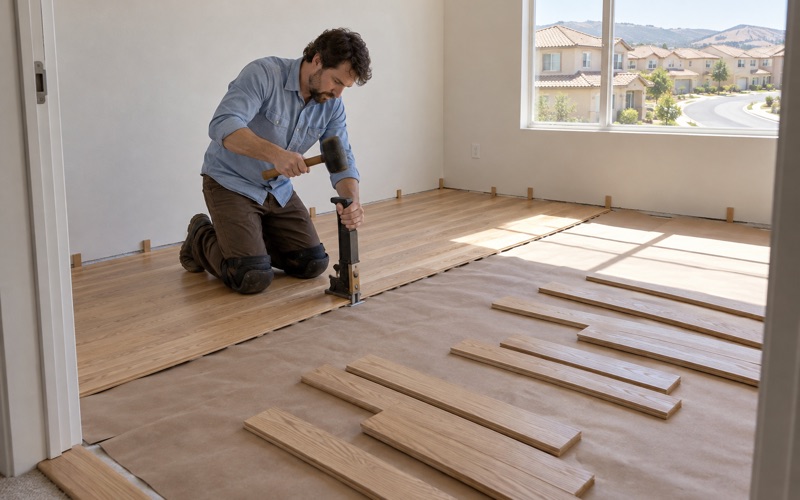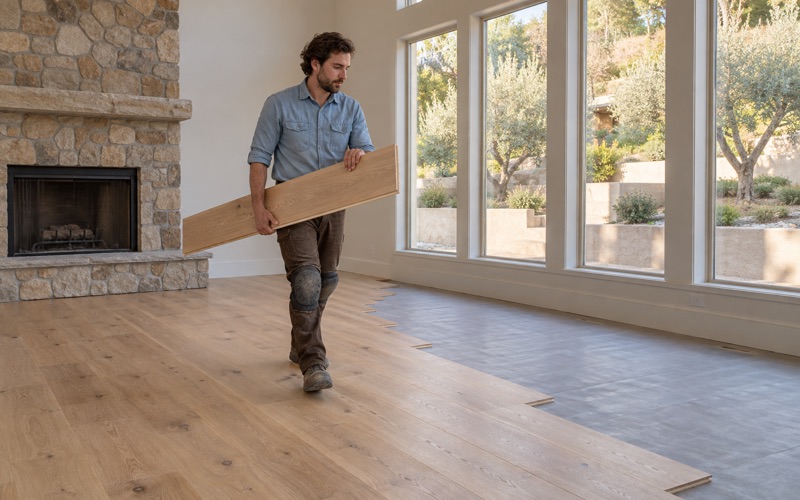
Diamond Bar Wood Flooring has spent more than 20 years on wood-flooring in Montclair, sanding, repairing and installing hardwood in homes that range from postwar houses to rental units and manufactured homes. Before we quote anything, we want to know how old the house is, who lives in it, and what sits under the boards. Those three answers shape nearly every decision that follows.
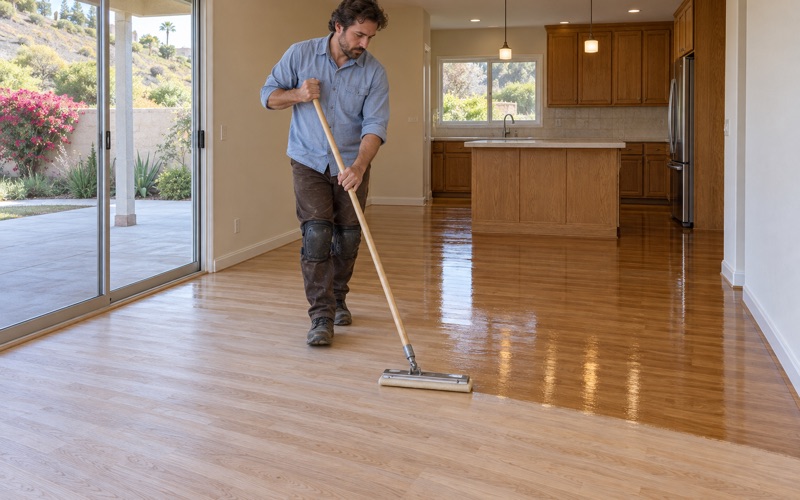
Refinishing is usually where the conversation starts. A worn red oak floor hidden under old carpet can often take a full sand and a new finish, while a thin engineered floor may only tolerate a lighter treatment. We measure the wear layer of an engineered floor before promising it can be sanded, because a promise the floor cannot keep ends in a replacement.
The finishes we carry are chosen to fit the SCAQMD Rule 1113 limit for wood coatings, which binds anyone applying or storing them at a job site. Every refinish also comes with a written cure schedule that spells out when you can walk on the floor, when furniture can go back, and when rugs can be laid down again.
Floors in Montclair’s 1950s and 1960s Houses
A Commuter-Suburb Housing Stock
Montclair’s houses reflect the years when it became a commuter town. According to the ACS 2024 five-year estimates, 46.2 percent of the city’s housing units were built between 1950 and 1969, and 65.9 percent predate 1980. The county history credits the late-1950s completion of Interstate 10 with connecting the area to Los Angeles and making it a viable commuter suburb.
The city itself dates from that era. It incorporated in 1956 under the name Monte Vista and voted in 1958 to become Montclair because of mail confusion with another Monte Vista. Houses from those first years are now well over half a century old, and their floors carry decades of traffic, repairs and covered-up damage.
What We Find Under Carpet and Vinyl
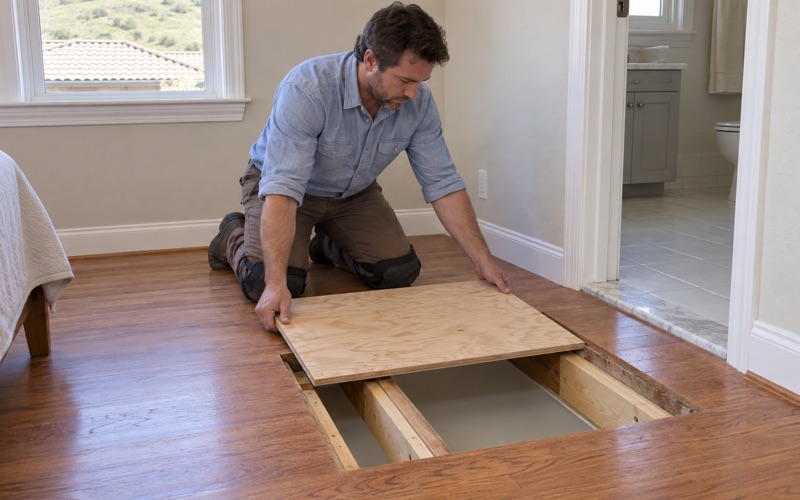
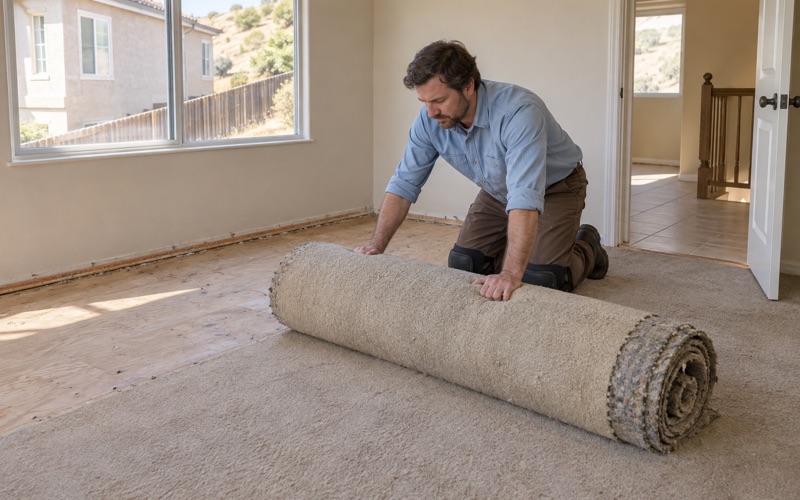
In a house from this period, original strip hardwood is often hidden beneath carpet or sheet flooring laid years later. We pull back a corner, identify the species, and look for cupping, crowning and board gapping before discussing a finish. Carpet tack strips, pad staples, pet stains and old patches all affect whether a sand-and-finish makes sense.
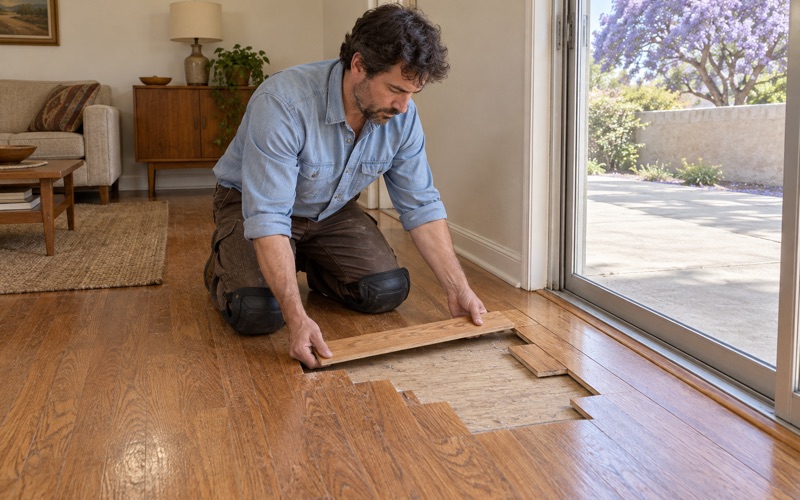
Where boards are too far gone, we use a weave-in repair so new strips run into the existing field instead of ending at a straight seam. If we see termite frass or kick-out holes that point to drywood termites, we stop and refer the owner to a licensed pest company before any boards are replaced.
Lead-Safe Work in Pre-1978 Homes
Most houses from Montclair’s postwar decades were built before 1978, the cutoff used by the EPA Lead Renovation, Repair and Painting Rule. We confirm the construction year before any sanding starts, and on those older homes we follow lead-safe work practices. Painted baseboards, shoe molding and door casings can all be disturbed when a floor is sanded to the edges.
Dust control matters just as much when a family stays in the house. We seal off work areas, run HEPA dust extraction on the drum sander and edger, and move room by room so a kitchen or bedroom stays usable. We also check for black mastic or cutback adhesive left behind by earlier floor coverings before any removal begins.
Looking for wood-flooring closer to La Verne? See Wood-Flooring in La Verne.
Flooring in Montclair Mobile Homes
Why Manufactured Homes Are Part of the Work Here
Mobile homes are a real share of Montclair housing, not a footnote. The ACS counts 898 of them, 8.2 percent of all housing units, and 688 owner households live in one, which is 11.8 percent of the city’s owners. We plan for manufactured homes as a regular part of the work rather than an unusual request.
Montclair also has a Mobile Home Rent Regulation in Municipal Code Title 4, Chapter 4.60. A statewide mobile home owners’ table, last revised in February 2020, listed 8 parks and 728 spaces under that regulation. It is a dated third-party compilation, so read those counts as a snapshot rather than a current figure.
Choosing a Floor for a Manufactured Home
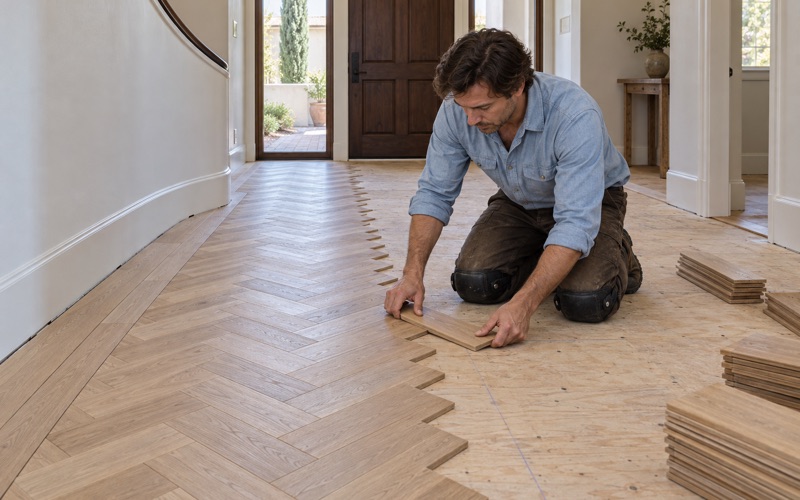
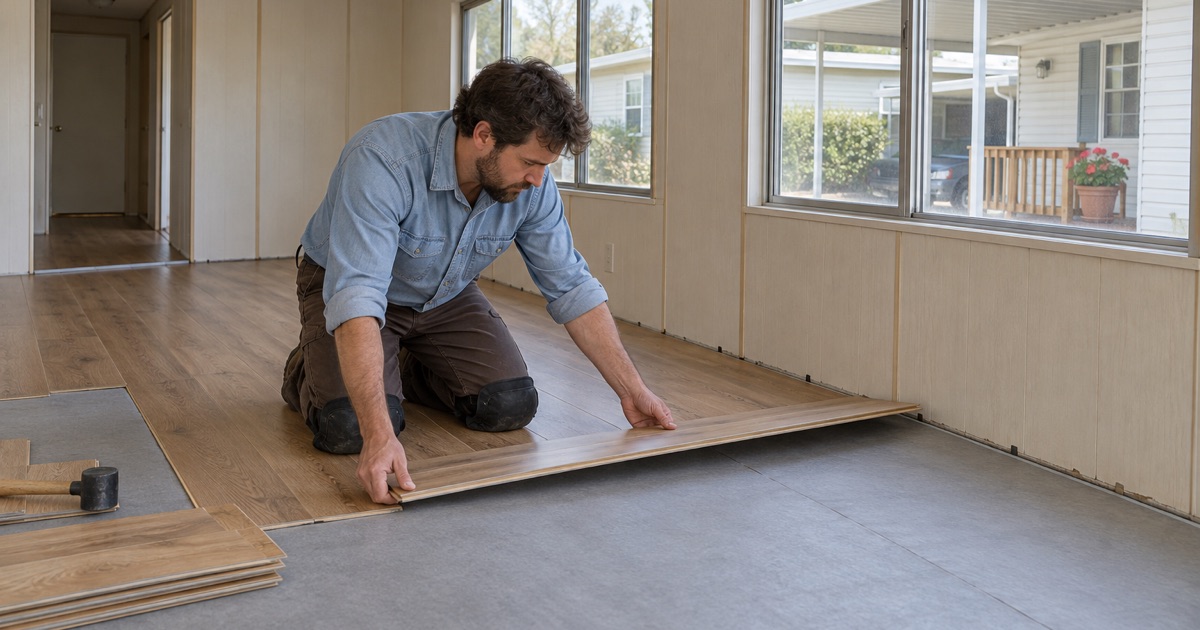
A manufactured home is framed differently from a site-built house, and a heavy solid hardwood nail-down installation is rarely the best fit. Engineered hardwood in a floating installation over a suitable underlayment spreads load evenly and tolerates small movement in the structure. Before recommending anything, we walk the existing subfloor and mark soft spots or signs of past water damage.
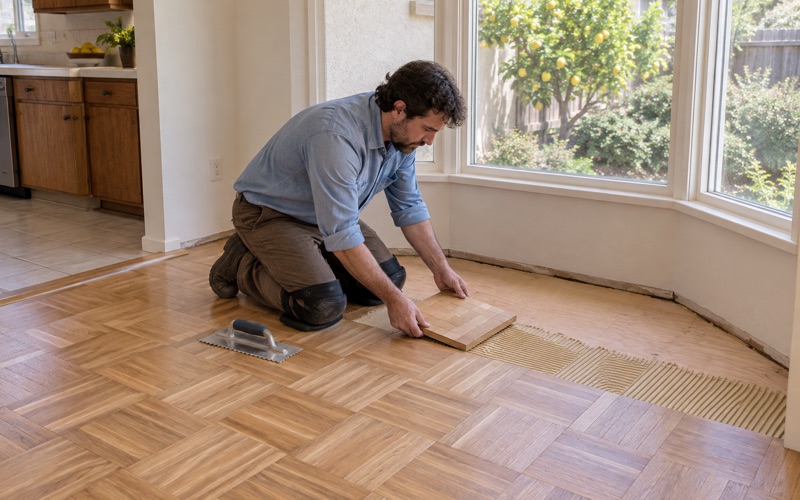
Some owners weigh luxury vinyl plank against engineered wood, and we lay out the tradeoffs plainly: water tolerance, feel underfoot and how each ages. Transitions matter in a compact floor plan, so we plan T-molding and reducer placement at doorways to keep thresholds low and easy to walk over.
Questions We Raise Before Ordering
We do not assume what a park will or will not allow. Before materials are ordered, we ask the homeowner to confirm any requirements that apply to their home, the same way we check association and building rules before ordering a condo or townhome floor. The owner knows their own agreement, and our part is making sure the question comes up early.
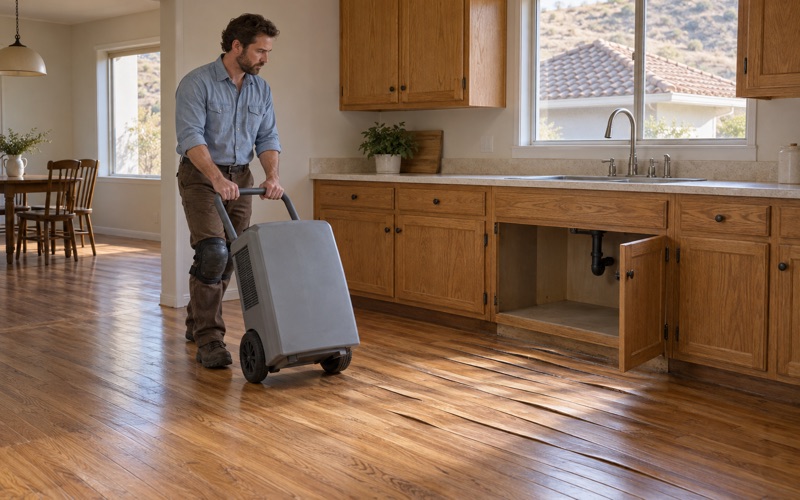
Water damage in a manufactured home needs the same discipline as anywhere else. When boards are stained or soft, we find the source of the leak and take readings with a pin moisture meter before replacing anything. That keeps a new floor from being laid over a problem that is still active.
Turning Over a Rental Unit
A City Close to Half Renters
Renters occupy 45.2 percent of Montclair’s occupied housing units, so a large share of floor work here happens between one tenancy and the next. Rentals in the city include detached houses, duplexes, small apartment buildings and larger complexes. Each type brings its own schedule, access and expectations from the owner or property manager.
Time is usually the priority in a turnover. An empty unit can be sanded, sealed and finished without working around furniture or residents, which makes it the easiest moment to do a full refinish instead of spot repairs. We sequence the work so painters and cleaners can follow without walking on a floor that is still curing.
Screen and Recoat or Full Sand
If the finish is dull but the wood itself is not worn through, a screen and recoat restores the surface with far less downtime than a full sand. It abrades the existing finish lightly and adds a fresh coat on top. It will not remove deep scratches, and we say so before a landlord pays for it.
Gray traffic lanes, deep gouges and pet damage that has reached bare wood call for a full sand through the grit sequence, followed by sanding sealer and new coats. We photograph the floor before work starts, which gives the owner a clear record of its condition at move-out alongside any Civil Code 1950.5 security deposit paperwork they keep.
Finishes That Hold Up to Tenant Traffic
For rentals we compare waterborne polyurethane and oil-modified polyurethane side by side. Waterborne finishes dry clear and let a unit return to service sooner, while oil-modified finishes warm to an amber tone over time. A lower sheen level, such as satin or matte, hides the everyday scuffs that come with move-ins and move-outs.
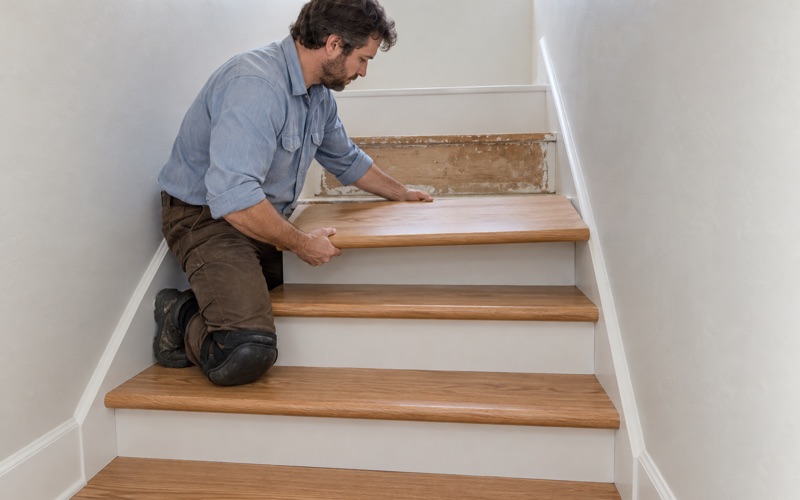
Stairs in townhome-style rentals take the hardest wear. We quote them by the tread and riser rather than folding them into a square-foot price, and we check each stair nosing and bullnose tread for loose fasteners before finishing. A loose nosing is a safety issue for the next tenant, not just a cosmetic one.
Newer Homes and Planning the Job
Homes Built Since 2000
Not every Montclair home is postwar. About 16.3 percent of the city’s housing units were built in 2000 or later, including 732 in the 2010s. When a newer home has a prefinished engineered floor with an aluminum oxide prefinish, that surface cannot be buffed and recoated the way a site-finished floor can.
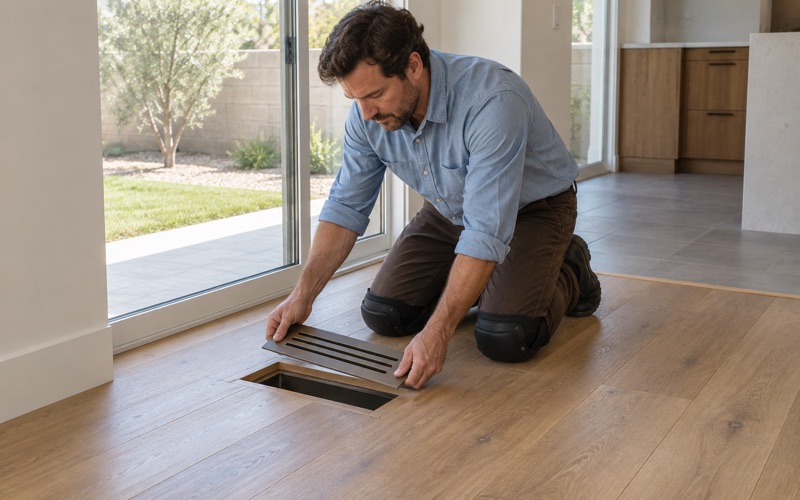
Whether an engineered floor can be refinished depends on the thickness of its wear layer. We measure it, often at a floor vent or a removed threshold, before telling an owner whether sanding is possible. When the wear layer is too thin, board replacement or a new installation is the honest recommendation.
Species, Moisture and Installation Choices
For new installations we compare species by Janka hardness rating. Red oak is a common match for older strip floors, while white oak, hickory and maple each bring a different grain and hardness. Plain-sawn, rift-sawn and quarter-sawn boards also show different figure, and select grade reads cleaner than character grade.
Montclair sits in National Weather Service forecast zone CAZ048, the San Bernardino and Riverside County Valleys. Wood responds to seasonal swings in indoor humidity, so we acclimate new boards and take readings before installation. Over concrete, we use in-situ relative humidity testing to ASTM F2170 and install a vapor retarder where the manufacturer calls for one.
What to Have Ready Before Work Starts
A few answers settle most of a plan: the year the house was built, whether the floor is solid or engineered, and whether anyone will live there during the work. For permit questions, the Building Division of the City of Montclair Community Development Department at 5111 Benito Street is the office to ask, and most permits there are issued over the counter at City Hall.
Fire, smoke and water losses follow their own path. We photograph and document smoke and ash residue or water damage so the insurance adjuster sees what we see. Once moisture readings confirm the structure is dry, we set the repair plan and schedule the boards.
- 20+ Years of Wood Floor Work
- Free In-Home Estimates
- Dust-Contained Sanding