Diamond Bar Wood Flooring has spent more than 20 years on wood-flooring in Rowland Heights and across the valley, refinishing worn oak, replacing water-damaged boards and installing new solid and engineered floors. Before we quote any of it, we find out when the house was built. That single date shapes how we sand, what we test for and which installation method suits the subfloor underneath.
A floor in a house from 1965 and a floor in a house from 1995 rarely need the same plan. One may be site-finished red oak worn to bare wood down the hallway, while the other may carry an engineered plank whose wear layer decides whether sanding is possible at all. We measure, test and look before we promise anything.
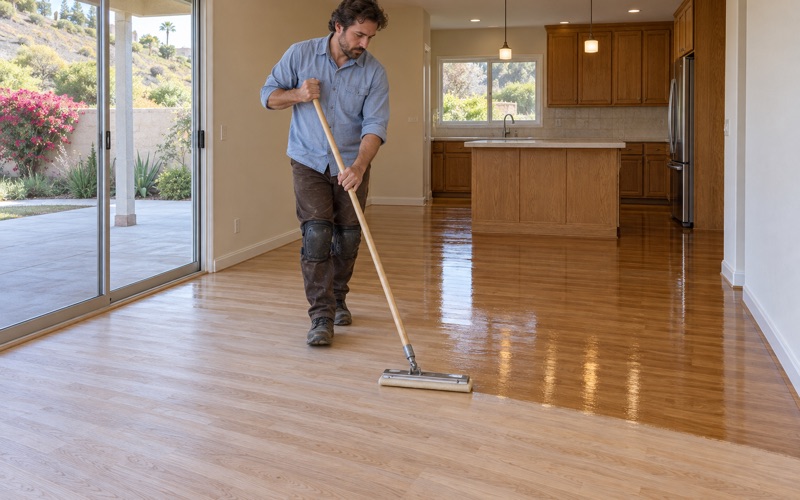
Our crews work in occupied homes, sealing off rooms with dust containment and moving through the house one space at a time so families can keep living there. Every refinish ends with a written cure schedule covering when to walk on the floor, when furniture can return and when rugs can go back down.
Floors Across Four Decades of Rowland Heights Houses
Rowland Heights does not have one build era. The ACS 2024 five-year estimates put 22.7 percent of its housing units in the 1960s, 30.4 percent in the 1970s, 19.6 percent in the 1980s and 14.0 percent in the 1990s. No single decade holds even a third of the housing, so we never walk into a house here assuming we already know what is under the carpet.
That spread is why our first question is the year a house was built, not its square footage. The answer tells us what flooring was likely installed originally, which finishes may be layered on top of it, and what safety steps the job calls for before a drum sander touches a board.
Houses From the 1960s and 1970s
More than half the homes in Rowland Heights were built in these two decades, and nearly all of them predate 1978. On those houses we follow lead-safe work practices under the EPA Lead Renovation, Repair and Painting Rule, because old paint on baseboards, door casings and stair risers can end up in the dust a sanding job creates. HEPA dust extraction on the sanders and a sealed work area keep that dust out of the rest of the home.
Houses of this age can hide original hardwood under carpet or sheet flooring, and sometimes black mastic or cutback adhesive left behind by an earlier tile job. We identify what we find before removing it, since older adhesives need to be handled on their own terms rather than ground into the air. Where solid red oak or white oak survives, a full sand through a proper grit sequence can often bring it back.
Houses From the 1980s
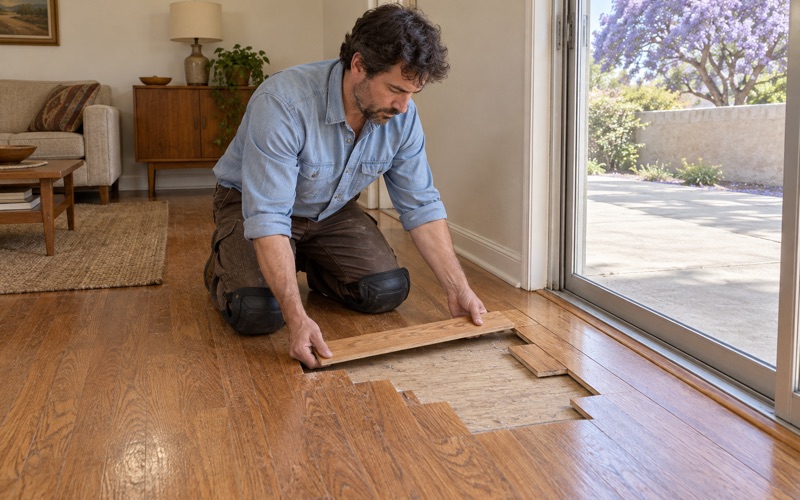
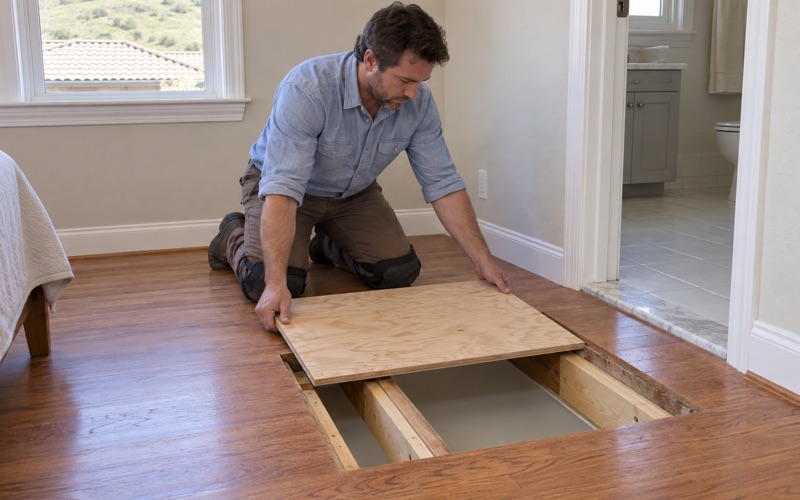
The 1980s layer, roughly one house in five here, sits after the lead cutoff but has had decades to collect its own wear. Floors from that era can show traffic lanes worn through the finish, board gapping, and patches where a past repair used mismatched wood. A board replacement or weave-in repair blends new boards into the existing floor before the whole room is refinished.
Some of these houses were given engineered or prefinished flooring during later remodels. Before we recommend sanding one, we measure the wear layer, because a thin veneer can be sanded through in a single pass and there is no fixing that afterward.
Why the Build Year Comes First
Confirming the build year takes minutes and changes the whole job. It sets whether lead-safe practices apply, helps us anticipate what the subfloor is made of, and tells us which finish layers we may be cutting through.
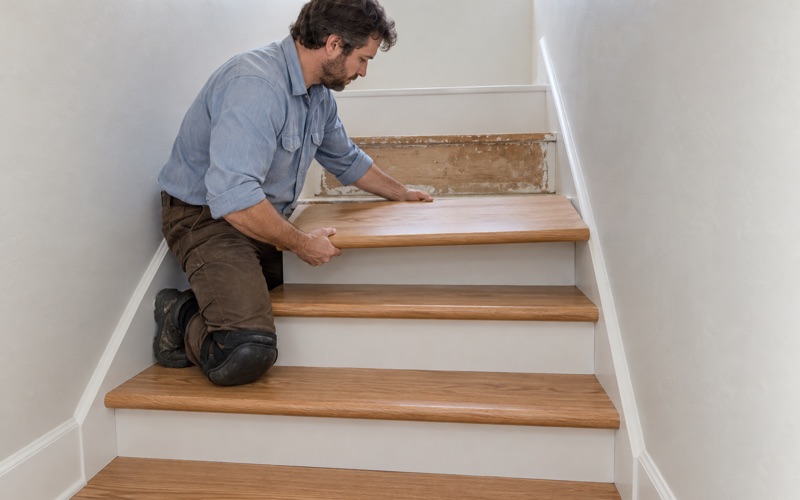
It also keeps quotes honest. A price built on the assumption of one tract type would be wrong for most houses in this community, so we inspect first and price the floor that is actually there. Stairs are quoted by the tread and riser, never folded into the square footage of the rooms around them.
Looking for wood-flooring closer to South San Jose Hills? See South San Jose Hills Wood-Flooring.
Houses Built in the 1990s and Homes Toward the Puente Hills
The 1990s Layer
Rowland Heights added 2,201 housing units in the 1990s, which is 14.0 percent of today’s housing and more than it has built in all the years since combined. That makes the 1990s house a real part of our work here, not an exception to plan around.
Floors in houses from this decade can include site-finished oak, early prefinished plank with an aluminum oxide prefinish, or later replacements, so we confirm each floor rather than assuming it. An aluminum oxide prefinish resists ordinary screening, which changes the refinish plan. Where it has worn through, full sanding depends on how much wood sits above the tongue or, on engineered plank, how thick the wear layer is.
From the Valley Floor to the Slopes
Los Angeles County’s East San Gabriel Valley Area Plan describes Rowland Heights as having varied topography rising from the valley floor at the northern edge of the community to the slopes of the Puente Hills bordering Orange County. Houses along that rise sit at different elevations and on very different lots, and the logistics of a flooring job change with them.
On a hillside lot, delivery can mean carrying boxes of hardwood up steps or a steep driveway, and we plan for that in the schedule rather than rushing material into the house. Wood still needs time to acclimate inside the rooms where it will be installed. We take pin moisture meter readings of both boards and subfloor before any nail-down installation begins.
Moisture, Leaks and Pests at Any Elevation
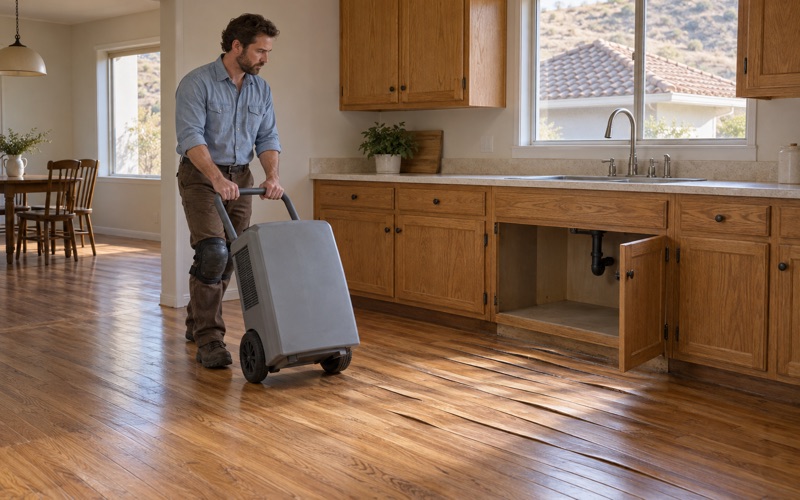
Water damage looks much the same whether a house sits near the valley floor or up a slope: cupping, crowning, buckling or dark staining along the boards. Before any water-damaged board is replaced, we find the source of the leak and take moisture readings, since new wood laid over a wet subfloor will move the same way the old wood did. Over concrete, that can mean an in-situ relative humidity test under ASTM F2170 before a glue-down or floating installation goes in.
When damage is part of an insurance claim, we photograph and document water, smoke and ash damage so the adjuster sees the same conditions we do. If we find termite frass or kick-out holes while boards are up, we identify the signs of drywood termites and refer the homeowner to a licensed pest company before replacement boards go down.
Apartments, Condos and Mobile Homes
Single-family houses make up most of Rowland Heights, and 68.0 percent of occupied homes are owner-occupied. The community’s larger rental buildings, attached homes and manufactured housing each call for a different approach to floor work.
Larger Rental Buildings
Of the 4,830 renter households in Rowland Heights, 958, or 19.8 percent, live in buildings of fifty or more units, according to ACS table B25032. Floor work in a building that size involves shared hallways and stairwells, neighbors on the other side of walls and ceilings, and building management with its own rules.
We confirm the building’s rules before any floor is ordered, including work hours, material deliveries and any requirement for sound-rated underlayment beneath a hard floor. Impact insulation class and sound transmission class requirements are set by the building or association, so we work to the documented requirement rather than offering a number of our own.
Condos, Townhomes and Associations
Owners of condos and townhomes often answer to an association governed by the Davis-Stirling Common Interest Development Act, and many associations route flooring changes through an architectural review committee. We check those rules before ordering material, so a new floor is not held up after the boxes arrive.
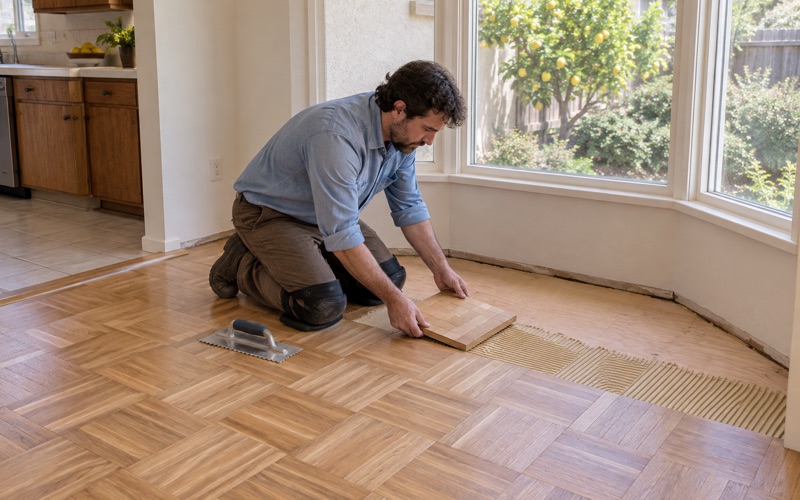
A floating installation over suitable underlayment, a glue-down engineered plank, or a luxury vinyl plank alternative can each fit different building rules. The right choice depends on what the governing documents allow, the condition of the subfloor, and how the owner wants the finished floor to look and wear.
Mobile Homes
Rowland Heights has 638 mobile homes, 542 of them owner-occupied, a housing type most flooring companies overlook. Flooring in a manufactured home sits on a different kind of floor structure than a site-built house, so weight, fastening and subfloor condition all need checking before hardwood goes down.
We look for soft spots and old water damage in the subfloor first. Where solid hardwood would be a poor fit, we may recommend engineered hardwood or a floating installation that suits the structure and still gives the owner a real wood surface.
Floor Work Under Los Angeles County Rules
Rowland Heights is unincorporated, so there is no city hall setting its building rules. Los Angeles County governs here, with Los Angeles County Public Works, Building and Safety serving unincorporated communities and the county’s building code applying instead of a city ordinance.
County Building Questions
Whether a particular flooring project involves county building review is a question for Los Angeles County Public Works, Building and Safety, and we point homeowners there rather than guessing. That conversation is especially worth having before structural repairs, such as a sistered joist under a sagging floor or subfloor replacement after a long-running leak.
Homeowners thinking about seismic work alongside new floors may also want to know that ZIP code 91748 appeared on the 2025 Southern California list for California’s Earthquake Brace + Bolt program. Eligibility is based on ZIP code and the list is updated, so check the current year’s list before planning around it.
Rental Units and County Tenant Rules
Rental housing in unincorporated Los Angeles County can fall under the county’s Rent Stabilization and Tenant Protections Ordinance, administered by the Department of Consumer and Business Affairs, for units with a certificate of occupancy issued on or before February 1, 1995. Much of the housing in Rowland Heights predates that date, so landlords planning floor work in an occupied rental should know which county rules cover the unit.
For those owners we schedule around occupancy, use dust containment so tenants and neighbors are not living in sanding dust, and leave a written cure schedule. It tells everyone when the floor can take foot traffic, when furniture can go back, and when rugs are safe to lay down.
Finishes and Air Quality Rules
Rowland Heights sits within the South Coast Air Quality Management District, and SCAQMD Rule 1113 sets VOC limits for wood coatings that bind anyone applying or storing them at a job site. We choose waterborne polyurethane, hardwax oil and other finishes that fit those limits, then match the sheen level and color to the house.
The finish also shapes how fast a family gets the room back. Waterborne finishes generally cure faster than traditional oil-based products, and the cure schedule we leave behind reflects the specific product used on that floor rather than a generic estimate.
- 20+ Years of Wood Floor Work
- Free In-Home Estimates
- Dust-Contained Sanding