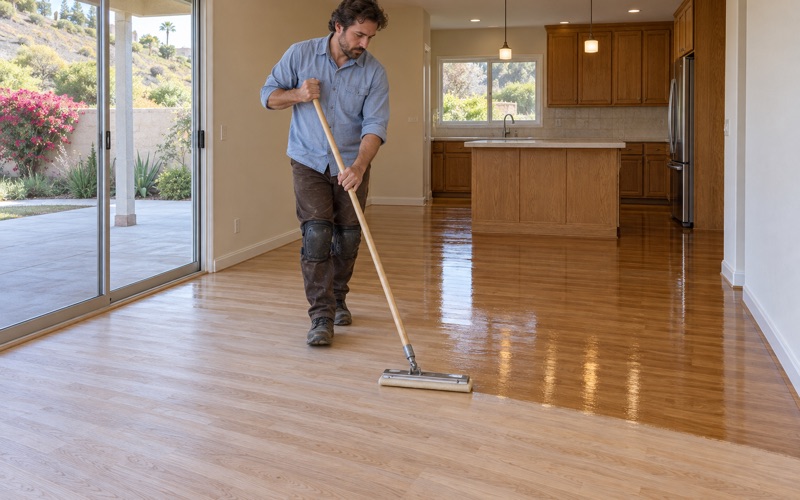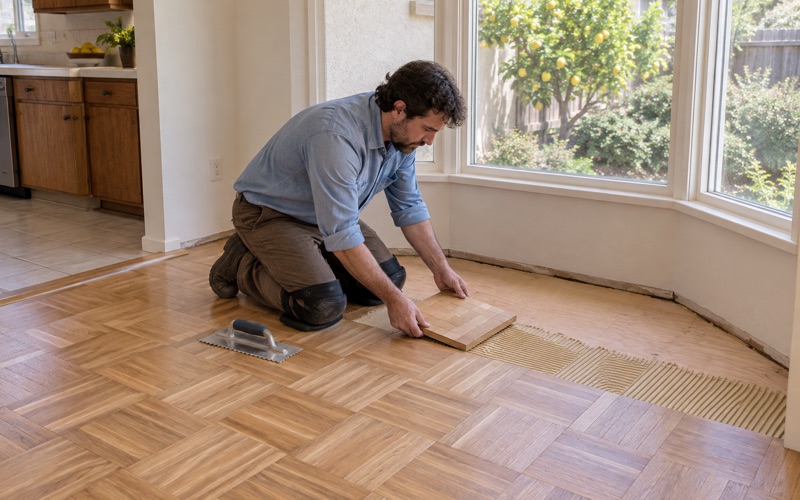
Diamond Bar Wood Flooring has spent more than 20 years on wood flooring, and our work in Signal Hill covers the full range: sanding and refinishing, board repair, stair work and new installations. We handle solid hardwood, engineered hardwood and the transitions between them, in houses and in the small apartment buildings owners rent out.
Every job starts with a look at the floor and a few questions about the building. How old is the house, how many times have the boards been sanded, and what finish is on them now? Those answers decide whether a floor gets a full sand, a screen and recoat, a repair, or a replacement.
We price from what we find on site rather than from a flat square-foot number. Stairs are quoted separately, finishes are chosen with the air district’s rules in mind, and nobody walks on a new coat until the written cure schedule says it is ready.
Floors in Signal Hill’s Older Houses
Checking the Build Year Before Sanding
Signal Hill has a real share of older housing for a city its size. Census estimates (ACS 2024 5-year) count 353 of its 4,811 housing units, or 7.3 percent, as built in 1939 or earlier, and 24.3 percent of all units went up before 1960. Nearly half the housing stock, 48.9 percent, predates 1980.
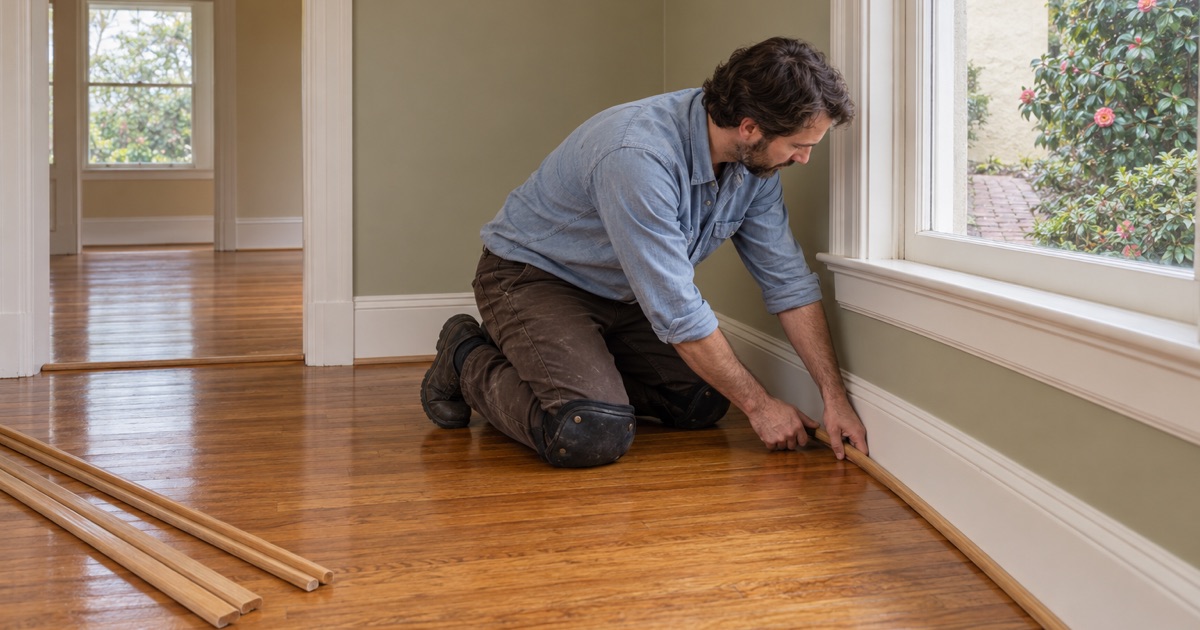
That is why we confirm the year a house was built before a drum sander touches the floor. On any home built before 1978, old finish layers can carry lead-based coatings, so we set up following lead-safe work practices under the EPA Lead Renovation, Repair and Painting Rule. That means containment, HEPA dust extraction and careful cleanup rather than open sanding.
Floors That Have Been Sanded Before
A solid hardwood floor in an older house may have been refinished several times, and each pass removes wood above the tongue. Before we choose a grit sequence, we pull a floor register or check a threshold to see how much material is left. If the tongue is close to showing, a screen and recoat can buy years without taking more wood off.
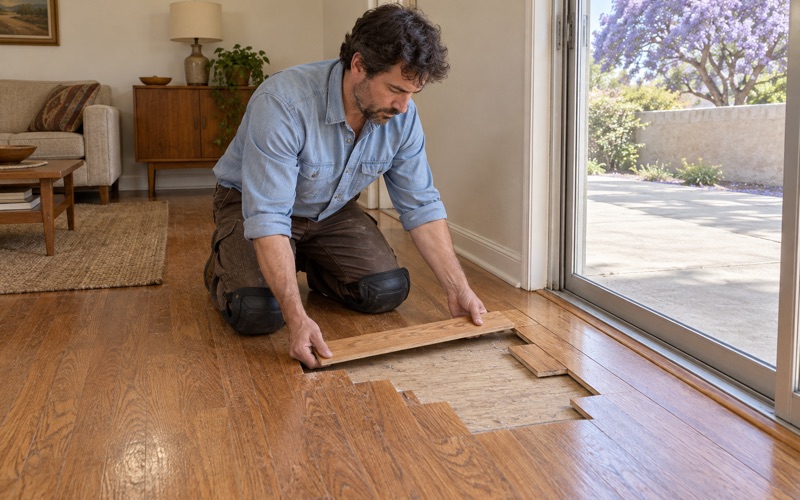
Older floors also tend to show board gapping, loose boards and old face nails. We reset or replace loose boards, fill gaps where filling will hold, and use a weave-in repair so new red oak or white oak blends into the surrounding pattern instead of reading as a patch.
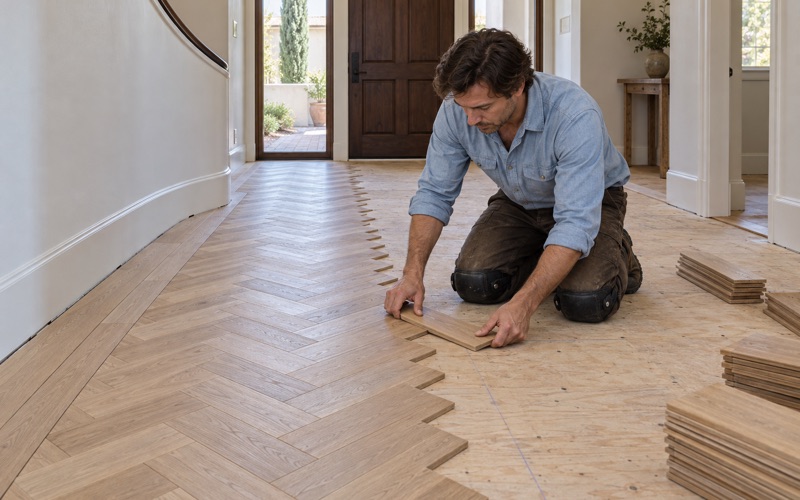
We also match the grade. A house with select grade boards looks wrong with a character grade patch full of knots and mineral streaks, so we sort replacement stock by color and grain before it goes down. Older floors laid in parquet or herringbone get the same care, piece by piece.
Subfloor and Movement Problems
Cupping, crowning and buckling tell us something about moisture or fastening, and we find the cause before we sand. A floor sanded flat while it is still cupped can crown later once the boards dry out. We take pin moisture meter readings across the room and compare them before deciding when the work can start.
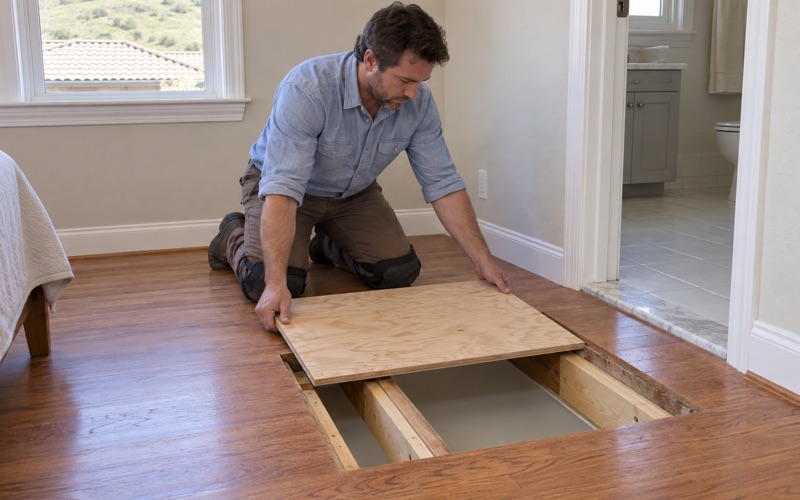
Where boards flex underfoot, we check the plywood subfloor and fastening from the surface. If the problem runs deeper than the floor itself, we say so plainly and recommend the right trade rather than covering it with a new finish.
Old fasteners get attention too. A floor that was face-nailed decades ago may need its nails set before sanding, or the drum sander will catch them. When we add boards, we use flooring cleats or flooring staples suited to the thickness of the stock and follow National Wood Flooring Association installation guidelines for spacing.
Looking for wood-flooring closer to La Cañada Flintridge? See La Cañada Flintridge Wood-Flooring.
A Town Incorporated in the Oil Era
From Alamitos No. 1 to Its Own City
Alamitos Well Number 1 struck oil on June 23, 1921, and the hill was soon covered with more than 100 oil derricks. Signal Hill voted to incorporate on April 22, 1924, roughly three years after the strike. The well site was designated California Historical Landmark number 580 in 1957.
Oil production stayed the mainstay until declining prices cut it back in the 1970s, and the city formed its redevelopment agency in 1974. The building record follows that change: the 1980s were the largest single building decade, with 23.0 percent of today’s units, laid over the older layer of houses from the decades before.
An Enclave Inside Long Beach
Signal Hill covers about 2.2 square miles and is entirely surrounded by the City of Long Beach. The hill itself rises 365 feet above the surrounding city. For a floor project, the practical point is that an address can look like Long Beach from the street and still sit under a different city government.
That matters when a job goes beyond the floor. City questions go to Signal Hill, not to Long Beach, so we confirm the address belongs to the enclave before anyone calls an office. It saves owners a wasted trip and a call to the wrong counter.
Signal Hill’s Building Office
The City of Signal Hill Community Development Department runs Building Safety, which reviews plans, issues permits and inspects work. Since October 28, 2024, the department has been temporarily working from the Council Chamber at 2175 Cherry Avenue.
We do not give owners a permit ruling on floor work. When a project grows to include framing, plumbing or electrical changes alongside the new floor, we point the owner to Building Safety so the city answers the question for that exact scope.
Keeping those two conversations separate protects the owner. We handle the floor, the right trade handles anything behind the walls or under the boards, and the city speaks for itself on what its own review covers.
Detached Houses and Small Apartment Buildings
Owner-Occupied Detached Houses
Signal Hill is split almost evenly between owners and renters: 2,285 owner-occupied units and 2,260 renter-occupied units. Among owners, 1,194 households live in detached houses, which is 52.3 percent of all owner households. Detached houses make up 1,799 units, about 37.4 percent of the city’s housing.
These are the jobs where owners most often ask about a full refinish, a stain change or a switch in species. We walk through the Janka hardness rating of red oak, white oak, hickory and maple, and how plain-sawn, rift-sawn and quarter-sawn boards look once the finish goes on.
Some owners want wider boards than the house has now. Wide plank solid hardwood moves more with seasonal changes than narrow strip flooring, so we talk through board width, acclimation time and fastening before a layout is set. Where a new floor meets tile or carpet, a T-molding or reducer finishes the edge cleanly.
Renters in Five-to-Nine-Unit Buildings
The city also has 802 units in five-to-nine-unit buildings, 16.7 percent of its housing, and 651 renter households, or 28.8 percent of renters, live in buildings of that size. For owners of those buildings, floor work usually happens between tenants, on a deadline set by the next move-in date.
We plan unit turnovers around that date. A screen and recoat can often be done and cured faster than a full sand, and a board replacement at a doorway or kitchen edge can fix the worst wear without redoing the room. Where the building has its own rules for contractors or noise, we check them before the floor is ordered.
Engineered Floors in Rentals and Condos
Many newer units carry engineered hardwood with an aluminum oxide prefinish. Before we promise that an engineered floor can be sanded, we measure the wear layer. A thin wear layer may only allow a recoat or a board-by-board replacement, and we tell the owner that up front.
In stacked units, underlayment and installation method matter to the neighbors below. Floating installation, glue-down installation and nail-down installation each suit different subfloors, and where a sound-rated underlayment is part of the association’s rules, we confirm what the rules require before anything is ordered.
Planning a Floor Job in Signal Hill
Finish Choices and the Air District
Signal Hill sits within the South Coast Air Quality Management District, and SCAQMD Rule 1113 sets the VOC limit for wood coatings. That limit binds anyone applying or storing coatings at a job site, so we choose waterborne polyurethane, oil-modified polyurethane, hardwax oil and sanding sealer products that fit it.
Sheen level is a separate choice. Matte and satin hide scratches and dust better in busy rooms, while semi-gloss shows more of the grain. We sample the stain and sheen on the actual floor so owners see the result in their own light.
Stairs, Repairs and Water Damage
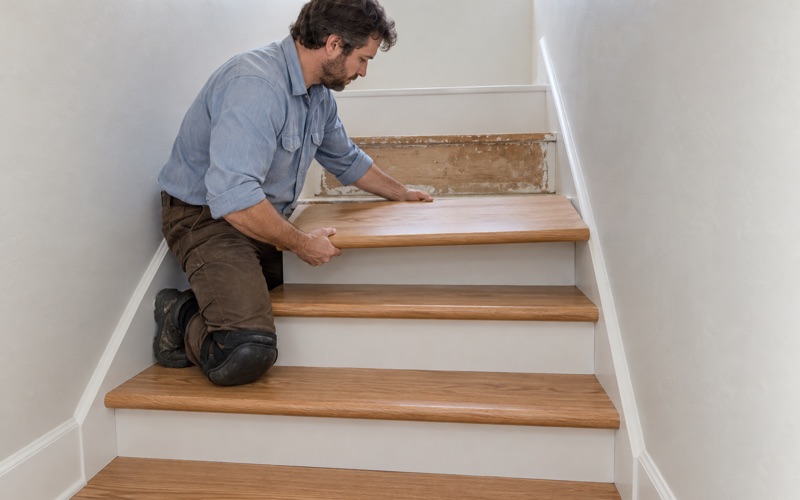
Stairs are priced by the tread and riser, never rolled into the square-foot rate. Stair nosing, a bullnose tread and each stair riser take hand work with an edger and scrapers, and quoting them separately keeps the number honest.
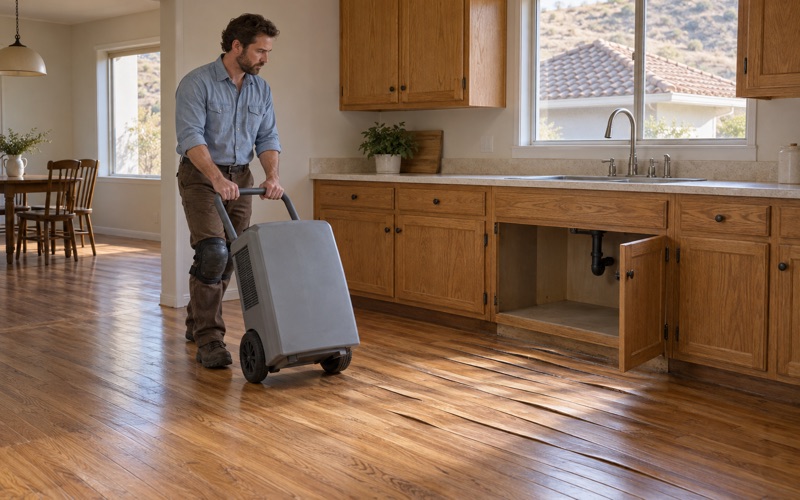
When boards are damaged by water, we find the source of the leak and take moisture readings before replacing anything. Water, smoke and ash damage is photographed and documented so the adjuster sees the same evidence we do. If we spot termite frass or kick-out holes that suggest drywood termites, we refer the owner to a licensed pest company before any boards go back in.
Staying Home During the Work
Most Signal Hill owners stay in the house while we work. A dust containment system with HEPA dust extraction, plus a room-by-room sequence, keeps a path open to the kitchen and bedrooms. We plan the order so the family is never boxed out of the rooms they need.
Every refinish ends with a written cure schedule. It spells out when socks are fine, when shoes are fine, when furniture can come back with felt pads, and when rugs can go down. Following it is the simplest way to protect a finish that took days to build.
- 20+ Years of Wood Floor Work
- Free In-Home Estimates
- Dust-Contained Sanding