Diamond Bar Wood Flooring has spent more than 20 years on wood flooring in South El Monte and the surrounding valley, sanding, repairing and installing floors in houses that range from lived-in family homes to rentals waiting on their next lease. The work changes depending on who holds the keys, and we plan each job around that before we quote it.
Some floors need a full sand to bare wood and a fresh finish. Others need only a screen and recoat, a few replaced boards, or a new engineered floor over a sound subfloor. We look first, measure what we can, and tell you which of those the floor actually calls for rather than defaulting to the largest job.
This page covers what we see most often here: older houses with original oak, rented homes that turn over between tenants, owners refinishing for the long haul, and the smaller share of mobile homes that need a different approach altogether.
Floors in South El Monte’s 1940s and 1950s Houses
An Older Housing Stock Than Most Buyers Expect
The housing here skews older than a quick drive suggests. Census figures show 34.3 percent of the city’s units were built in the 1950s and another 13.5 percent in the 1940s, so more than half the homes predate 1960. The city itself only incorporated on July 30, 1958, which means many of these houses were standing before South El Monte was a city at all.
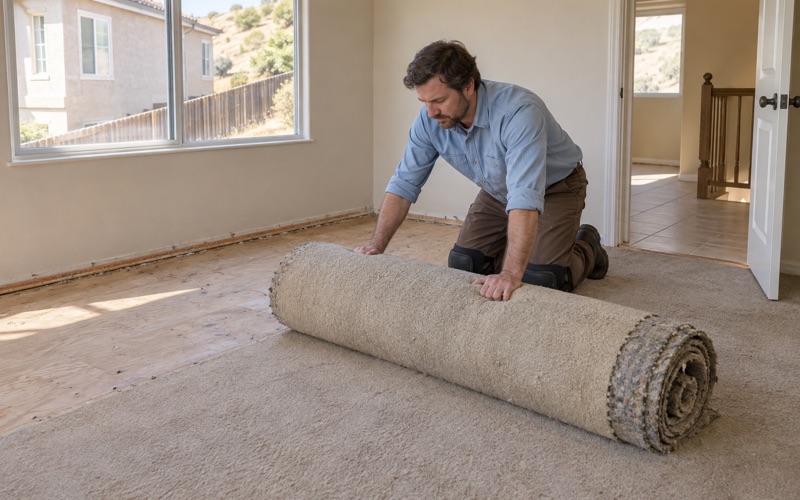
Houses from those decades often carry narrow-strip red oak or white oak laid over a board or plywood subfloor, sometimes hidden under carpet or sheet vinyl for years. When we pull those coverings back, we usually find floors worth saving, along with old staples, tack strip holes and the occasional patch of black mastic that has to be dealt with before any sanding.
Confirming the Build Year Before Sanding
Before a drum sander touches an older floor, we confirm the year the house was built. Homes built before 1978 fall under the EPA Lead Renovation, Repair and Painting Rule, and in this city that covers most of the stock. Old finishes, painted baseboards and shoe molding can all carry lead, so we set up containment and follow lead-safe work practices on those houses.
That step matters just as much in a vacant rental as in an occupied home. Dust settles into vents, closets and window tracks, and the next household lives with whatever is left behind. HEPA dust extraction on the sanders and a careful cleanup at the end keep the job from leaving a problem for anyone who moves in later.
What Seventy Years Does to a Subfloor
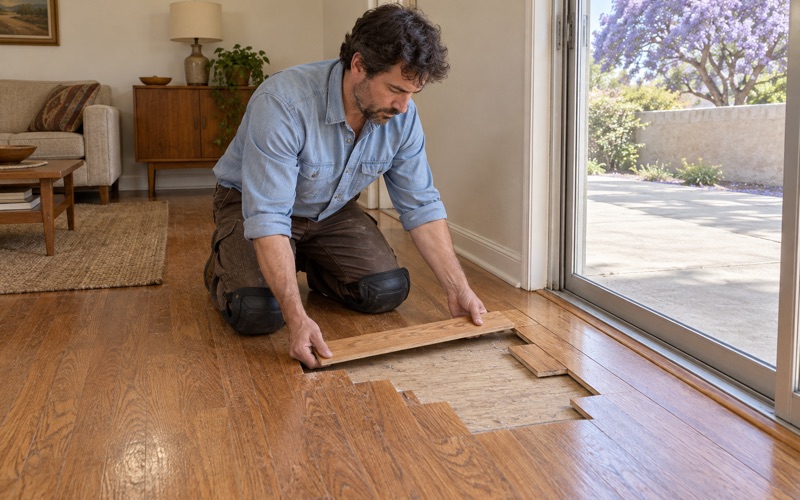
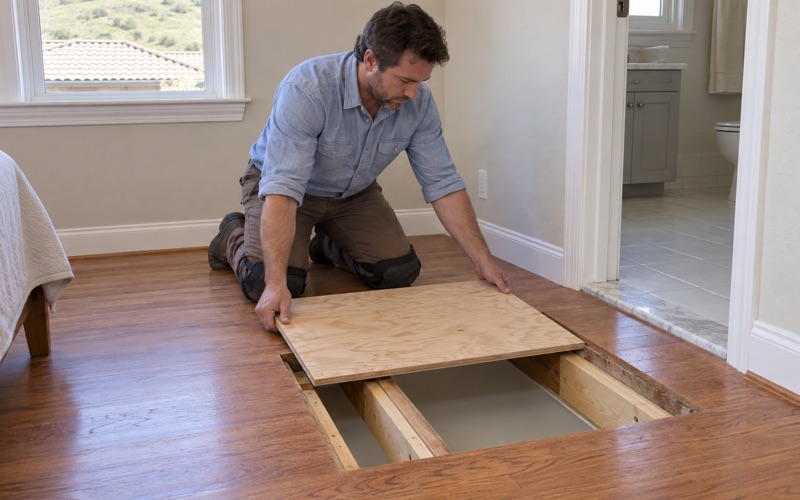
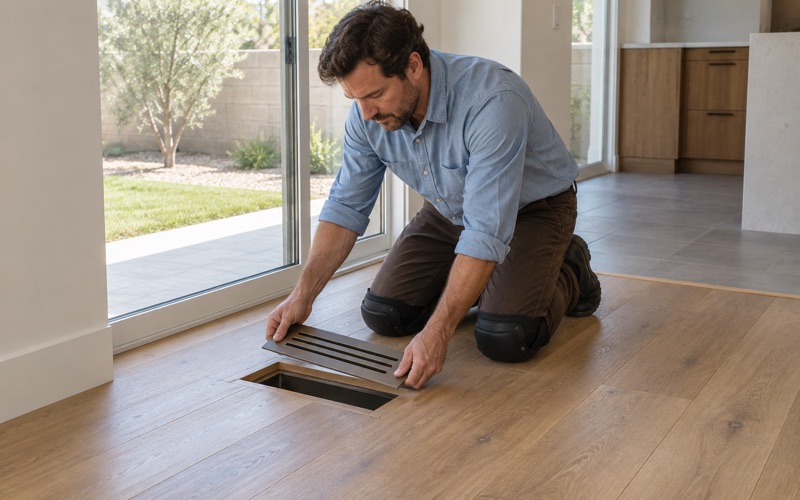
Floors this old have usually been sanded more than once, and each pass removes wood above the tongue. We check the remaining thickness at a floor register or threshold before promising another full sand. Where the wood is too thin, a weave-in repair or new boards may make more sense than one more round with the edger.
We also look for drywood termite signs in older framing and flooring, such as termite frass and small kick-out holes. When we find them, we refer the homeowner to a licensed pest company before replacing any boards. Putting new wood over active damage only moves the problem a few inches, and it tends to show up again as soft spots or board gapping.
Looking for wood-flooring closer to Santa Fe Springs? See Santa Fe Springs Wood-Flooring.
Turning Over Floors Between Tenants in Rented Houses
Rentals Are Detached Houses Here, Not Just Apartments
South El Monte splits almost evenly between owners and renters, with 50.5 percent of occupied units owner-occupied and 49.5 percent rented. What sets the city apart is where those renters live. Nearly half of renter households, 48.3 percent, rent a detached house, so a large share of the wood floors we refinish belong to landlords preparing a single-family home for the next lease.
That shapes the work in practical ways. A rental floor sees furniture dragged in and out, pet traffic and years of wear before anyone calls us, and the turnaround window between tenants is usually short. We schedule around the move-out and move-in dates first and then work out whether the floor needs a full sand or a lighter pass.
Screen and Recoat Versus a Full Sand
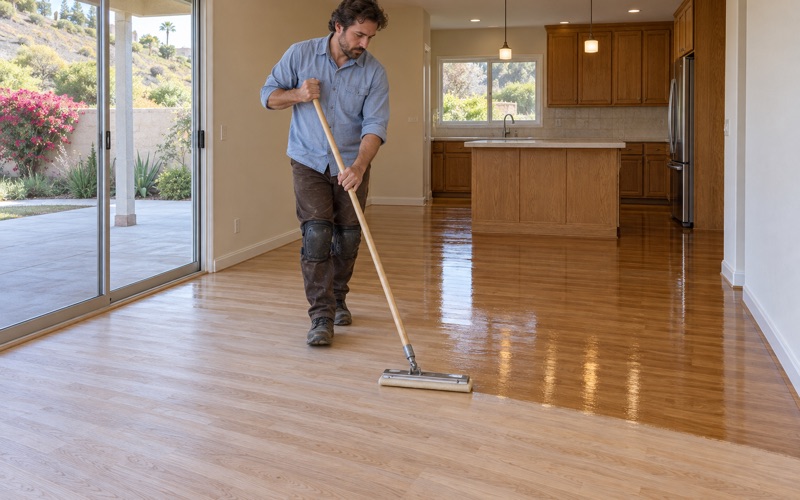
When the existing finish is scuffed but still intact, a screen and recoat can restore the surface in far less time than sanding to bare wood. We abrade the top coat with a multi-head orbital sander or buffer and lay down fresh waterborne polyurethane. It will not remove deep gouges, pet stains or gray patches where the finish has worn through.
When the wear goes into the wood itself, a full sand is the honest answer. We run a proper grit sequence, apply wood filler where boards have separated, and finish with a sanding sealer and topcoats suited to heavy use. For a landlord, a durable finish at a moderate sheen level tends to hide traffic marks better between tenants than a high gloss does.
Documenting a Floor Between Leases
A floor turned over between tenants often ends up part of a move-out inspection and the deposit accounting under Civil Code 1950.5. We photograph the condition of the boards before we start and describe what we found, so the owner has a clear record of scratches, water marks or pet damage separate from ordinary wear.
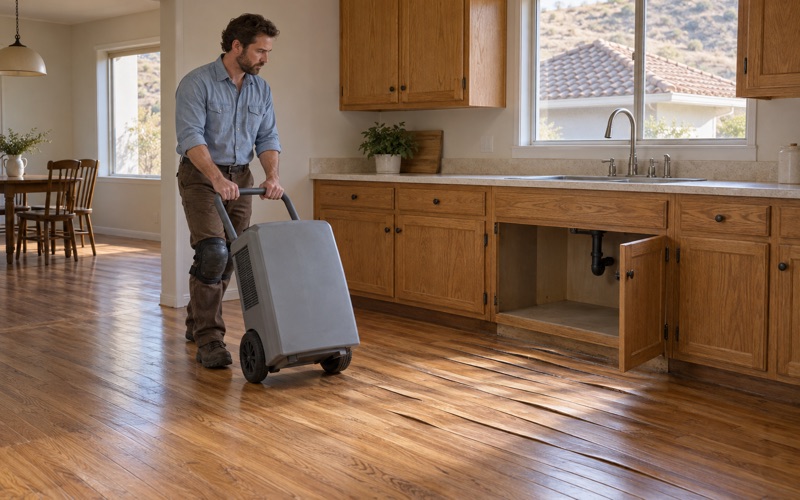
If we find cupping or crowning near a kitchen or bathroom, we locate the source of the moisture and take readings with a pin moisture meter before replacing any boards. A slow plumbing leak left behind by one tenancy can ruin new wood installed for the next, so we treat the cause before we swap the damaged sections.
Owner-Occupied Homes and Long-Term Refinishing
Refinishing While the Family Stays Home
Owners who plan to stay usually want a floor that lasts another decade or two, not a quick cosmetic pass. Most owner-occupied homes here are detached houses, and families rarely want to move out for a week. We work room by room with a dust containment system so bedrooms, the kitchen and a path to the door stay usable while we sand.
Every refinish comes with a written cure schedule. It spells out when socks are fine on the new finish, when furniture can return, and how long to wait before laying rugs. Those timelines differ between finish types, and having them on paper keeps a well-meaning family member from dragging a couch across a floor that has not yet cured.
Choosing a Finish That Fits Air District Rules
Wood coatings used at a job site in this part of Los Angeles County are subject to SCAQMD Rule 1113, which sets VOC limits for anyone applying or storing them. We choose finishes that fit that limit, which in practice often means a waterborne polyurethane, and sometimes a hardwax oil where an owner wants a lower-sheen, easily repaired surface.
Oil-modified polyurethane still has its place on some jobs, but only in products that meet the rule. We talk through the tradeoffs with you: how each finish ambers over time, how it handles scratches from pets and kitchen chairs, and how easily a worn traffic lane can be touched up later without sanding the entire room again.
Stairs, Replacements and Engineered Floors
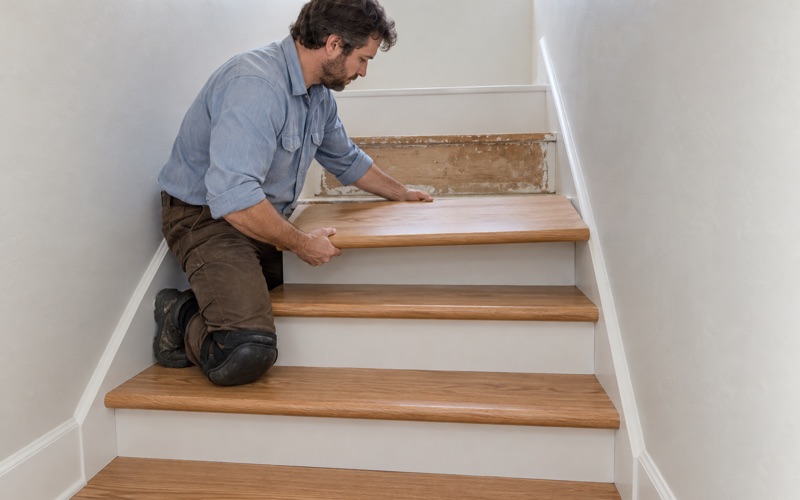
Many of these homes have stairs or split-level steps that were carpeted over long ago. We quote stairs by the tread and riser rather than folding them into a square-foot price, because each bullnose tread, stair nosing and riser takes hand work that a flat floor does not. That keeps the estimate honest when some steps need replacement and others only need sanding.
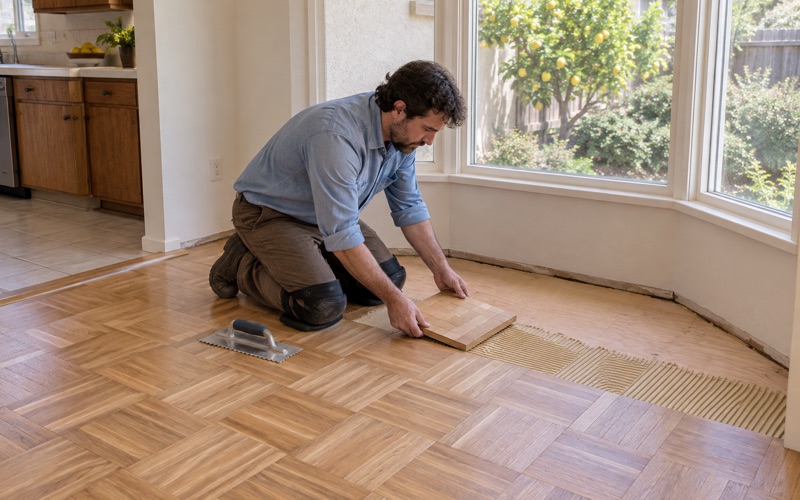
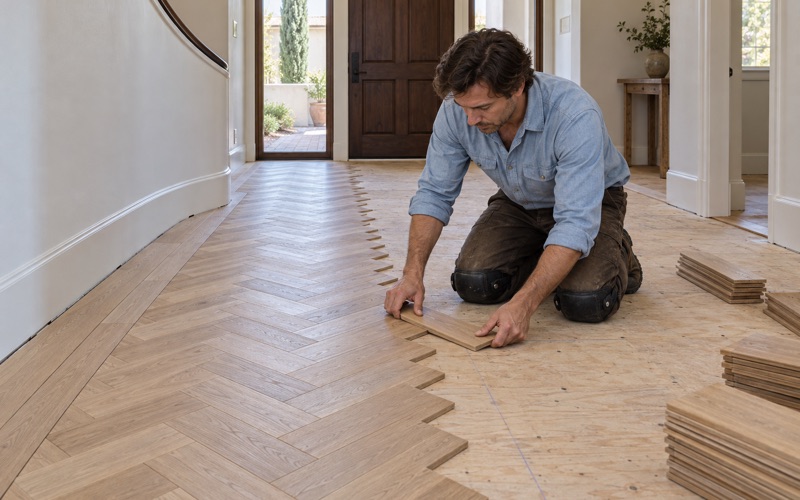
When an owner wants to replace rather than refinish, we compare solid hardwood with engineered hardwood for the space. On an existing engineered floor, we measure the wear layer before saying whether it can be sanded at all. A thin wear layer may accept a screen and recoat once, while a thicker one can handle a full sand and a new color.
Mobile Homes and Planning Floor Work in South El Monte
Floors in the City’s Mobile Homes
Mobile homes make up 9.9 percent of the city’s housing units, 525 in total, and they are split between owners and renters. Their floors are a different animal from a 1950s house. Subfloors are often thinner panels, sometimes OSB subfloor, and they can flex under heavy traffic or soften where a water heater or washer has leaked over the years.
For these homes we usually steer toward a floating installation of engineered hardwood or, where moisture risk is high, luxury vinyl plank over a suitable underlayment. We check the subfloor for soft spots and moisture before ordering material. If panels need replacing first, we say so up front instead of laying a new floor over a base that will not hold it.
Weather and Timing the Finish
South El Monte sits in the National Weather Service forecast zone for the Los Angeles County San Gabriel Valley. Temperature and humidity inside a house affect how quickly a finish dries and how a new floor settles in, so we check the conditions in the rooms before we apply coats and let new boards acclimate before installation.
In practice that means we may leave a window closed, run the air conditioning, or adjust the number of coats laid down in a day. Rushing a finish in the wrong conditions can leave bubbles, soft spots or a cloudy look. A little patience at this stage saves a return visit and another round of screening.
What to Expect When You Call
We start with a visit to look at the floor, ask when the house was built, and learn whether it is your home or a rental between tenants. From there we explain the options, from a screen and recoat to a full sand or new installation, and give you a written estimate that separates stairs, repairs and finish work.
For rentals we plan around lease dates, and for occupied homes we plan around the family. Either way, you get a clear sequence of rooms, a realistic timeline and the cure schedule before we pack up. If something unexpected turns up under the old carpet, such as termite damage or a hidden leak, we stop and talk it through before going further.
- 20+ Years of Wood Floor Work
- Free In-Home Estimates
- Dust-Contained Sanding