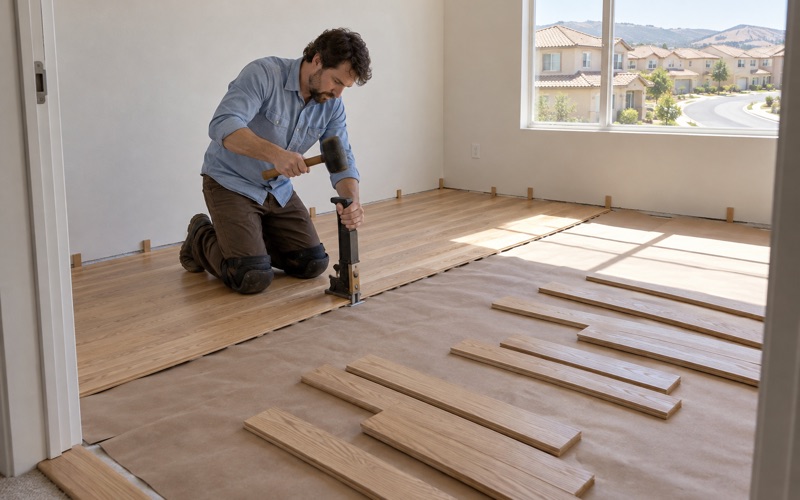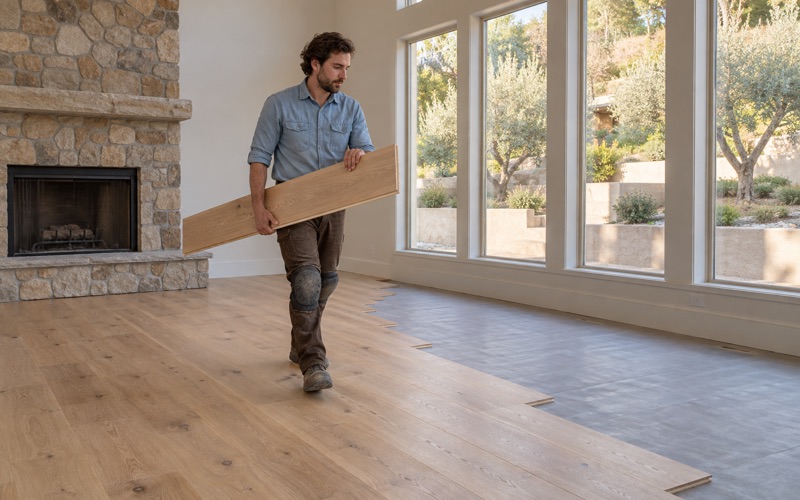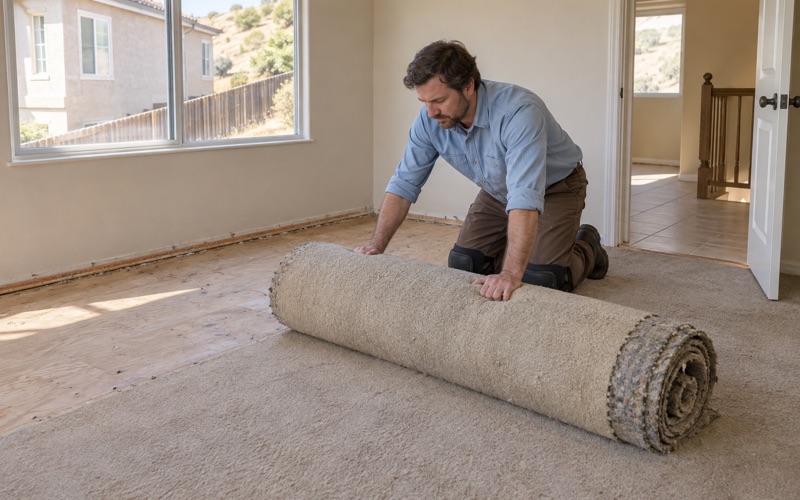
Diamond Bar Wood Flooring has spent more than 20 years on wood flooring in Valinda and across the San Gabriel Valley, sanding, repairing and installing floors in houses whose owners plan to stay. Most of the calls we take here are about renewal rather than reinvention. Someone wants the oak under a worn finish brought back, a damaged run of boards rewoven, or a tired carpeted room finally turned into hardwood.
Our process starts before any machine is unloaded. We confirm the year the house was built, because that decides how sanding dust is handled, and we measure the wear layer on any engineered floor before we tell you it can be sanded at all. Moisture readings come before board replacement, and the source of a leak is found first.
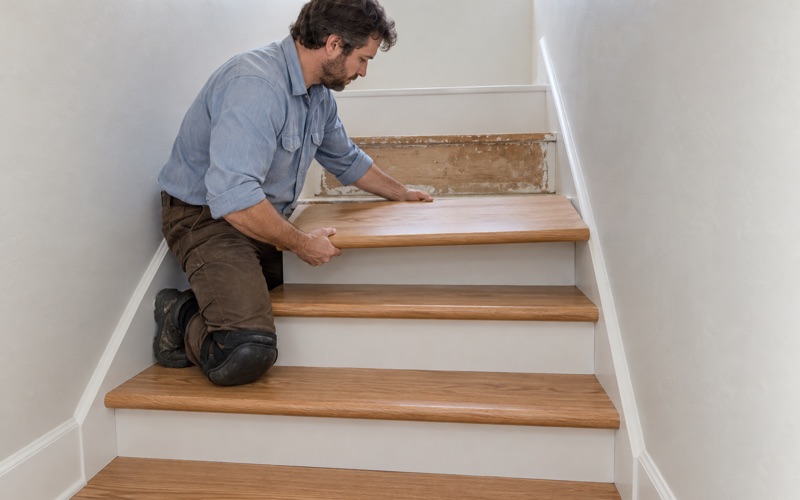
When the finish goes down, you get a written cure schedule that tells you when to walk on it, when furniture can return and when rugs can go back. Stairs are priced tread by tread and riser by riser, so a staircase never hides inside a square-foot number. The sections below cover what that looks like in the houses of this community.
Floors in Valinda’s 1950s Houses
One Building Generation
Valinda’s housing stock comes largely from one decade. The 2024 American Community Survey five-year estimates put 2,799 of its 4,954 housing units in the 1950s, which is 56.5 percent, and two out of three units predate 1960. That means many of the floors we see here were laid within a few years of each other, by builders working with the same postwar methods.
Los Angeles County’s East San Gabriel Valley Area Plan describes the community as single-family residential subdivisions with limited multi-family residential, and the numbers agree. Of those 4,954 units, 4,446 are one-unit detached houses, or 89.7 percent. For floor work, that points to whole-house jobs in owner-lived homes far more often than shared-wall units with association sign-offs.
What Is Often Under the Carpet
Carpet and sheet goods went over a lot of original wood in houses of this age. When we pull up a corner, we look for the species, the board width, how the boards were fastened and how many sandings the floor has already had. Red oak strip flooring was widely used in homes of the period, but we identify the floor in front of us instead of assuming.
We also look for what later owners added. Old adhesive residue, including black mastic or cutback adhesive left from tile or sheet flooring, changes how a room is prepared, and it is not something to grind into the air. If the boards are sound, a careful grit sequence with a drum sander and an edger can bring the wood back.
Reading the Wear on an Old Floor
Seven decades of foot traffic leave patterns. Board gapping in dry months, slight cupping near an old leak, and loose boards over the subfloor all tell us something about the house’s history. We note each one, take pin moisture meter readings where boards look swollen, and explain which problems sanding fixes and which need repairs first.
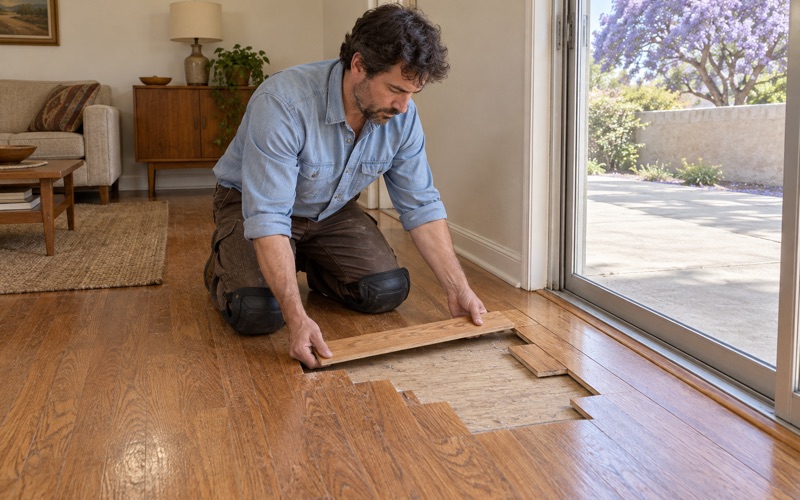
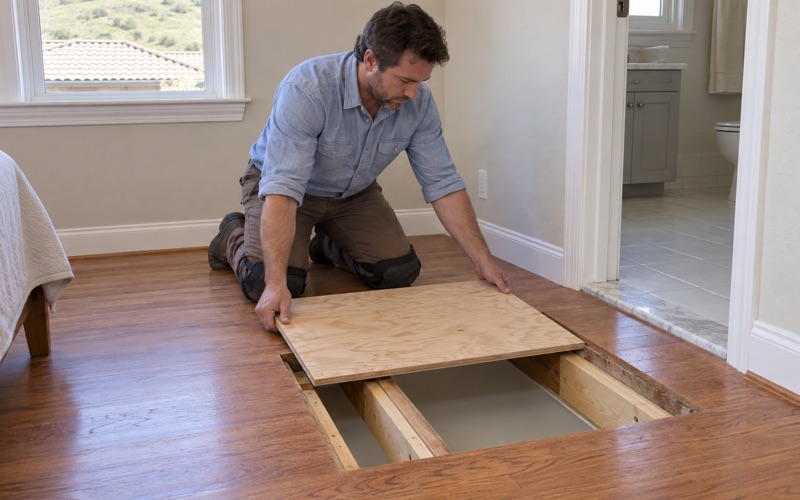
Where a section is too damaged to save, we do a weave-in repair, working replacement boards into the existing pattern rather than cutting a straight seam across the room. Matching species and cut keeps the repair from standing out once the whole floor is sanded and finished together. Before replacing boards, we check for termite frass and kick-out holes that signal drywood termites, and we refer any finding to a licensed pest company.
Looking for wood-flooring closer to Covina? See Covina Wood-Flooring.
Renewing Floors in a Long-Owned Home
Owners Who Plan to Stay
Of Valinda’s 4,713 occupied units, 3,739 are owner-occupied, or 79.3 percent. Owners who have lived in a house for years tend to ask different questions than someone preparing to sell. They want a finish that holds up for the next decade, a color they will still like, and repairs done well enough that they never have to revisit them.
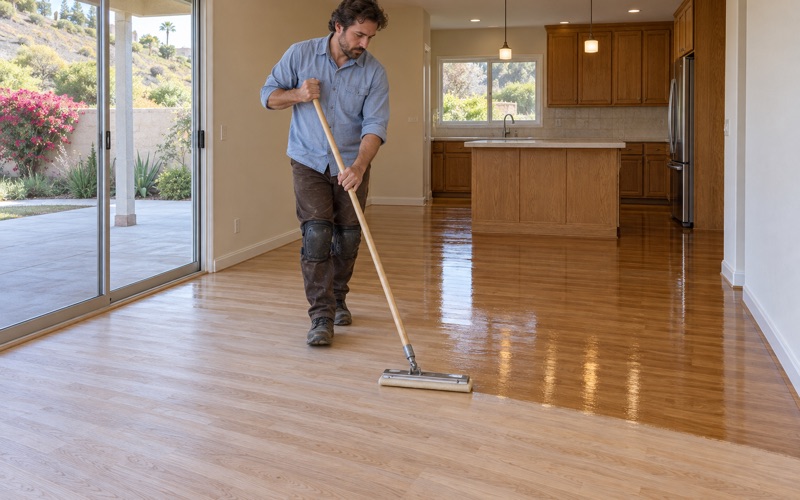
That shapes our recommendations. A full sand and refinish makes sense when the finish is worn through to bare wood, while a screen and recoat can refresh a floor whose finish is dull but intact. We show you which condition your floor is actually in rather than selling you the bigger job.
Choosing a Finish
Every finish we apply is chosen to fall within the South Coast AQMD Rule 1113 limit for wood coatings, which applies to anyone using or storing those products at a job site. Within that limit there are real choices. Waterborne polyurethane stays clearer and cures with less odor, oil-modified polyurethane ambers the wood over time, and hardwax oil gives a low-sheen look that can be spot-repaired.
Sheen level matters as much as the product. Satin and matte hide the scratches that come with dogs, kids and chairs better than gloss does, which suits a floor that will be lived on for years. We lay out stain samples on your own boards after sanding, because a color on raw oak in your room rarely looks like the chip in a showroom.
Staying Home During the Work
Most long-term owners would rather not move out for a floor project. We set up a dust containment system with HEPA dust extraction and work room by room, so the kitchen or a bedroom stays usable while another space is sanded and finished. The sequence is agreed before we start, so you know which rooms close on which days.
The written cure schedule does the rest. It spells out when socks are fine on the new finish, when furniture with felt pads can return and when area rugs can go back down. Following it is the difference between a finish that cures hard and one that carries a rug pattern for years.
Rental Houses Between Tenants
Rentals Here Are Mostly Houses
Valinda’s 974 renter households are not mostly in apartment buildings. The same survey counts 675 of them, 69.3 percent, living in detached houses. For the owners of those rental houses, floor work usually lands in the short gap between one tenant moving out and the next moving in.
That calendar changes the job. We scope the work during a walkthrough, quote any staircase separately, and plan the finish so the cure schedule fits the move-in date. If the timeline is too short for a full refinish to cure, we say so rather than rushing a finish that will scuff in the first week.
Durable Choices for a Rental
Rental floors take harder use than owner-occupied ones, so we often steer toward a satin waterborne finish that can be screened and recoated between tenants instead of sanded every time. On a floor that has already been sanded many times, we check how much wood remains above the tongue before recommending another full sand.
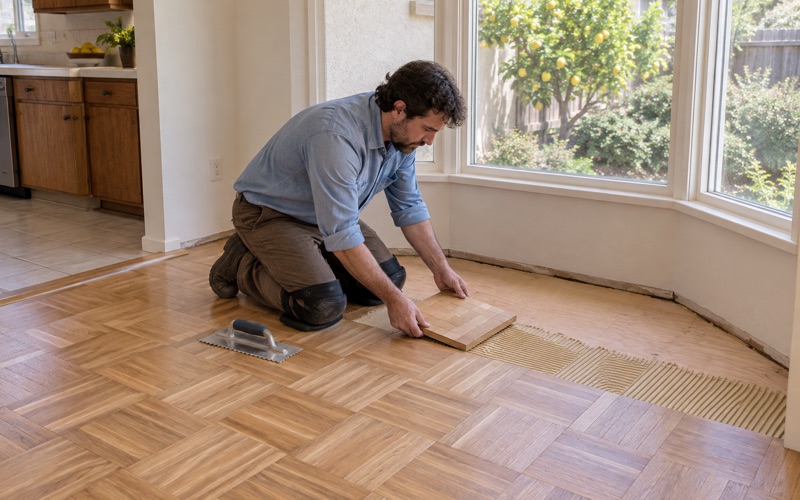
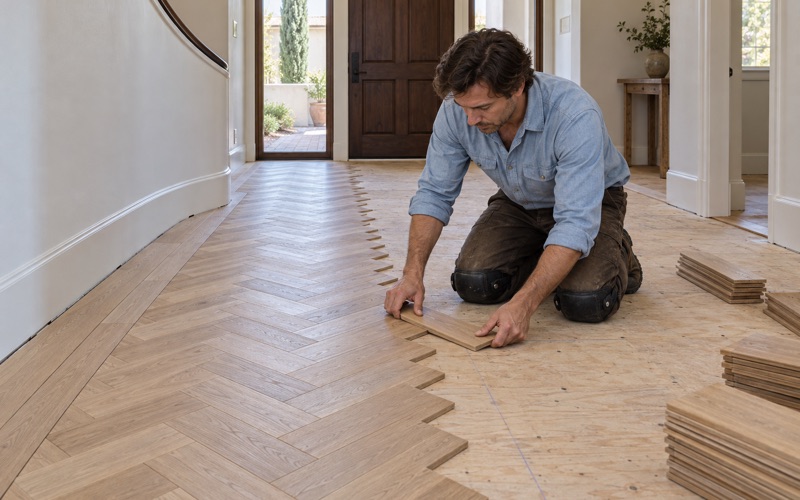
Where replacement makes more sense, the choice between solid hardwood, engineered hardwood and luxury vinyl plank depends on the room and the budget. An engineered floor with an aluminum oxide prefinish goes in quickly and resists wear, but its wear layer limits future sanding. We explain that tradeoff in writing so the decision is made with the facts in hand.
Water Damage and Documentation
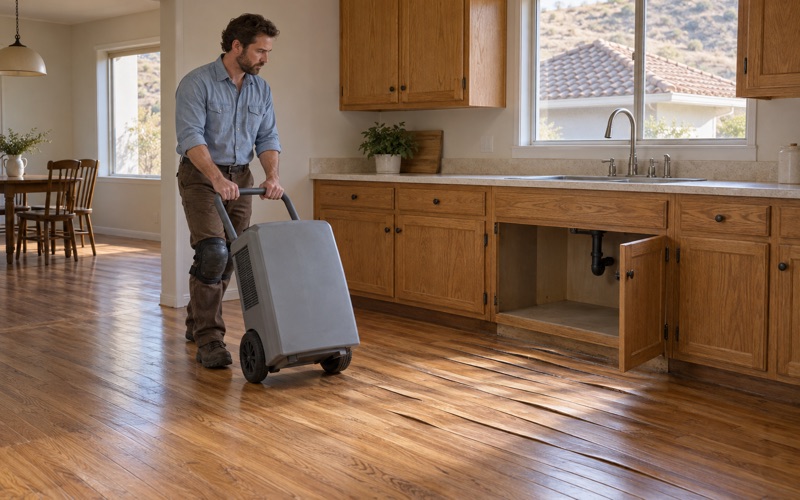
A vacant house can hide a slow leak for weeks. When boards show cupping, crowning or buckling, we find the source of the water and take moisture readings before any board is replaced, because new wood laid over a wet subfloor fails the same way. Damage is photographed and documented so an insurance adjuster sees what we see.
The same documentation applies to smoke and ash residue after a fire in or near the home. Clear photos, moisture readings and a written description of the affected rooms give the adjuster and the owner a shared record to work from.
County Rules and Older-Home Lead Practices
Unincorporated Los Angeles County
Valinda is not an incorporated city. It first appeared as an unincorporated place in the 1970 census and as a census-designated place in 1980, and it remains part of unincorporated Los Angeles County. County rules apply here, and building and safety services come from Los Angeles County Public Works rather than a city hall.
Whether a particular floor project involves county paperwork depends on its scope, especially when work reaches past the floor surface into floor joists or other framing. We raise that question with you during scoping and point you to Los Angeles County Public Works, Building and Safety for the answer on your specific job. We would rather confirm it than guess.
Lead-Safe Work in Pre-1978 Houses
The EPA Lead Renovation, Repair and Painting Rule applies to renovation in housing built before 1978. With 88.9 percent of Valinda’s housing units built before 1980, most houses we work in here likely fall into that older group, though the exact pre-1978 share is somewhat lower. That is why we confirm the year each house was built before sanding begins.
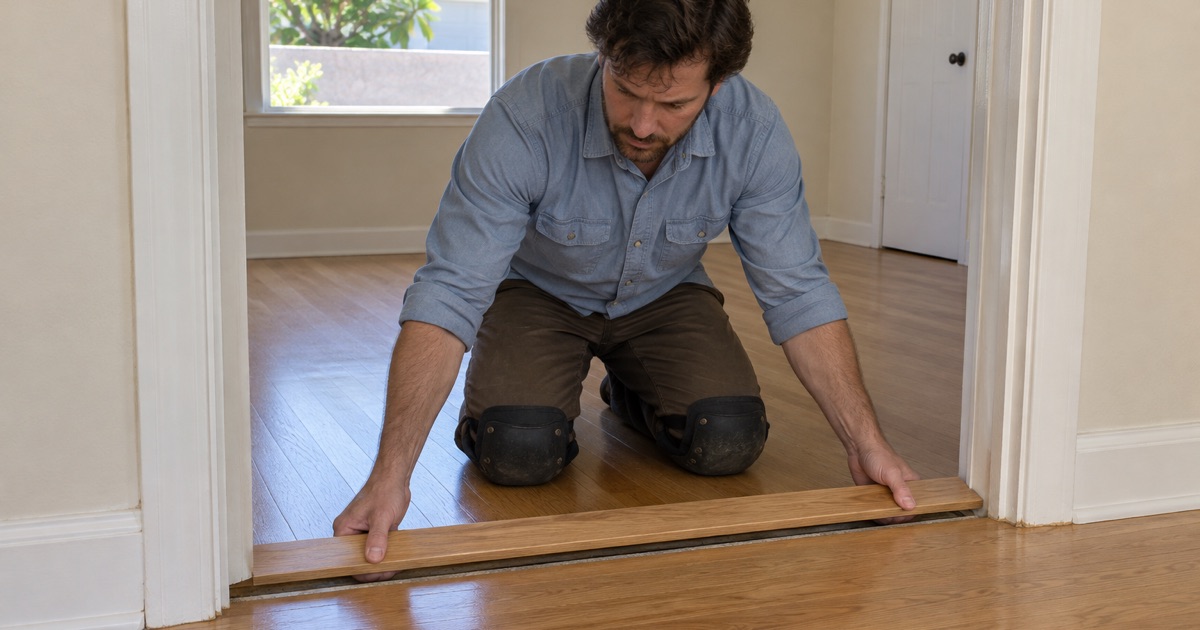
On older homes we follow lead-safe work practices. Painted baseboards, shoe molding and thresholds get attention before sanders run, work areas are contained, and cleanup is done with HEPA equipment rather than a shop broom. The approach adds time to setup, but it protects families who stay in the house during the job.
Retrofits and the Wider Community
Some owners pair floor work with other long-term projects. Both of Valinda’s ZIP codes, 91744 and 91791, appeared on the 2025 Southern California ZIP list for the California Earthquake Brace + Bolt program. If you are considering a retrofit, check the current year’s list and schedule it alongside the floor work so neither project undoes the other.
The county’s area plan also notes that the Puente Creek Channel runs through the southern part of Valinda, with limited commercial uses along Amar Road and Azusa Avenue. Most of the rest is residential subdivision, and that is where our work in Valinda happens: original floors in houses their owners intend to keep.
- 20+ Years of Wood Floor Work
- Free In-Home Estimates
- Dust-Contained Sanding