Diamond Bar Wood Flooring has handled wood-flooring in Walnut for more than 20 years, and most of that work lands in one kind of house: a detached home whose original floor is now several decades into its life. We refinish, repair and replace hardwood, and every job starts with finding out what is actually under the finish before we quote any sanding. That means confirming whether a floor is solid hardwood or engineered, and measuring the wear layer when it is engineered.
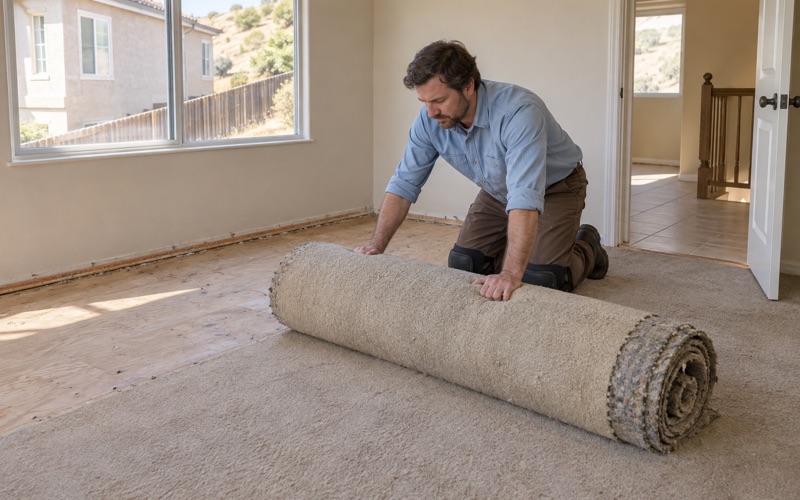
A floor that has carried a household for forty years usually tells a clear story. There are traffic lanes worn to bare wood, gray staining near a door, gaps opening between boards and a pale rectangle where a rug sat for a decade. Some of that sands out, some of it calls for board replacement, and some of it means the floor has reached the end of what sanding can give.
We plan the work so a family can keep living in the house while it happens. Dust containment, HEPA dust extraction and a room-by-room sequence keep the rest of the home usable. Every refinish ends with a written cure schedule that says when to walk on the floor, when furniture goes back and when rugs can return.
Refinishing Floors in Walnut, California’s 1980s Houses
A city built mostly in one decade
Walnut’s housing stock is unusually concentrated in time. The 2024 five-year American Community Survey counts 9,230 housing units in the city, and 4,419 of them, or 47.9 percent, were built between 1980 and 1989. The City of Walnut’s own Housing Element explains why: during the 1980s the population grew by more than 130 percent, from 12,000 residents to over 29,000.
For floor work, that means a large share of the city’s original floors went down within the same ten years and has aged on roughly the same clock. Finishes applied at the time have worn through in the busiest rooms, and floors that were never refinished are now overdue. The 1970s account for another 20.5 percent of units, so a good number of houses are a little older still.
What sanding a 1980s floor involves
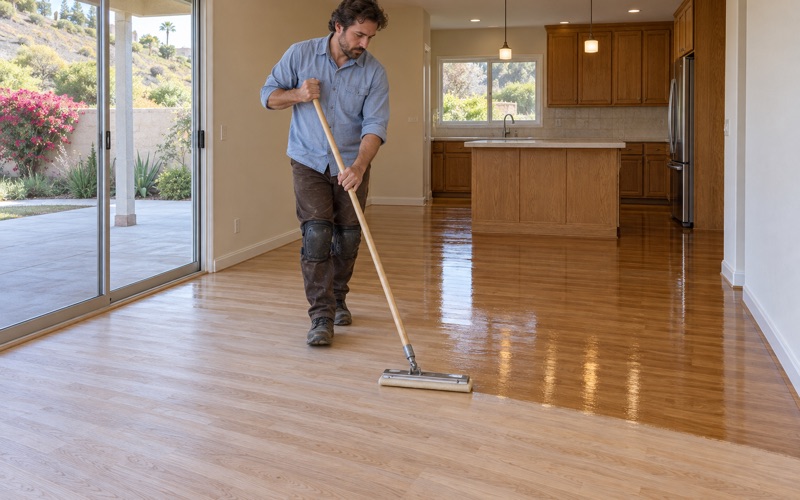
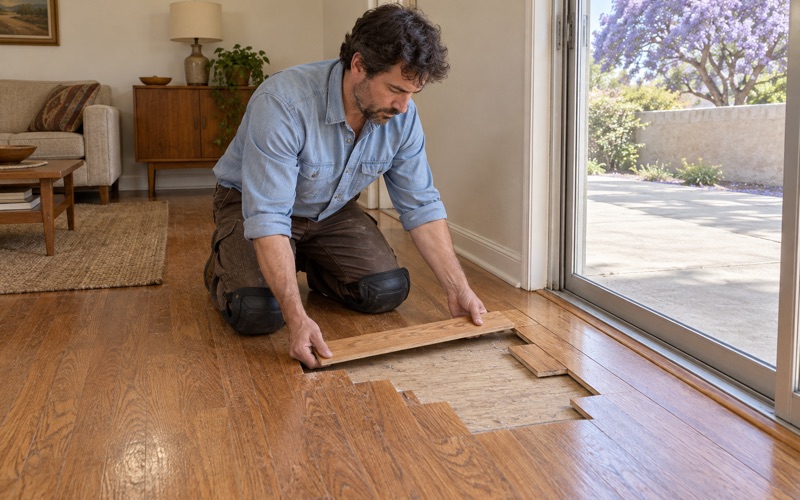
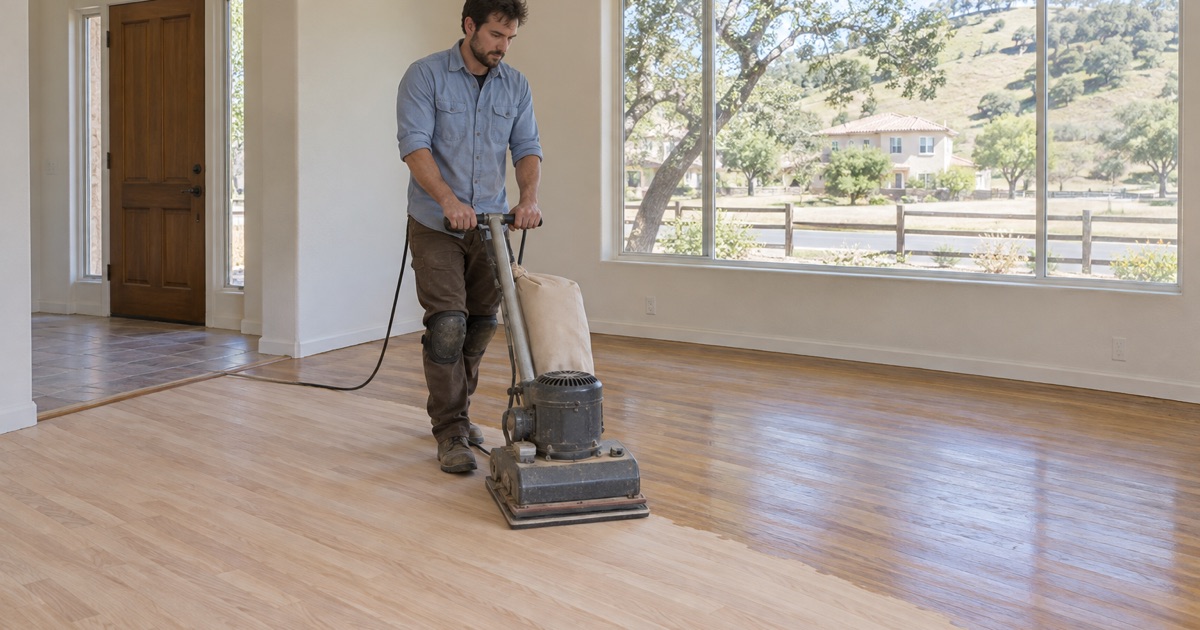
Most solid hardwood from that era can take a full sand, provided earlier refinishing has not thinned the boards too far. We run a drum sander through a grit sequence, work the perimeter with an edger, and finish with a multi-head orbital sander so scratch patterns do not show under stain. Small defects get wood filler, and damaged boards are cut out and replaced with a weave-in repair using matching stock before any coating goes down.
Red oak is one of the most common species in American homes of that age, and it takes stain evenly once it is sanded clean. If an owner wants a lighter, more current look, we talk through what a natural finish or a lower sheen level will do on that species before committing. Red oak’s warm undertone does not disappear under a clear coat, and it is better to know that before the sanding sealer goes on.
Finishes that fit the air district’s rules
Walnut sits inside the South Coast Air Quality Management District, and SCAQMD Rule 1113 sets the VOC limit for wood coatings applied or stored at a job site. We choose finishes that fit that limit. Waterborne polyurethane and hardwax oil are the options we discuss most often with owners of these houses.
Waterborne finishes dry clear and let rooms come back into use sooner. Oil-modified polyurethane ambers over time, which some owners of older oak floors actually prefer, so we explain the tradeoff rather than picking for them. Whichever finish goes down, the written cure schedule goes with it.
Looking for wood-flooring closer to Rowland Heights? See Wood-Flooring Services in Rowland Heights.
When a 1980s Floor Needs Replacing Rather Than Sanding
Engineered floors and the wear layer
Not every floor in a 1980s house is the one it was built with. Many have been replaced once already, sometimes with engineered hardwood whose top layer of real wood is thin. We measure that wear layer before promising a refinish, because sanding through it exposes a core that no finish can hide.
When the wear layer is too thin, the honest options are a screen and recoat or a replacement. A screen and recoat refreshes the surface without removing wood, but it only works when the existing finish is worn and not broken through to raw boards. If the damage has reached the wood itself, a new floor is the better use of the money.
Moisture, cupping and water damage
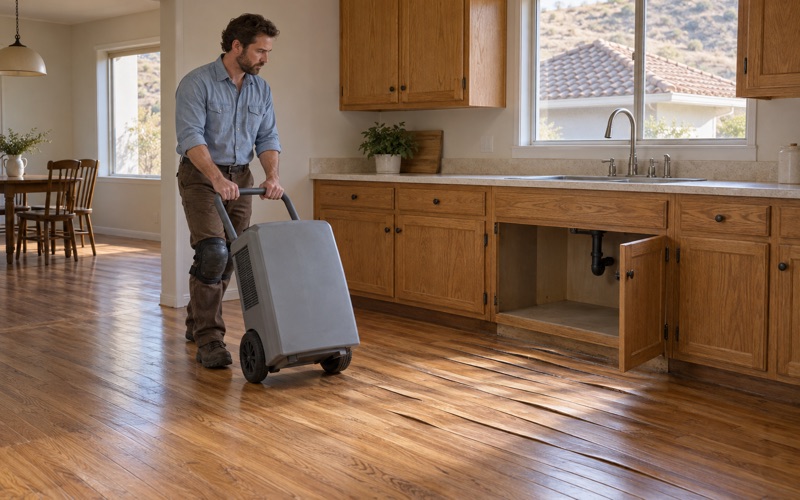
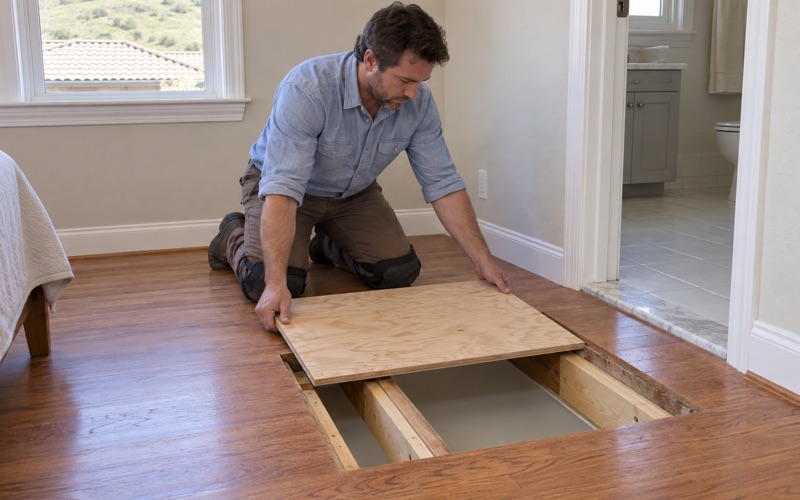
Cupping, crowning, buckling and board gapping all point to moisture moving through the wood, and a floor showing them should not simply be sanded flat. We find the source of any leak first, whether a supply line under a sink, a dishwasher connection or a failed water heater. Readings with a pin moisture meter come before a single board is replaced.
Where new flooring will sit over concrete, an in-situ relative humidity test under ASTM F2170 tells us whether the concrete is dry enough to proceed. We check what is under each house rather than assuming it from the street. Water, smoke and ash damage is photographed and documented so an insurance adjuster sees what we see.
Choosing what goes down next
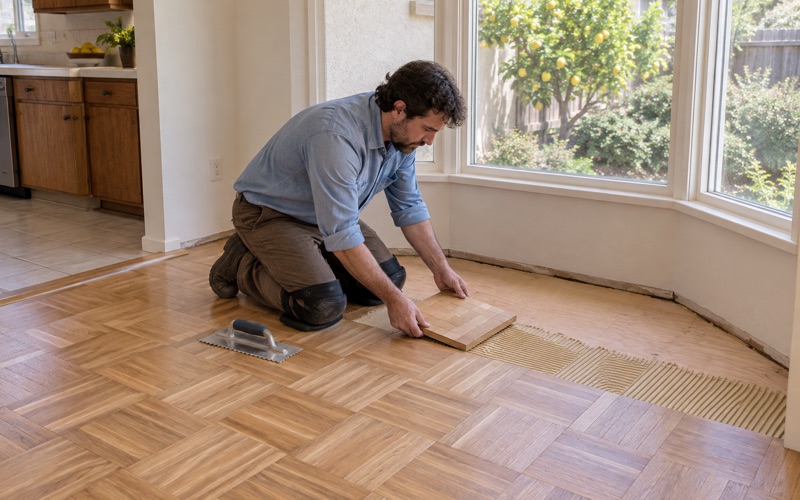
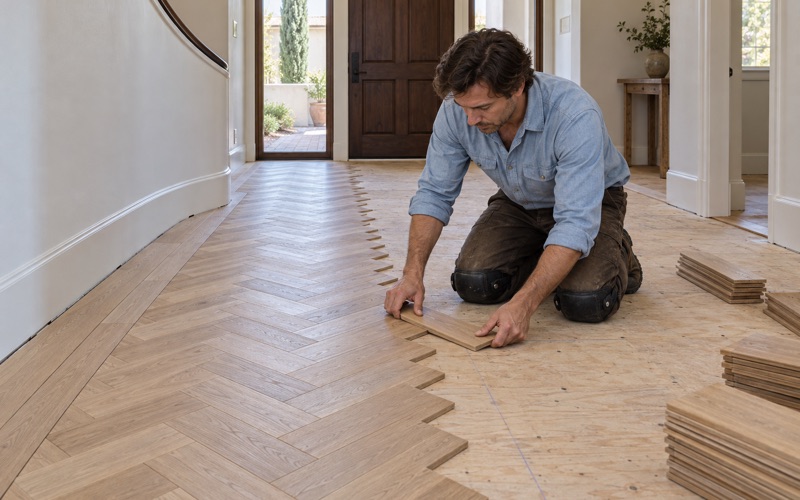
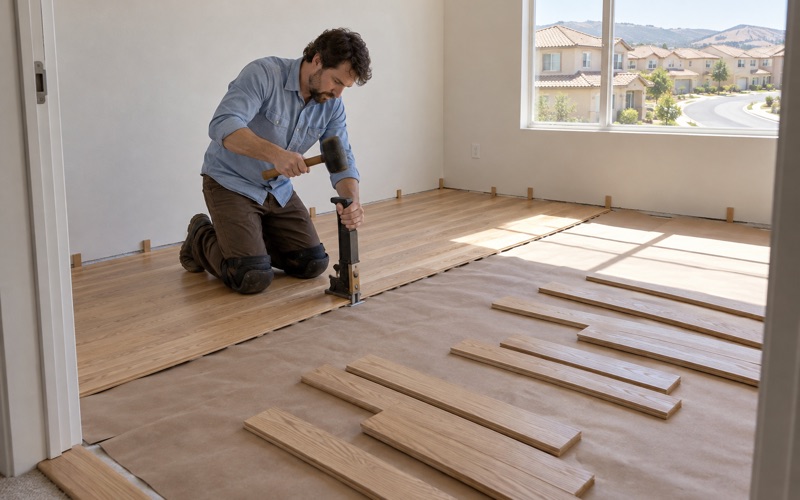
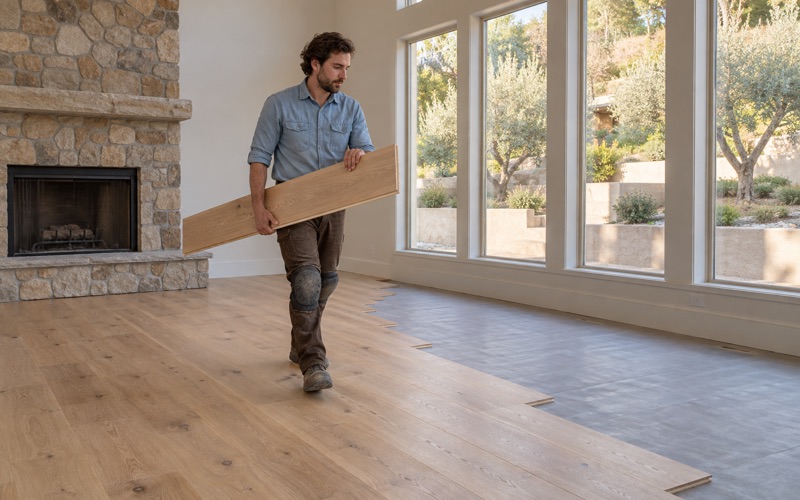
A replacement floor is a chance to change species, board width and installation method. White oak, hickory and maple all carry higher Janka hardness ratings than red oak, and wide plank engineered hardwood suits open living areas well. Solid hardwood is typically a nail-down installation with flooring cleats or flooring staples over a plywood subfloor, while engineered products can also go down as a glue-down or floating installation over underlayment.
Before any boards are replaced, we look for drywood termites. Termite frass and kick-out holes in trim or subfloor are signs we identify and refer to a licensed pest company. Laying new wood over an active colony only hands the problem a fresh meal.
Rental Houses Between Tenants in Walnut, California
Renters here live in houses
Walnut is a city of detached homes, and that holds for renters as well as owners. Of the city’s 9,230 housing units, 8,737, or 94.7 percent, are one-unit detached houses. Among the 1,405 renter households, 1,227, or 87.3 percent, live in a detached house.
That shapes the floor work a landlord orders. A rental here is usually a whole house with the same hardwood an owner-occupied home would have, rather than a single apartment unit. Owners still occupy 83.8 percent of occupied units, but the rental houses that do exist carry whole-house floors that need the same care.
Turning a floor around on a schedule
The window between tenants is usually short, so we plan a rental refinish around it. A screen and recoat fits a tight gap more easily, while a full sand and finish needs more days before furniture or a moving crew can return. The written cure schedule gives a property owner firm dates to hand the next tenant.
Waterborne finishes help here because they reach walkable hardness sooner than oil-modified products. We sequence the rooms so the parts of the house finished first can be walked for a showing while work continues elsewhere. That keeps a vacancy from stretching simply because the floors are not ready.
Documenting condition at move-out
Deep pet stains, furniture gouges and water marks near a refrigerator are the usual move-out findings. We photograph the floor before work begins and describe what sands out and what needs board replacement. That gives an owner a clear, dated record of the floor’s condition.
The record is useful to landlords handling a security deposit under California Civil Code 1950.5. We document the damage and the repair, and the decision about any deduction stays with the owner. Our part is making sure the photos and the scope match what was actually on the floor.
Hillside Neighborhoods and Planning With the City of Walnut
A low-density, semi-rural city
Walnut’s Housing Element describes a city that developed as a low-density, semi-rural residential community, reflecting severe environmental constraints. It contains large hillside areas with slopes well in excess of 25 percent, which the same document says are susceptible to unstable soils. The city sits on the southern slopes of the San Jose Hills, bounded by the Puente Hills to the south.
For a flooring crew, hillside streets are a logistics question. Steep driveways and long carries from the truck affect how we stage a drum sander, boxes of flooring and a dust containment system. We look at access during the estimate so installation day does not begin with a staging problem.
Houses of different ages on the same street
The 1980s dominate, yet 38.4 percent of Walnut’s units were built before 1980 and 3.6 percent before 1960. The EPA Lead Renovation, Repair and Painting Rule concerns homes built before 1978, so we confirm the year a house was built before any sanding starts. On those older houses we follow lead-safe work practices, with containment and HEPA dust extraction throughout.
Seismic retrofit is a separate subject, but it sometimes comes up while an owner is planning a larger project. ZIP code 91789 appears on the 2025 Southern California list for the Earthquake Brace + Bolt program. Anyone interested should check the current year’s list before counting on it.
The Building & Safety counter
Walnut, incorporated on January 19, 1959, runs a Building & Safety Division within its Community Development Department at 21201 La Puente Road. The division handles plan review, permit issuance and field inspections, and inspections are scheduled by phone at 909-598-5241.
The division’s page carries no exempt-work list and does not mention flooring. When a project goes beyond the floor itself, such as moving a wall or adding a sistered joist under a sagging section, we ask the counter about that scope rather than guessing. It is a short call that keeps a floor job from turning into a surprise later.
- 20+ Years of Wood Floor Work
- Free In-Home Estimates
- Dust-Contained Sanding