Diamond Bar Wood Flooring has handled wood flooring in West Covina for more than 20 years, and most of that work falls into one of two jobs. One is bringing an owner’s original floor back to life. The other is getting a rental floor ready before the next lease starts, on a date that does not move.
The first thing we check on either job is the year the house or building went up. That date shapes nearly every decision after it, from whether lead-safe work practices apply before sanding to how much wood an old floor has left to give. On engineered boards we also measure the wear layer before anyone promises a refinish, because a thin veneer cannot survive a drum sander.
Homes stay livable while we work. We seal off the rooms in progress, run HEPA dust extraction at the sander, and move through the house in a set order so a family keeps a kitchen and a place to sleep. When the last coat is down, you get a written cure schedule that says when to walk on the floor, when furniture can return and when rugs go back.
Original Floors in West Covina’s 1950s Houses
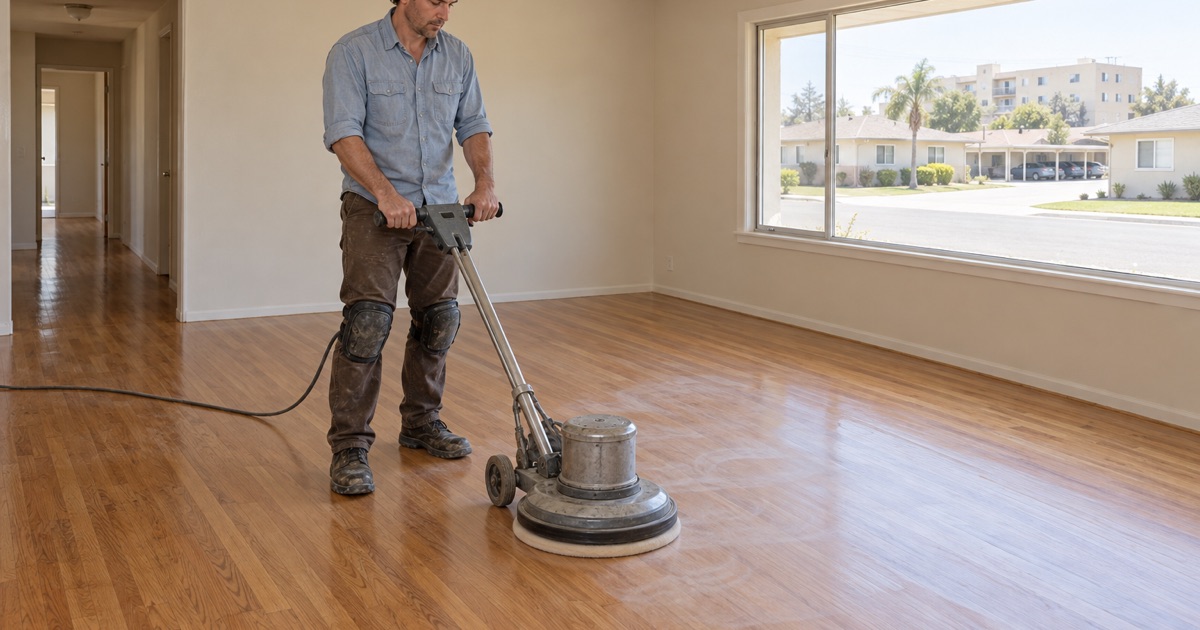
A City Built Mostly in One Decade
West Covina sits in Los Angeles County, about 19 miles east of downtown Los Angeles, and its housing carries a clear date stamp. Census estimates place 12,110 of its 34,287 housing units, or 35.3 percent, in the 1950s. Between 1950 and 1960 the population grew by 1,025.69 percent, from fewer than 5,000 people to more than 50,000.
A boom at that pace leaves a great many houses the same age, and many of their floors have now been in service for more than six decades. Some have been sanded, refinished and covered over more than once. Before we plan anything, we find out what is actually under the carpet or vinyl in each room.
What We Look For Under Old Coverings
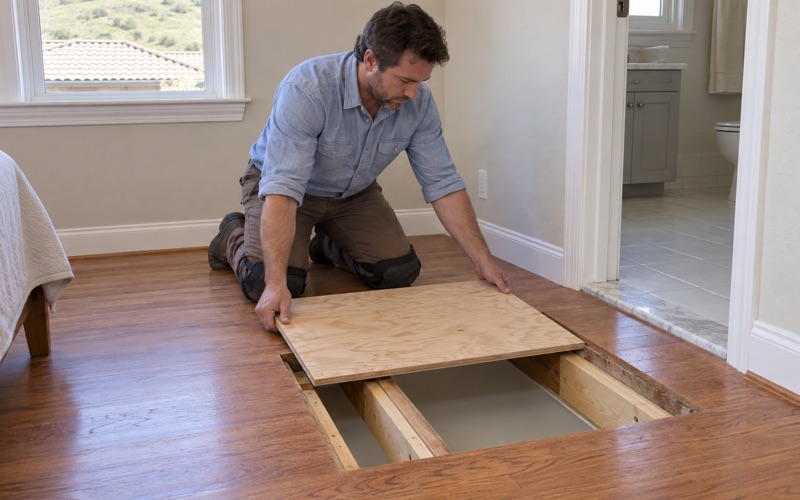
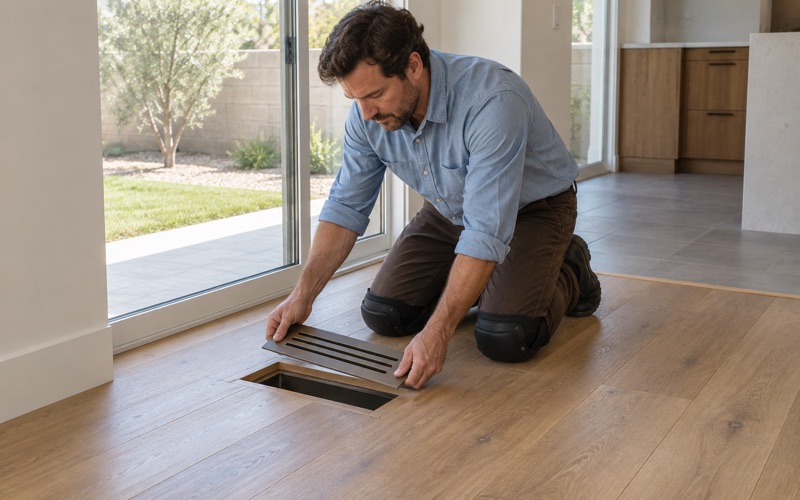
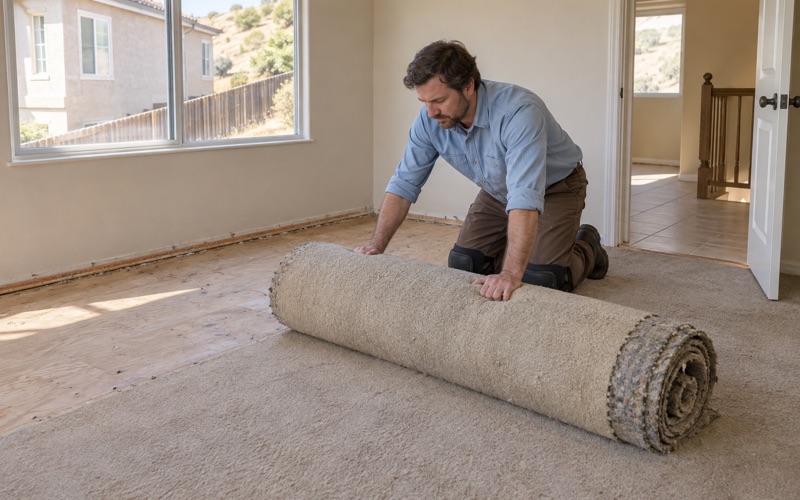
Postwar strip floors are commonly red oak or white oak, but we confirm the species by lifting a board or pulling a floor register rather than assuming it. Carpet tack strips, staples and old pad adhesive leave holes and residue that the sanding plan has to account for. Where a vinyl or tile layer comes up, we look for black mastic or cutback adhesive before any scraping begins.
Earlier refinishing matters just as much. Every sanding removes wood above the tongue, and a floor that has been through several rounds may not have enough left for another full pass with a drum sander and edger. In that case a screen and recoat, or board replacement in the worn areas, can be the better choice for the room.
Lead-Safe Work in Pre-1978 Homes
Much of West Covina’s housing is old enough that the EPA Lead Renovation, Repair and Painting Rule deserves a look before work starts. Sanding a floor means working along baseboards, door casings and stair parts that may carry old paint. We confirm the build year first, then set containment and cleanup to lead-safe work practices when the home predates 1978.
The cutoff falls inside the 1970s, so a house from 1976 and one from 1979 can look alike on a census table but not under the rule. That is why we check the individual property rather than guessing from the street. The answer changes how we handle dust at the edger and how we clean before any finish goes on.
Looking for wood-flooring closer to Chino Hills? See Wood-Flooring in Chino Hills.
The 1970s Houses and Townhomes
West Covina’s Second Building Wave
The 1970s produced the city’s second-largest housing layer, with 7,907 units, or 23.1 percent of the total. Taken together with the 1950s, that means a floor call here very often lands in a house from one of those two decades. The two eras raise different questions, and we treat them that way.
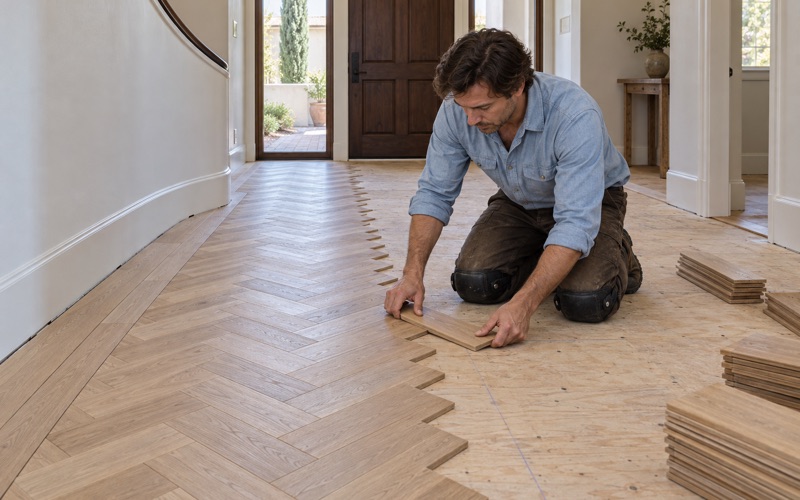
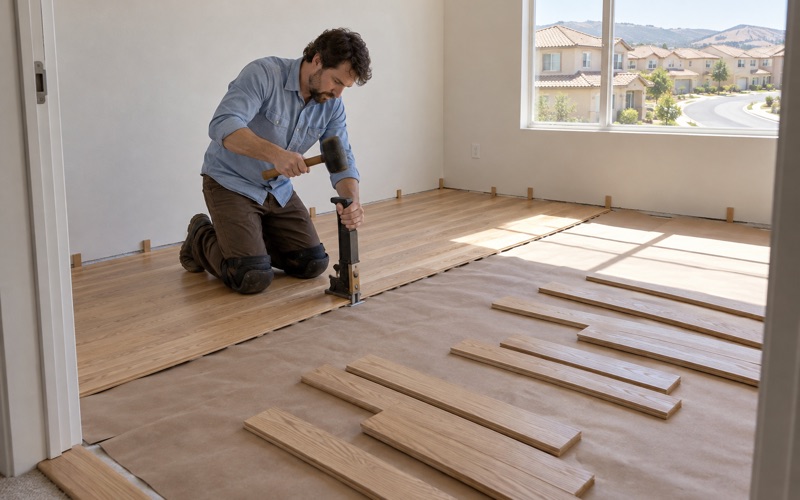
In houses from the later decade we regularly find carpet or sheet vinyl where an owner now wants wood. That puts the subfloor at the center of the job instead of the finish. We check it for flatness, fastener hold and squeaks before choosing between nail-down, glue-down and floating installation.
Subfloor and Moisture Checks
A plywood subfloor or an OSB subfloor that moves underfoot will show through new boards as squeaks and gaps. Where floor joists sag, a sistered joist may be needed before flooring goes down, and that work is scoped separately. Where a room sits on concrete, we run an in-situ relative humidity test following ASTM F2170 instead of judging from the surface.
Moisture also shows up as cupping, crowning or buckling in an existing floor. Before we replace water-damaged boards, we find the source of the leak and take pin moisture meter readings in and around the area. Laying new boards over an active slab leak or a dripping supply line only means doing the repair twice.
Townhomes and Association Rules
West Covina counts 2,964 attached single-family units, and many townhomes are governed by a homeowners association. Before we order material for one, we read the association’s rules on flooring type, underlayment and approval steps. Some associations route floor changes through an architectural review committee under their governing documents.
Where a townhome shares a floor and ceiling with a neighbor, sound-rated underlayment is often part of the approval. We get the association’s written requirement rather than quoting a sound figure from memory. Once the rules are clear, we compare engineered hardwood, solid hardwood and a floating floor against them.
Turnover Floors in Large Apartment Buildings and Rentals
Buildings of Fifty or More Units
West Covina has a sizable apartment layer for a city built in the 1950s. Census estimates count 4,220 housing units, or 12.3 percent of the city’s stock, in buildings of fifty or more units. Among the city’s 13,069 renter households, 3,812, or 29.2 percent, live in those large buildings.
For a property manager, that scale changes what a floor job is. The work is usually a vacant unit with a move-in date, an elevator or hallway schedule to respect, and a building rule sheet covering noise hours and debris. We plan sanding, finish coats and cure time backward from the day the next tenant gets keys.
Screen and Recoat Between Tenants
Not every turnover needs a full sand. If the wear sits in the finish rather than the wood, a screen and recoat can restore the sheen level and protection in far less time. Where pet stains, deep scratches or board gapping go past the finish, we switch to board replacement or a weave-in repair.
Finish choice matters when the next tenant arrives within days. Waterborne polyurethane is our usual turnover finish for its drying time and milder odor, and every coating we bring fits the South Coast AQMD Rule 1113 limit for wood coatings. The cure schedule goes to the manager in writing so the move-in plan matches the floor.
Rental Houses Between Leases
Large buildings are only part of the rental picture here. Of the city’s renter households, 4,097 live in detached houses, and a rental house can pass through several tenants between refinishes. Those floors typically show traffic lanes, furniture dents and wear near entry doors and kitchens.
Owners between leases usually want to know what is worth fixing now and what can wait. We walk the floor with them and separate what a refinish will correct from boards that need replacing. A rental built before 1978 gets the same lead-safe work practices as an owner-occupied home.
Owner-Occupied Homes and Older Houses
Floors Owners Plan to Keep
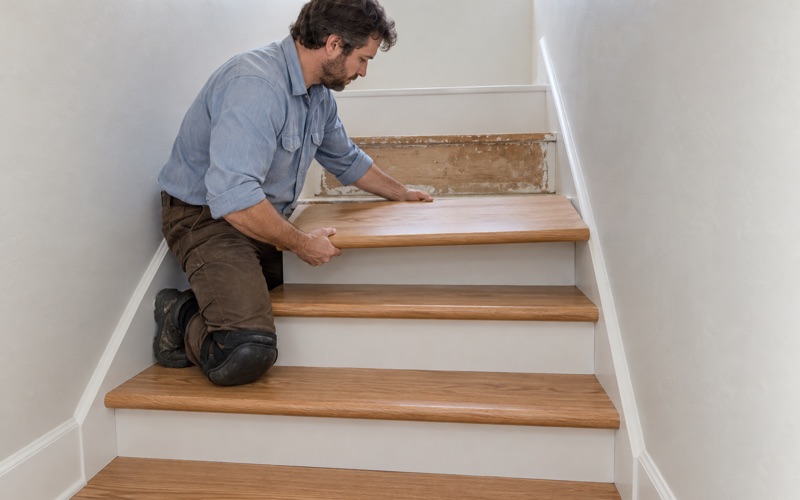
About 60.3 percent of West Covina’s occupied homes are owner-occupied, and most of those owners live in detached houses. They tend to ask different questions than a landlord: whether to keep the original strip floor, how to match a later addition, and what the stairs will cost. We quote stairs by each tread and riser, with stair nosing and bullnose treads priced as their own items.
Matching old and new wood comes down to species, cut and grade. A plain-sawn red oak floor does not blend with rift-sawn or quarter-sawn white oak, and select grade reads differently than character grade. Where boards must be woven in, we sand sample pieces with the surrounding floor before the stain color is decided.
Termites, Old Boards and Seismic Work
Older wood can hide drywood termite damage that only shows once boards come up. Kick-out holes and small piles of termite frass near baseboards are the signs we watch for. If we find them, we stop and refer the owner to a licensed pest company, because new boards laid before treatment only give the termites fresh wood.
Seismic work sometimes enters the same conversation. The ZIP codes 91790, 91791 and 91792 appear on the 2025 Southern California list for the California Earthquake Brace + Bolt program. That program is separate from flooring, so we suggest owners check the current year’s list and schedule any retrofit around the floor job.
The City’s Preservation Ordinance and Building Division
West Covina incorporated on February 17, 1923, and in 2007 it adopted a historic preservation ordinance that allows landmark and historic district designation with the owner’s consent. How far that ordinance reaches inside a home is not something we have confirmed. If your house has been designated, ask the city before planning major changes.
Permit questions for a specific project belong with the City of West Covina Building Division at 1444 W Garvey Avenue S, Room 215, which handles plan review, permit issuance and inspection for private development. We would rather an owner hear that answer from the city than from a flooring crew. Once those questions are settled, we set the schedule, the finish and the cure plan around the house.
- 20+ Years of Wood Floor Work
- Free In-Home Estimates
- Dust-Contained Sanding